
Emergency? We dispatch 24/7 across the Eastside. Call (323) 606-0255 now for rapid response.
A retaining wall that is bulging, leaning, or cracking is telling you it is losing the fight against the soil behind it, and once that movement starts it accelerates. During a wet Eastside winter, water pressure behind the wall can turn a slow lean into a sudden failure over a single storm. When a wall is threatening a house, driveway, or the property below it, the response cannot wait for a scheduled estimate.
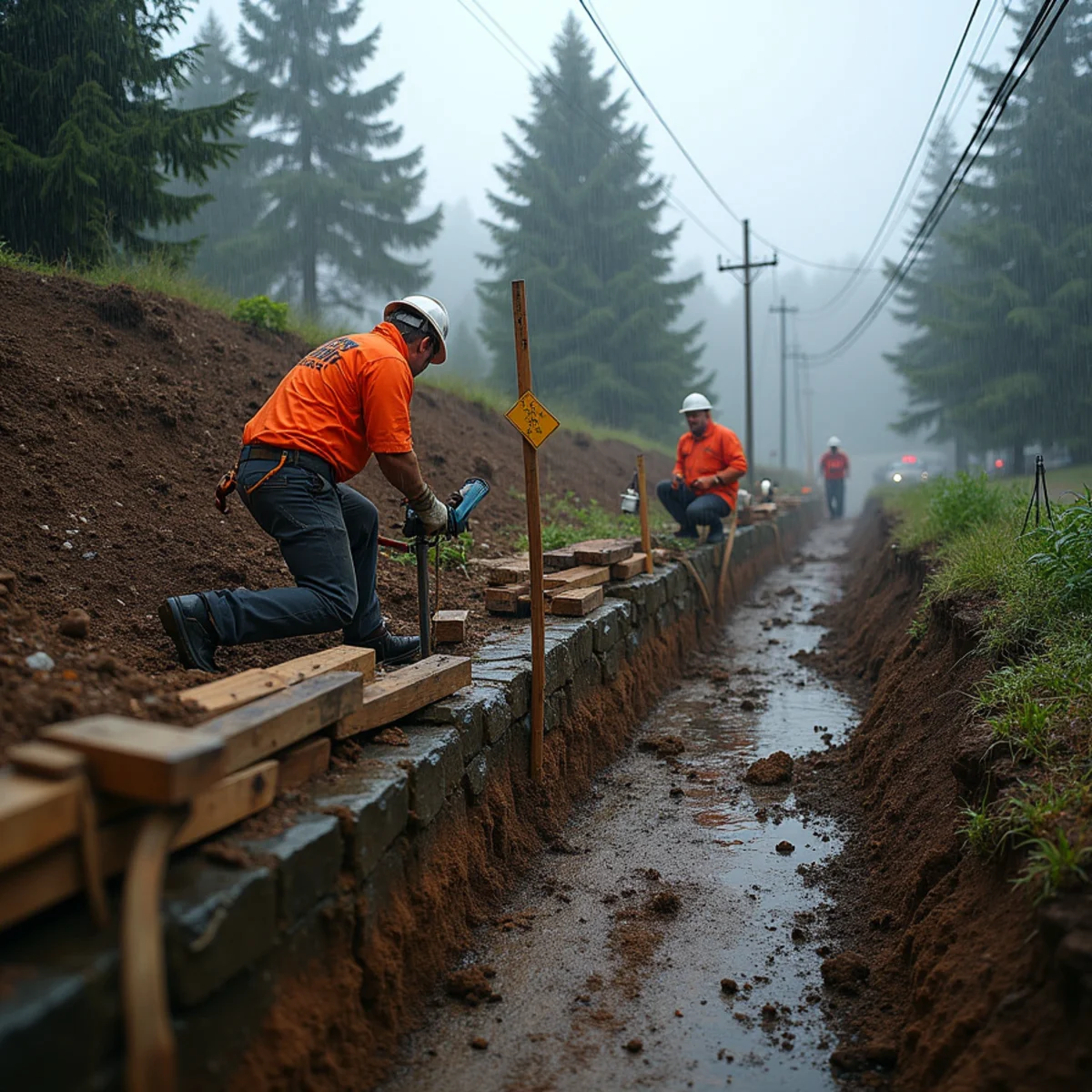
We dispatch 24/7 for wall failures. The first job is to make the situation safe, shoring the wall, relieving the water pressure driving the movement, and protecting whatever is downhill of it. Once the immediate danger is controlled, we assess why the wall failed and rebuild or reinforce it to a standard that will not fail again, with proper drainage, reinforcement, and engineering where the height requires it. Fast stabilization now, a permanent fix that lasts.
Need Emergency Retaining Wall Repair in the Seattle area?
Free on-site estimate · 14+ years serving the Eastside
Signs You Need Emergency Retaining Wall Repair
Bulging or leaning face
A wall that is bowing outward or tilting has lost its ability to hold the soil load, usually from water pressure and missing reinforcement. This is active failure, not a cosmetic issue, and it worsens quickly in wet weather. It needs to be shored and assessed immediately.
Cracking and separation
Stair-step cracks, blocks pulling apart, or a wall separating from adjacent structures signal that the wall is moving under load. Water seeping through the face at the same time means pressure is building behind it. These are warning signs that failure may be near.
Soil movement and sinkholes
When the ground above a wall starts to slump, or voids and sinkholes appear behind it, the retained soil is escaping and the wall is no longer doing its job. This threatens anything built above and can undermine foundations. It demands urgent stabilization.
Threat to structures below
A failing wall above a house, driveway, or neighboring property is a life-safety and liability concern, especially during heavy rain. A sudden collapse can cause serious damage in seconds. Immediate shoring and protection of the area downhill is the priority.
Our Process
- 1
Emergency dispatch and assessment
We respond 24/7, evaluate how far the failure has progressed, and determine what is immediately at risk so we can prioritize protecting people and property.
- 2
Shoring and stabilization
We install temporary shoring to arrest movement and relieve the hydrostatic pressure driving the failure, stopping the situation from getting worse.
- 3
Water and load relief
We cut off the water feeding the pressure, divert surface runoff away from the wall, and reduce the load where possible while a permanent plan is developed.
- 4
Failure diagnosis
We identify exactly why the wall failed, whether drainage, reinforcement, base, or overload, so the rebuild corrects the root cause rather than repeating it.
- 5
Engineered rebuild
We rebuild or reinforce the wall to spec, coordinating stamped engineering and permits for walls over four feet, with proper drainage and geogrid reinforcement.
- 6
Drainage and final grading
We build in the gravel drainage zone, drain line, and reinforcement the original lacked, then grade the surface to keep water off the wall going forward.
What's Included
- 24/7 emergency dispatch for wall failures
- Temporary shoring to arrest movement
- Hydrostatic pressure relief and dewatering
- Protection of structures and areas below
- Root-cause failure diagnosis
- Engineered rebuild of block, rockery, or boulder walls
- Stamped engineering and permits over four feet
- Gravel drainage chimney and perforated drain line
- Geogrid soil reinforcement to code
- Surface regrading to divert runoff
What Affects the Price
Emergency wall work has two phases, and we price them so the urgent part happens fast. Stabilization and shoring are quoted to stop the failure and make the area safe right away, then the permanent rebuild is scoped once we know why the wall failed. Cost depends on wall size, how far it moved, and access, which we assess on the first visit.
| Factor | How it affects your quote |
|---|---|
| Severity of failure | A wall caught early with a slight lean costs far less to stabilize than one that has partially collapsed and lost soil behind it. |
| Emergency stabilization scope | The shoring, dewatering, and protection needed to make the site safe immediately is priced separately from the permanent repair. |
| Wall size and rebuild extent | Height and length determine how much wall must be rebuilt or reinforced, along with the engineering the height requires. |
| Engineering and permits | Failures on walls over four feet need stamped plans and permits for the rebuild, adding design cost before construction. |
| Access and site conditions | Steep, wet, or confined sites slow the work and may require specialized equipment, which affects both phases of the job. |
Every property is different — the only way to get an accurate number is a free on-site estimate. Call (323) 606-0255 to schedule.
What Your Line-Item Estimate Includes
We put everything in writing so you can compare bids on the same scope instead of guessing what a total leaves out. Your itemized SeattleProTurf estimate separates:
- Labor and installation
- Materials and delivery
- Site prep, excavation, and haul-off
- Drainage and engineered base work
- Permits and engineering (when required)
- Restoration, cleanup, and site protection
- Payment milestones tied to real progress
- Workmanship warranty terms
Why Choose SeattleProTurf for Emergency Retaining Wall Repair?
Plenty of contractors can lay turf, stack block, or dig a trench. Building outdoor work that survives Northwest winters takes local knowledge, real engineering, and a crew that is still here to stand behind it. Here is what sets us apart on projects like yours.
14+ years on the Eastside
We have built projects like this across Kirkland and Puget Sound for more than 14 years, so we know exactly how our glacial-till soil and wet winters affect the work.
Licensed, bonded & insured
Registered Washington contractor SEATTPT839LN, with liability and workers' comp coverage — and we handle the engineering and permits when the scope requires them.
Trusted by Eastside homeowners
Homeowners choose us for clean job sites, honest line-item estimates, and installations that hold up season after season.
One accountable local crew
Not a franchise or a lead broker. The same team quotes, builds, and warranties your project — and we are here to stand behind it.
Frequently Asked Questions
Treat it as one. A bulging or leaning wall is actively failing, and in wet weather that movement can accelerate to collapse quickly. Call us at (323) 606-0255 and keep people and vehicles away from both sides of the wall. We can dispatch to shore it and relieve the pressure before it fails.
Often, yes, if we get there while it is still moving rather than after collapse. Temporary shoring and relieving the water pressure behind the wall can arrest the movement and buy time for a proper engineered repair. The earlier you call, the more of the existing wall we can usually save.
In this region it is almost always trapped water combined with too little reinforcement. Winter keeps the soil behind the wall saturated, and without a drainage zone and geogrid tied into the slope, the pressure eventually wins. Our rebuild corrects those root causes so the replacement wall does not repeat the failure.
It depends on your policy and the cause of failure, and coverage for retaining walls varies a lot. We document the failure and the work thoroughly, which helps with claims, but you should confirm coverage with your insurer. Either way, we prioritize making the site safe first and sort the paperwork alongside.
A wall that's leaning, bulging, cracking, or showing soil washout is failing under hydrostatic pressure and can collapse without much more warning, so treat it as urgent, especially if it supports a driveway, structure, or slope above a home. Keep people and vehicles away from both sides and call our 24/7 emergency line at (323) 606-0255. We can stabilize the immediate hazard and then diagnose whether it needs rebuilding or drainage remediation.
Most emergency failures aren't really sudden; they're the end of a slow process where blocked or missing drainage lets water build up behind the wall until saturated hardpan pushes it out. Our heaviest December rains simply add the final load. When we make emergency repairs we correct the underlying drainage with rock and perforated pipe, because rebuilding without fixing water movement just resets the clock on the next failure.