
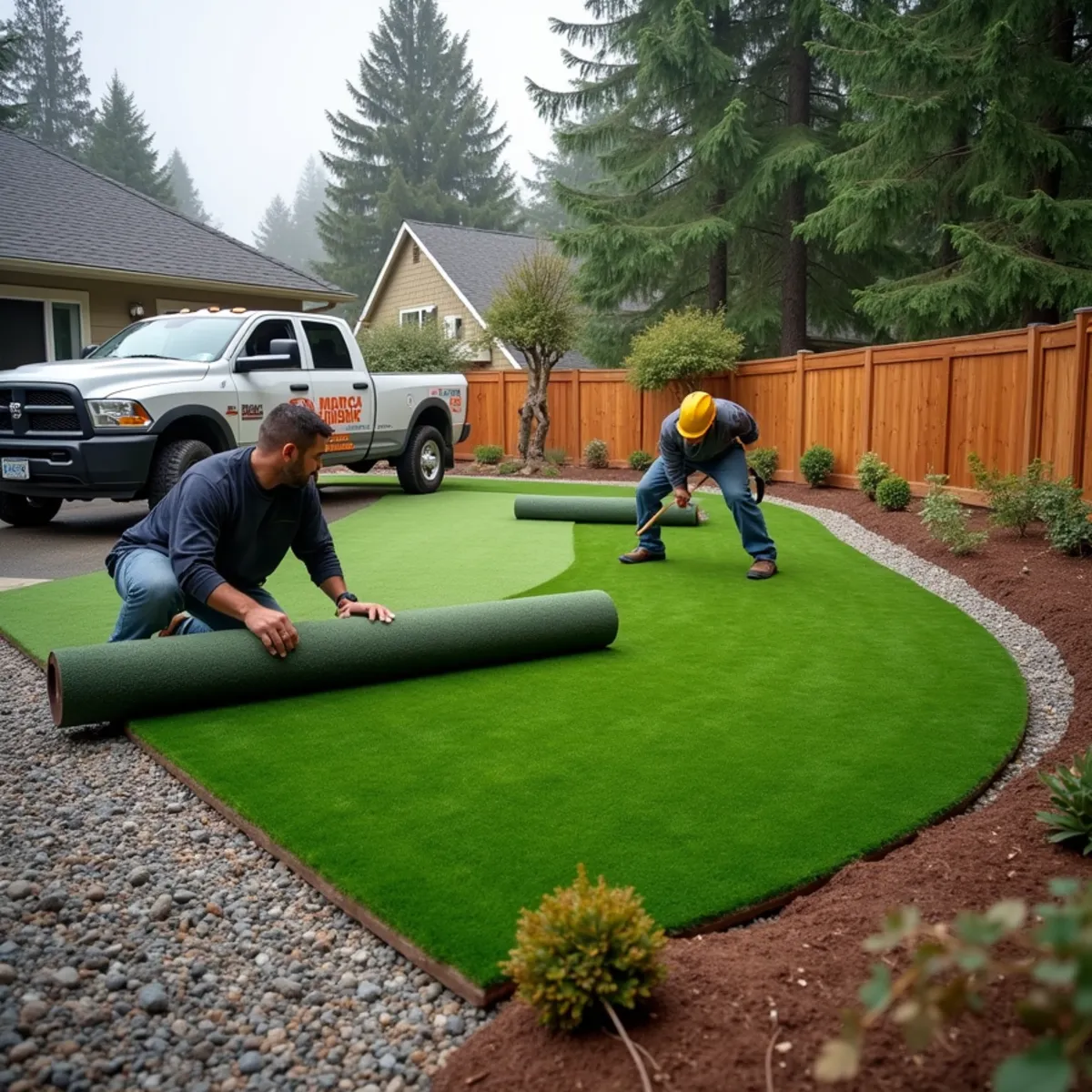
Keeping a natural lawn alive on the Eastside is a losing battle for most homeowners. The same dense glacial till that sheds water in December bakes hard in July, and between those extremes moss creeps in from the shade while European crane fly larvae chew through the roots. You end up reseeding bare patches every spring and dragging a mower across a lawn that is either soggy or scorched. Synthetic turf ends that cycle for good.
We have installed artificial grass across Kirkland, Redmond, Bellevue, and the surrounding Eastside for more than 14 years, and the difference between a good turf job and a bad one is entirely underground. A proper base built for Pacific Northwest rainfall is what keeps the surface firm, level, and draining season after season. That is where we focus, so the green you see on day one still looks that way a decade later.
Need Synthetic Turf Installation in the Seattle area?
Free on-site estimate · 14+ years serving the Eastside
Signs You Need Synthetic Turf Installation
Moss and shade take over
Tall firs and cloudy winters keep large parts of Eastside yards in permanent shade, and that is exactly where moss outcompetes grass. Once moss establishes, natural turf never fully recovers without constant chemical treatment. Synthetic turf removes the host the moss needs.
Crane fly larvae destroy the roots
European crane flies are endemic to western Washington, and their larvae feed on grass roots through the winter and early spring. Homeowners see the damage as spongy, dying patches that pull up like carpet. There is nothing living for them to eat under artificial grass.
Mud season never ends
When the ground is saturated for months, a natural lawn becomes a mud pit that tracks into the house on shoes and paws. Kids and pets stay off it and the yard goes unused. Turf over a free-draining base stays firm and usable in the same conditions.
Endless upkeep with poor results
Mowing, edging, aerating, dethatching, fertilizing, and watering add up to real money and weekends of labor. Despite all of it, the results here are mediocre because the climate fights you. Turf gives you the look without the calendar of chores.
Our Process
- 1
Site evaluation and design
We walk the yard, check grades and drainage, note shade and traffic patterns, and recommend the right pile height and blade shape for how you actually use the space.
- 2
Excavation and grading
We strip the existing sod and soil to the proper depth and shape the subgrade so water moves away from the house and toward planned drainage, not toward your foundation.
- 3
Base construction
We build up an open-graded, 5/8-inch crushed aggregate base in lifts, compacting each layer so the surface is dense, stable, and permeable enough to handle heavy rain.
- 4
Weed barrier and drainage layer
A commercial geotextile barrier goes down to stop growth from below while still letting water pass through, tied into any French drains or catch basins the site needs.
- 5
Turf layout and seaming
We roll out the turf with all blades running the same direction, let it acclimate, then cut and glue seams so joints disappear and edges are locked to the base.
- 6
Infill and final grooming
We spread the specified infill, power-broom the fibers upright, and inspect every seam and perimeter so the finished lawn looks natural and sits firm underfoot.
What's Included
- Full removal of existing sod, soil, or failed turf
- Laser or transit grading for positive drainage
- Compacted open-graded crushed aggregate base
- Commercial-grade geotextile weed barrier
- Premium polyethylene turf with UV-stable fibers
- Glued and nailed seams with hidden joints
- Antimicrobial or standard silica infill options
- Bender board, paver, or steel perimeter edging
- Integration with drains or catch basins as needed
- Final power-brooming and jobsite cleanup
What Affects the Price
Synthetic turf is priced per square foot installed, and the number that matters most is what goes under the grass. A cheap bid almost always means a thin base that settles and puddles within a couple of seasons. We quote the full system so you know the base is built for our rainfall, not just for the estimate.
| Factor | How it affects your quote |
|---|---|
| Square footage | Larger areas lower the per-foot cost as fixed mobilization and setup are spread across more turf. |
| Base and drainage work | Poorly draining glacial till or low spots require deeper excavation and added drain lines, which raises cost. |
| Turf grade selected | Face weight, pile height, and blade technology vary widely, and better turf carries a higher material price. |
| Site access and demolition | Tight backyards, stairs, or heavy old sod removal add labor and haul-off compared with open, easy-access lots. |
| Edging and transitions | Curved beds, paver borders, or tie-ins to patios and walkways add detailing time and materials. |
Every property is different — the only way to get an accurate number is a free on-site estimate. Call (323) 606-0255 to schedule.
What Your Line-Item Estimate Includes
We put everything in writing so you can compare bids on the same scope instead of guessing what a total leaves out. Your itemized SeattleProTurf estimate separates:
- Labor and installation
- Materials and delivery
- Site prep, excavation, and haul-off
- Drainage and engineered base work
- Permits and engineering (when required)
- Restoration, cleanup, and site protection
- Payment milestones tied to real progress
- Workmanship warranty terms
Why Choose SeattleProTurf for Synthetic Turf Installation?
Plenty of contractors can lay turf, stack block, or dig a trench. Building outdoor work that survives Northwest winters takes local knowledge, real engineering, and a crew that is still here to stand behind it. Here is what sets us apart on projects like yours.
14+ years on the Eastside
We have built projects like this across Kirkland and Puget Sound for more than 14 years, so we know exactly how our glacial-till soil and wet winters affect the work.
Licensed, bonded & insured
Registered Washington contractor SEATTPT839LN, with liability and workers' comp coverage — and we handle the engineering and permits when the scope requires them.
Trusted by Eastside homeowners
Homeowners choose us for clean job sites, honest line-item estimates, and installations that hold up season after season.
One accountable local crew
Not a franchise or a lead broker. The same team quotes, builds, and warranties your project — and we are here to stand behind it.
Frequently Asked Questions
It drains extremely well when the base is right. We build an open-graded crushed aggregate base and the turf backing is perforated, so water passes straight through instead of pooling. The trick is grading and base depth, which is why a proper install matters so much here.
Quality turf installed over a stable base typically lasts 15 to 20 years. Our cool climate and lack of intense summer sun are actually easier on the fibers than hotter regions, so UV fade is slow and the surface holds its color for a long time.
Moss needs organic material and constant moisture to root. Because turf sits on clean aggregate and drains freely, it does not give moss the foothold that soil and thatch do. An occasional rinse and brushing keeps it clear in shaded areas.
Yes. We use lead-free, non-toxic turf and can specify antimicrobial infill for homes with dogs. The surface stays firm and even, drains quickly after rain, and does not turn to mud, so it is a cleaner play surface than a natural lawn here.
Quality artificial grass carries a manufacturer warranty of 8 to 15 years against fading and defects, but the realistic service life on the Eastside is 15 to 20 years when it's installed over a properly compacted, free-draining crushed-rock base. The base and the seaming workmanship matter far more than the yarn itself, which is where cut-rate installs fail early. We use a stabilized open-graded sub-base so the turf drains through our persistent wet winters instead of holding water.
Yes. Because we excavate to native soil and build a crushed-rock base rather than working with saturated topsoil, turf installation continues year-round on the Eastside, unlike sod that needs a growing window. The one caveat is that heavy standing water or frozen ground can slow excavation and compaction, so we schedule around the worst of the December rain when possible. Call (323) 606-0255 to check winter availability.