
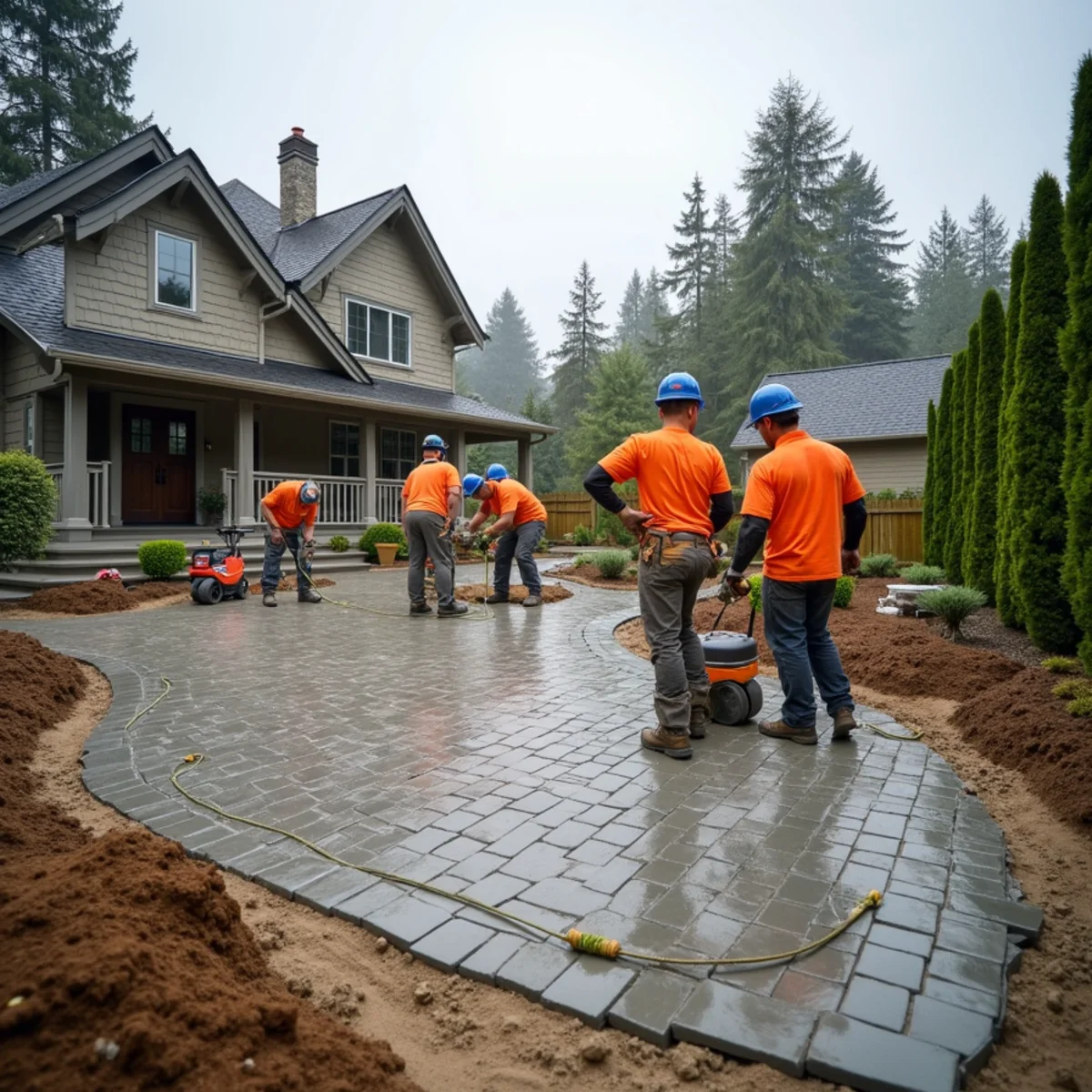
A paver patio should still be flat and tight ten winters from now. Around here, most of the ones that sink, heave, or grow weeds between the joints were never built for the ground they sit on. Eastside soil holds water, freezes at the surface on cold nights, and moves, and a patio set on a thin sand base moves with it. The fix is not fancier stone, it is a base engineered for our conditions.
We build patios, walkways, and driveways the way they are done in wetter climates: a deep, compacted open-graded aggregate base that drains, proper edge restraint that locks the field in place, and polymeric joint sand that resists washout and weeds. Interlocking pavers flex slightly with the ground instead of cracking like a poured slab, and any single stone can be lifted and reset years later. Done right, the result is a surface that looks sharp and holds its line.
Need Paver Patios & Walkways in the Seattle area?
Free on-site estimate · 14+ years serving the Eastside
Signs You Need Paver Patios & Walkways
Sinking and settling pavers
When a base is too shallow or built from the wrong material, rain washes fines out from underneath and the surface dips and rocks. You notice puddles collecting in low spots and stones that wobble underfoot. It almost always traces back to base construction, not the pavers themselves.
Weeds and moss in the joints
Regular sand between pavers washes out and fills with organic debris, and in our climate that means weeds and moss colonize the joints fast. The patio starts to look neglected within a couple of seasons. Polymeric sand and clean base drainage keep the joints tight and clear.
Standing water and slick surfaces
Poor grading traps water on the patio, which stays wet, grows algae, and turns slippery in winter. It also drives runoff toward the house instead of away from it. Correct slope and, where appropriate, permeable pavers solve both the safety and the drainage problem.
Cracked concrete alternatives
Poured and stamped concrete cracks when the ground moves, and once it cracks the whole slab has to be patched or replaced. There is no clean repair. Interlocking pavers move with the soil and let us lift and reset individual stones without a visible scar.
Our Process
- 1
Design and material selection
We plan the layout, size, and pattern with you, choose a paver and color that fits the home, and confirm how the patio ties into existing grades, doors, and drainage.
- 2
Layout and excavation
We stake the shape, then excavate to the depth the base requires, which is deeper here than in dry climates so the finished surface stays supported.
- 3
Base building and compaction
We install open-graded crushed aggregate in compacted lifts, building a base that carries load and lets water drain through rather than pool beneath the stones.
- 4
Bedding and screeding
A precise bedding layer is screeded flat to the planned slope, giving every paver uniform support and shedding water away from the structure.
- 5
Paver setting and cutting
We lay the field in the chosen pattern, saw-cut clean edges and curves, and set border courses that frame the space and anchor the perimeter.
- 6
Edge restraint and joint locking
We install edge restraint, sweep in polymeric sand, and plate-compact and activate the joints so the whole surface interlocks and resists shifting.
What's Included
- Custom patio, walkway, and driveway layouts
- Excavation sized for Northwest base depth
- Compacted open-graded aggregate base
- Permeable paver options for stormwater codes
- Precision screeded bedding layer
- Saw-cut curves, borders, and inlays
- Rigid or spiked edge restraint systems
- Polymeric joint sand for weed resistance
- Positive grading away from foundations
- Steps, seat walls, and paver transitions
What Affects the Price
Paver work is quoted by the square foot, but two patios of the same size can be priced very differently depending on what the site demands. Drainage tie-ins, base depth, cuts, and grade changes all move the number. We spell out the base and edge details in the estimate so you can compare bids on more than a headline price.
| Factor | How it affects your quote |
|---|---|
| Paver style and quality | Premium tumbled, textured, or large-format pavers cost more than standard holland stone, and pattern complexity adds cutting labor. |
| Base and drainage requirements | Wet or unstable soil calls for deeper excavation and added drainage, which is the single biggest driver of cost here. |
| Permeable versus standard system | Permeable pavers used to meet impervious-surface rules use a specialized open-graded base and cost more than a conventional install. |
| Site access and demolition | Removing old concrete, working around tight side yards, or hauling material by hand adds labor to the job. |
| Detailing and features | Curves, borders, steps, seat walls, and lighting sleeves add both material and craftsmanship time. |
Every property is different — the only way to get an accurate number is a free on-site estimate. Call (323) 606-0255 to schedule.
What Your Line-Item Estimate Includes
We put everything in writing so you can compare bids on the same scope instead of guessing what a total leaves out. Your itemized SeattleProTurf estimate separates:
- Labor and installation
- Materials and delivery
- Site prep, excavation, and haul-off
- Drainage and engineered base work
- Permits and engineering (when required)
- Restoration, cleanup, and site protection
- Payment milestones tied to real progress
- Workmanship warranty terms
Why Choose SeattleProTurf for Paver Patios & Walkways?
Plenty of contractors can lay turf, stack block, or dig a trench. Building outdoor work that survives Northwest winters takes local knowledge, real engineering, and a crew that is still here to stand behind it. Here is what sets us apart on projects like yours.
14+ years on the Eastside
We have built projects like this across Kirkland and Puget Sound for more than 14 years, so we know exactly how our glacial-till soil and wet winters affect the work.
Licensed, bonded & insured
Registered Washington contractor SEATTPT839LN, with liability and workers' comp coverage — and we handle the engineering and permits when the scope requires them.
Trusted by Eastside homeowners
Homeowners choose us for clean job sites, honest line-item estimates, and installations that hold up season after season.
One accountable local crew
Not a franchise or a lead broker. The same team quotes, builds, and warranties your project — and we are here to stand behind it.
Frequently Asked Questions
Almost always because the base was too thin or built from the wrong aggregate. Our soil holds water and moves, so fines wash out from under a shallow base and the pavers settle. We build a deeper open-graded base that drains and stays put, which is what prevents the sinking in the first place.
It depends on your jurisdiction and how much hard surface you are adding. Bellevue and King County have impervious-surface limits, and permeable pavers can help you stay under them while managing stormwater on site. We check the rules for your property before recommending a system.
Pavers flex with the ground instead of cracking, and any damaged or stained stone can be lifted and swapped without patching a whole slab. Stamped concrete looks good until it cracks, and in soil that moves like ours, it eventually does.
Not the way they do with plain sand joints. We finish with polymeric sand that hardens to resist washout and weed growth, and because the base drains cleanly, organic debris does not build up in the joints. Occasional sweeping keeps them tight.
Almost every failure traces back to the base, not the pavers. Seattle's glacial-till hardpan sheds water, so a patio built on thin or poorly compacted aggregate traps moisture that freezes, heaves, and settles unevenly. We excavate deep, compact an open-graded 5/8-inch crushed base in lifts, and lock the joints with polymeric sand so the surface stays flat through our freeze-thaw cycles.
For many Kirkland properties they're a smart choice because they let stormwater infiltrate on site rather than running off, which helps with drainage code and reduces pooling during our heavy rains. Permeable systems use a larger open-graded base and clean angular joint stone instead of polymeric sand, so they cost a bit more to build but manage water better on flat lots. We'll advise whether your soil and slope actually benefit from a permeable design.