Paver Patio Cost Breakdown: Kirkland & Eastside Homes
The short answer
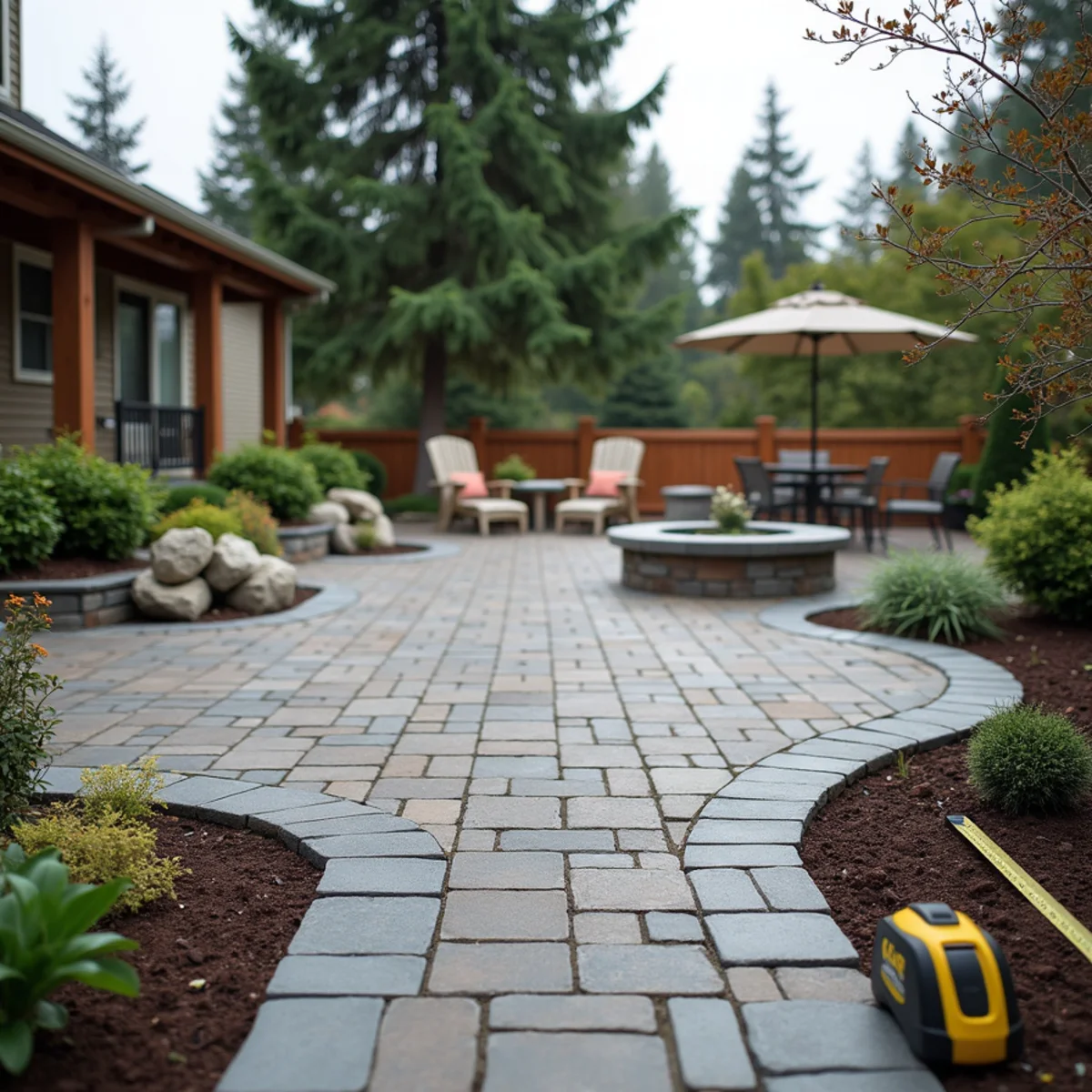
A professionally built paver patio on the Eastside generally falls in the $2,230–$6,450 range for typical residential sizes, with premium projects climbing higher. Cost is driven by square footage, paver type, how deep the base must be excavated into hardpan, grading and drainage, and whether steps, seat walls, or curves are involved.
A paver patio is one of the highest-value hardscape upgrades an Eastside home can make, but the quotes homeowners receive can vary wildly for what looks like the same project. The reason usually has nothing to do with the pavers on top and everything to do with the depth of the base below and the drainage strategy around it. In a region built on glacial till that refuses to absorb water, cutting corners on the sub-base is how a beautiful patio becomes a heaved, puddled disappointment.
This breakdown walks through where the money actually goes on a Kirkland paver project, from material selection to excavation to the finishing details that separate a patio that stays flat for decades from one that shifts after its first wet winter. Understanding the line items lets you read competing bids clearly and spot the low number that is quietly leaving out the work that matters most.
Key takeaways
- Square footage and paver selection set the baseline — premium and permeable pavers cost more than standard concrete units.
- Excavation depth into Eastside hardpan and the volume of open-graded base drive a big share of the price.
- Proper grading and drainage away from the house are essential on soils that don't absorb water.
- Design features like curves, steps, seat walls, and borders add labor and material beyond the base patio.
- Polymeric sand in the joints and a compacted, well-built base are what keep pavers from shifting or weeding over time.
- Typical Eastside patios fall in a broad residential range; complex, feature-rich builds sit at the upper end.
Overview of Paver Patio Investment in Greater Seattle
Paver patios in the greater Seattle area generally fall within a broad range, with many residential projects landing in the neighborhood of $2,230 to $6,450 depending on size, material, and site complexity. Larger or multi-level patios with seat walls, steps, or integrated features climb above that, while a modest, straightforward rectangle sits at the lower end. For perspective, the average Seattle-metro landscaping project runs around $5,476, and a well-built patio commonly anchors a project in that range.
The single biggest driver of the total is square footage, but the second is what your soil forces the crew to do before a single paver is laid. Two patios of identical size can differ by thousands of dollars purely because one lot needed deeper excavation and more imported aggregate to handle drainage on compacted till. That is why an honest patio quote is site-specific rather than a flat per-foot rate pulled from a chart.
Our paver patio and walkway installations are priced as complete assemblies: excavation, base, edge restraint, pavers, and joint stabilization. When you see the full scope written out, the value of a properly engineered patio becomes obvious against a thin, fast install that will telegraph every freeze-thaw cycle within a couple of seasons.
Material Cost Differences: Belgard Pavers, Slate & Granite
The paver itself is where personal taste meets budget. Manufactured concrete pavers from a line like Belgard offer the widest range of colors, textures, and price points, and they are engineered for consistent thickness and interlock, which speeds installation and keeps the surface uniform. They are the practical default for most Eastside patios and sit in the middle of the material cost spectrum.
Natural stone changes both the look and the number. Slate brings a layered, organic surface and a premium price, while granite is among the most durable and most expensive choices, prized for its density and resistance to our wet climate. Natural stone also tends to cost more to install because thickness varies piece to piece, so the crew spends more time setting each unit to a true plane.
The right material depends on how the patio will be used and how it should read against the house. A high-traffic family patio may favor the durability and value of premium concrete pavers, while a refined entertaining space might justify natural stone. We help homeowners weigh appearance against long-term performance so the material fits both the design and the budget.
Color, size, and pattern quietly influence the material budget too. A tumbled or textured paver, a large-format unit, or a multi-piece modular pattern generally costs more than a plain rectangular paver in a simple running bond, both in material and in the labor to lay it. Blends that combine several colors or a permeable joint pattern add another layer of cost. None of this is a reason to avoid the look you want; it is a reason to price the specific paver and pattern rather than assuming a single flat rate covers every option on the showroom board.
Sub-Base Excavation: Why NW Glacial Soil Requires Extra Depth
Here is the line item that quietly explains most price gaps between bids. Because our glacial till sheds surface water instead of soaking it up, a patio base cannot simply sit on scraped native soil. We excavate down to firm ground, remove the wet, unstable material, and rebuild with compacted open-graded crushed aggregate that both supports the pavers and lets water drain through and away rather than getting trapped underfoot.
That extra depth means more excavation labor, more soil hauled off, and more imported rock, all of which cost real money. It is also exactly what prevents the heaving, settling, and pooling that plague patios built on a token base. A bid that comes in dramatically low is often one that plans a shallow base, and on Eastside soil that is a patio with an expiration date.
On lots where water tends to collect, we tie the patio base into a broader drainage plan so storm runoff has somewhere to go. Integrating a patio with proper yard drainage protects both the hardscape and the home behind it, and it is far cheaper to build in from the start than to retrofit after the first failure.
Permeable vs Non-Permeable Paver Costs and City Code Rebates
Permeable pavers are designed with wider joints and a special open-graded base that lets stormwater pass straight through the surface into the ground below, rather than sheeting off into the street or a drain. They cost more up front than standard pavers because the base is deeper and the aggregate is specialized, but they solve a problem that matters a great deal on the Eastside.
Cities like Bellevue enforce impervious-surface and stormwater codes that limit how much hard, water-shedding surface a lot can add. A permeable patio can help a project stay within those limits and, in some jurisdictions, may factor favorably into stormwater requirements or incentives. When a project is close to an impervious-surface threshold, permeable pavers are sometimes the difference between an easy approval and an expensive redesign.
Whether permeable makes sense depends on your lot, your city, and your goals. We evaluate the local stormwater rules alongside the design so the patio is both attractive and compliant, and so any code-driven advantage is captured rather than missed.
Labor, Edging & Polymeric Sand Finishing Variables
Labor is a major component of any patio, and Eastside rates generally run in the range of $60 to $115 per hour for skilled hardscape work. Access drives labor hard: a backyard reachable only through a narrow gate turns machine work into wheelbarrow work and adds hours. Complex patterns, curves, cuts around obstacles, and elevation changes all add skilled time as well.
Edge restraint is a small line item with outsized importance. Without a solid edge holding the field of pavers in place, the perimeter units creep and the whole surface loosens over time. Proper edging is not where to save money, and a quality installer will always include it in the scope.
The final detail is the joint. We finish patios with polymeric sand, which is swept into the joints and then activated so it hardens, locking pavers together while resisting weeds and washout. In our rainy climate that stabilized joint is essential; plain sand simply erodes out. This finishing step is one more place where a corner-cutting bid saves a little now and costs a lot later.
Requesting a Detailed Design Quote
Because so much of a patio's cost hides in the base and the site conditions, a meaningful quote requires an on-site look. We measure the space, assess the soil and drainage, and talk through material, pattern, and any features like a seat wall or a connection to a retaining wall or fire feature. From there you get a written scope that shows the base depth and finishing details, not just a lump sum.
That transparency is the point. When your quote spells out the excavation, aggregate, edging, and joint treatment, you can compare it honestly against any other bid and see exactly what a lower number might be leaving out. As a licensed, bonded, and insured contractor with over fourteen years on Eastside hardscapes, we would rather earn the job by showing our work than by hiding it.
A patio also rarely lives in isolation, and thinking about the whole yard at quote time can save money. If the same project could include a seat wall, a fire feature, a walkway connecting to the driveway, or a retaining wall to level a sloped yard, planning them together often costs less than adding them piecemeal later, because the crew, the excavation, and the base work overlap. We are happy to scope a patio on its own or as part of a larger outdoor plan, whichever fits your goals and budget, and to phase the work if you would rather build it in stages.
The base is the patio: what 14 years of Eastside jobs taught us
A paver patio in Kirkland lives or dies on what's underneath it, and our soils make that harder than the marketing photos suggest. Set pavers on Seattle hardpan without an open-graded base and proper compaction, and the first wet winter will heave and settle them into a washboard. We build with a compacted open-graded 5/8-inch crushed base, geotextile fabric over the subgrade, and polymeric sand in the joints. That system costs more than a quick sand-set job, and it is the reason our patios still sit flat years later.
The number that surprises people is edge restraint and drainage. Water has to go somewhere, and on a flat Eastside lot it wants to pool against the house. We pitch every patio away from the foundation and often tie in a channel drain when the grade fights us. Skipping that is how a beautiful patio turns into a swamp and a callback.
Material choice swings the budget more than size does. A tumbled concrete paver is a fraction of the cost of natural stone or a large-format porcelain, and the labor to set irregular flagstone is higher still. We help homeowners land on a paver that matches both the house and the realistic budget rather than the Pinterest board.
Pro tips from our crew
- Insist on an open-graded crushed base and geotextile fabric; sand-set patios fail fast on our clay subsoils.
- Confirm the patio pitches away from the house at roughly a quarter-inch per foot before anyone lays a paver.
- Polymeric sand in the joints resists moss and weeds far better than plain sand in our wet climate.
- Large-format pavers need a flatter, more precise base, which raises labor; factor that into the material decision.
- If your patio sits below a downspout, plan the drainage before the design, not after.
Frequently Asked Questions
Most of the gap is in the base, not the pavers. Our glacial till requires deeper excavation and more open-graded aggregate to drain properly, and a low bid often plans a shallow base that will heave or settle. Always compare the excavation and base depth line by line, not just the total.
Often yes, especially where a city like Bellevue enforces impervious-surface and stormwater limits. Permeable pavers let rain pass through into the ground, which can keep a project compliant and reduce runoff. On lots near an impervious-surface threshold, they can be the deciding factor for approval.
Polymeric sand is swept into paver joints and then activated so it hardens, locking the pavers together while resisting weeds and washout. In our rainy climate plain joint sand erodes out over time, so the polymeric version is what keeps the surface tight and stable for the long term.
With a correctly excavated and compacted base, solid edge restraint, and stabilized joints, a paver patio can perform for decades. The finished surface is repairable too, since individual pavers can be lifted and reset, which is a real advantage over a poured slab that cracks.
Any hard surface in our climate can grow moss on the shaded north side, but pavers with polymeric-sand joints and a slight pitch drain and dry faster than poured concrete. An annual rinse and the occasional joint refresh keeps them safe. We can recommend paver textures that hold traction when wet.
Sometimes, if the slab is sound, properly pitched, and drains well, we can overlay it. If the slab is cracked or holds water, an overlay just inherits those problems, and removal is the better long-term call. We assess the slab's condition during the estimate and give you a straight answer. Call (323) 606-0255 to set that up.
A paver patio's real cost lives in the parts you will never see once the project is done: the depth of the excavation, the quality of the crushed aggregate base, and the drainage strategy that keeps our glacial soil from working against the surface above. Judge patio bids by that hidden engineering, and the difference between a durable investment and a short-lived one becomes clear.
If you are planning a patio in Kirkland, Woodinville, Sammamish, or anywhere on the Eastside, we will walk the space, assess your soil and drainage, and give you an itemized, written quote at no cost. Call Seattle Pro Turf at (323) 606-0255 for a free design consultation and estimate.
Ready to move from reading to results? Our paver patios & walkways and retaining wall construction crews handle projects like this across the Eastside — including Kirkland and Woodinville. Call (323) 606-0255 for a free estimate.
Get expert help on your project
SeattleProTurf · 14+ years serving the Eastside · Licensed & insured