
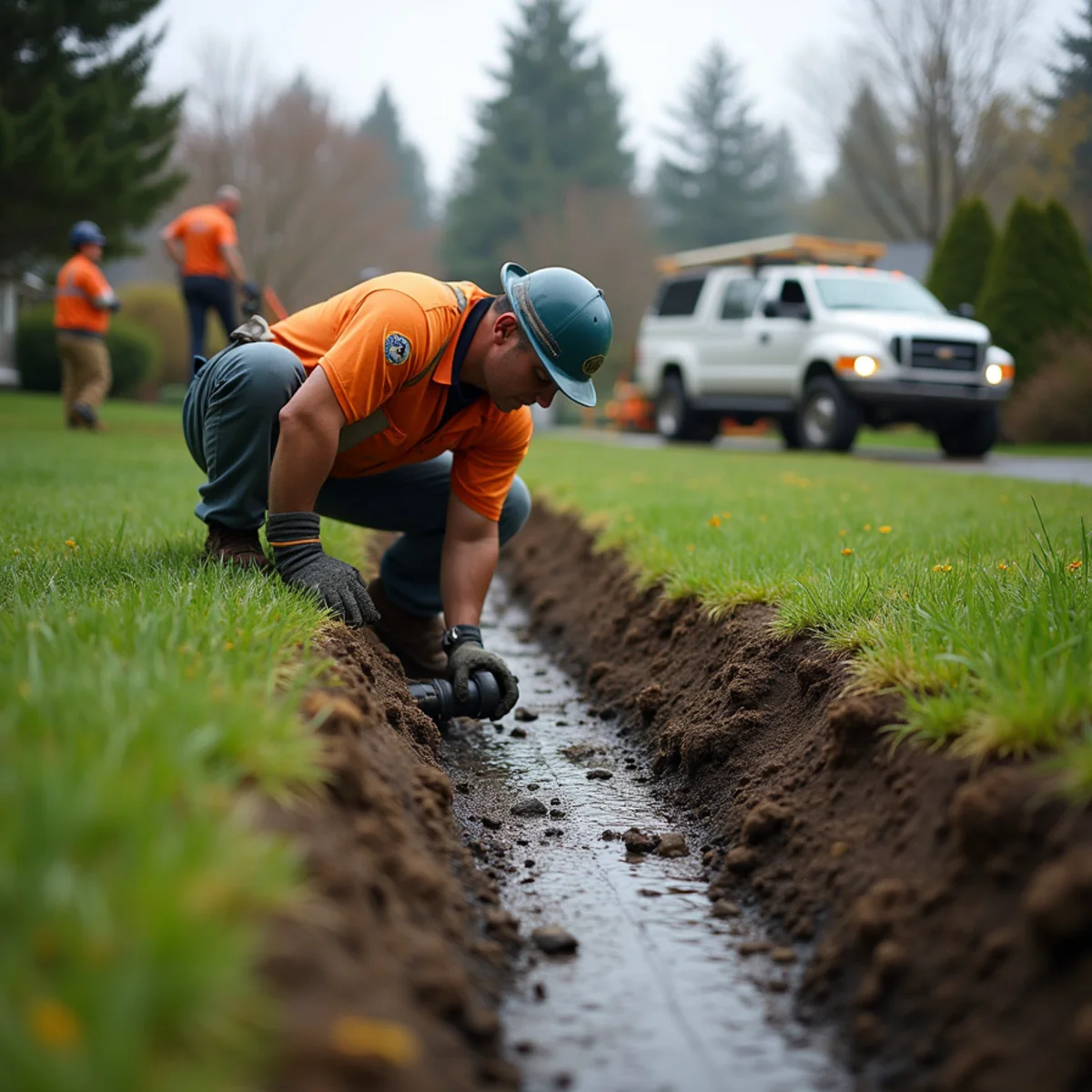
Standing water in an Eastside yard is not bad luck, it is soil doing exactly what it does. The glacial till under most of Kirkland is dense and nearly watertight, so when December drops five inches of rain, that water cannot soak in. It sits on the surface, runs toward the low point, and often that low point is against your house. A drainage system gives the water somewhere better to go.
We design and install French drains, catch basins, channel drains, and downspout tie-ins as a system, mapping where water enters your property and building a continuous path to carry it out. The goal is not one trench in one wet spot, it is intercepting and routing water before it ponds, floods, or pushes against your foundation. On hardpan soil the details, slope, pipe sizing, clean gravel, and a real outlet, are what make the difference between a drain that works and one that clogs in a year.
Need French Drains & Yard Drainage in the Seattle area?
Free on-site estimate · 14+ years serving the Eastside
Signs You Need French Drains & Yard Drainage
Water cannot soak into hardpan
Seattle-area glacial till sheds surface water almost like pavement, so rain has nowhere to infiltrate. It collects on top of the soil and travels downhill until something stops it. Effective drainage has to move that water off site, not try to soak it away.
Runoff attacking the foundation
When grade slopes toward the house or a yard drains to the foundation, water pools against the walls and finds its way into crawlspaces and basements. Over time it undermines footings and breeds mold. Intercepting and redirecting that water protects the structure.
Chronically soggy, unusable lawn
A yard that stays saturated for months kills grass, breeds moss, and turns to mud that nothing can use. Kids, pets, and gardens all lose the space. A French drain network lowers the water table in the root zone and gives the lawn a chance to firm up.
Overwhelmed or disconnected downspouts
Roof downspouts dumping at the foundation add hundreds of gallons in a single storm right where you least want it. Splash blocks do not move water far enough. Tying downspouts into a piped drainage system carries roof water out to a proper discharge point.
Our Process
- 1
Water mapping and assessment
We study how water enters and travels across your property during rain, locate the low points and problem areas, and identify a viable discharge point for the system.
- 2
System design
We design the drain layout, pipe sizing, and slope, combining French drains, catch basins, and downspout tie-ins into one continuous path with adequate fall.
- 3
Trenching to grade
We excavate trenches at a consistent slope toward the outlet, because a drain that does not run downhill the whole way will silt up and stop working.
- 4
Pipe, fabric, and gravel
We line trenches with filter fabric, bed perforated pipe in clean drain rock, and wrap the aggregate so soil fines cannot migrate in and clog the system.
- 5
Catch basins and inlets
We set catch basins at surface low spots and connect downspouts and channel drains so water is captured where it collects and fed into the main line.
- 6
Outlet and restoration
We build a proper daylight or dispersion outlet, backfill and compact, and restore the surface with turf, gravel, or planting so the yard looks finished.
What's Included
- Property-wide drainage assessment and design
- Perforated French drains in clean drain rock
- Non-woven filter fabric to prevent silting
- Catch basins at surface collection points
- Downspout collection and piped tie-ins
- Channel and trench drains for patios and drives
- Sloped conveyance piping to a real outlet
- Daylight, dry well, or dispersion discharge
- Foundation and crawlspace water diversion
- Surface restoration with turf or planting
What Affects the Price
Drainage is priced by the system, driven mostly by linear footage of pipe, the number of catch basins, and how far water must travel to a legal outlet. Hardpan soil is slow to dig, and finding a viable discharge point can shape the whole design. We assess the full water path first so the quote solves the problem instead of just one wet corner.
| Factor | How it affects your quote |
|---|---|
| Linear footage and layout | The total length of drain trench and pipe is the main cost driver, and complex yards need more runs to capture all the water. |
| Number of inlets and basins | Each catch basin, downspout tie-in, and channel drain adds fittings and labor to build the collection network. |
| Discharge point distance | How far and how much fall exists to a legal outlet affects trenching, and a dry well or dispersion system adds cost where daylighting is not possible. |
| Soil and digging conditions | Dense glacial till, roots, and buried obstacles slow excavation compared with loose soil, adding equipment and labor time. |
| Surface restoration | Restoring lawn, patio, or planting beds over the trenches adds material and finishing labor to leave the yard whole. |
Every property is different — the only way to get an accurate number is a free on-site estimate. Call (323) 606-0255 to schedule.
What Your Line-Item Estimate Includes
We put everything in writing so you can compare bids on the same scope instead of guessing what a total leaves out. Your itemized SeattleProTurf estimate separates:
- Labor and installation
- Materials and delivery
- Site prep, excavation, and haul-off
- Drainage and engineered base work
- Permits and engineering (when required)
- Restoration, cleanup, and site protection
- Payment milestones tied to real progress
- Workmanship warranty terms
Why Choose SeattleProTurf for French Drains & Yard Drainage?
Plenty of contractors can lay turf, stack block, or dig a trench. Building outdoor work that survives Northwest winters takes local knowledge, real engineering, and a crew that is still here to stand behind it. Here is what sets us apart on projects like yours.
14+ years on the Eastside
We have built projects like this across Kirkland and Puget Sound for more than 14 years, so we know exactly how our glacial-till soil and wet winters affect the work.
Licensed, bonded & insured
Registered Washington contractor SEATTPT839LN, with liability and workers' comp coverage — and we handle the engineering and permits when the scope requires them.
Trusted by Eastside homeowners
Homeowners choose us for clean job sites, honest line-item estimates, and installations that hold up season after season.
One accountable local crew
Not a franchise or a lead broker. The same team quotes, builds, and warranties your project — and we are here to stand behind it.
Frequently Asked Questions
Most Eastside yards sit on dense glacial till that water cannot penetrate, so winter rain has nowhere to go but across the surface. It collects in the low areas and stays for months. The solution is to intercept that surface and shallow subsurface water and pipe it to an outlet, which is what a drainage system does.
Every system needs a legal discharge point, which might be a daylight outlet on a slope, a curb or storm connection where allowed, a dry well, or a dispersion trench. Finding and building the right outlet is part of our design, and local rules vary, so we confirm what your property allows.
Yes. By intercepting water before it reaches the house and directing downspouts into a piped system, we keep water from pooling against the foundation and finding its way into crawlspaces. Grading away from the structure combined with drainage is the most reliable way to keep the base of the house dry.
The two usual causes are no filter fabric, so soil fines clog the gravel and pipe, and insufficient slope, so water and sediment sit in the line. We wrap the aggregate in non-woven fabric and trench to a consistent fall, which is what keeps the system flowing for the long term.
A french drain excels at intercepting subsurface water and relieving a soggy, spongy lawn, but surface pooling from downspouts or a hardscape often calls for a catch basin and solid pipe instead, and hillside seepage may need a curtain drain. On the Eastside's glacial hardpan, water frequently perches on top of the clay layer, so the right fix depends on where the water actually sits. We diagnose the source before recommending a system so you're not paying for the wrong solution.
A well-built french drain wrapped in filter fabric with clean open-graded stone can last 20 to 30 years, but performance depends on keeping silt and roots out of the pipe. We recommend flushing the line and checking outlets every few years, especially where crane fly larvae and moss signal chronically wet soil. Systems that skip the filter fabric clog with fine hardpan silt within a season or two.