Dealing with Seattle Hardpan: How Alder Clay Destroys Drainage
The short answer
Seattle hardpan — dense glacial till, often with alder clay — is nearly impermeable, so water sits on top or runs sideways instead of soaking in, causing sogginess, pooling, and failed plantings. Solutions work with it rather than against it: French drains, catch basins, open-graded base under hardscape, and raised or amended planting beds.
Homeowners across the Eastside describe the same maddening problem: water that will not drain. It sits on the lawn, turns beds to muck, and lingers long after the rain stops, and no amount of surface effort seems to fix it. The culprit is almost always the ground itself, the dense glacial subsoil known locally as Seattle hardpan, and understanding how it behaves is the key to actually solving the drainage problems it causes.
This guide explains what hardpan is, why it defeats surface water and shallow drainage attempts, and how properly engineered drainage cuts through it to give water a real path away. If your yard in Kirkland, Sammamish, Lynnwood, or anywhere the ground stays soggy has resisted every fix you have tried, the reason is likely beneath your feet, and so is the solution.
Key takeaways
- Seattle hardpan is dense glacial till — often laced with alder clay — that is nearly impermeable to water.
- Instead of soaking in, water sits on the surface or runs sideways, causing sogginess, pooling, and drowned plantings.
- You can't easily make hardpan drain, so effective solutions route water around it rather than through it.
- French drains and catch basins collect and carry water to a proper outlet away from the house.
- Under hardscape, an open-graded crushed-rock base gives water somewhere to go and prevents heaving.
- For planting, raised beds and amended soil lift roots above the saturated layer where plants otherwise fail.
What Is Glacial Till (Seattle Hardpan) and Where Is It Found
Seattle hardpan is glacial till: a dense, compacted mix of clay, silt, sand, and stone that was pressed down under the weight of massive ice sheets during the last glaciation. That immense pressure compacted the material into a hard, nearly impermeable layer, and it underlies much of the Puget Sound region, often just a foot or two beneath the topsoil. It is one of the defining features of building and gardening here.
Because it was compacted by glaciers rather than by normal soil processes, hardpan is far denser than the loose topsoil above it, and water treats the boundary between them almost like a floor. Homeowners often encounter it as the point where a shovel suddenly refuses to dig, hitting a hard, gray, cement-like layer. That layer is exactly what your drainage water is hitting too.
Where hardpan sits close to the surface, its effects on drainage are pronounced, and much of the Eastside falls into that category. Knowing that this layer is present and how it behaves is the starting point for any drainage solution that will actually work, because a fix that ignores the hardpan is a fix that ignores the real problem.
Why Surface Water Bounces Off Compacted Clay Subsoils
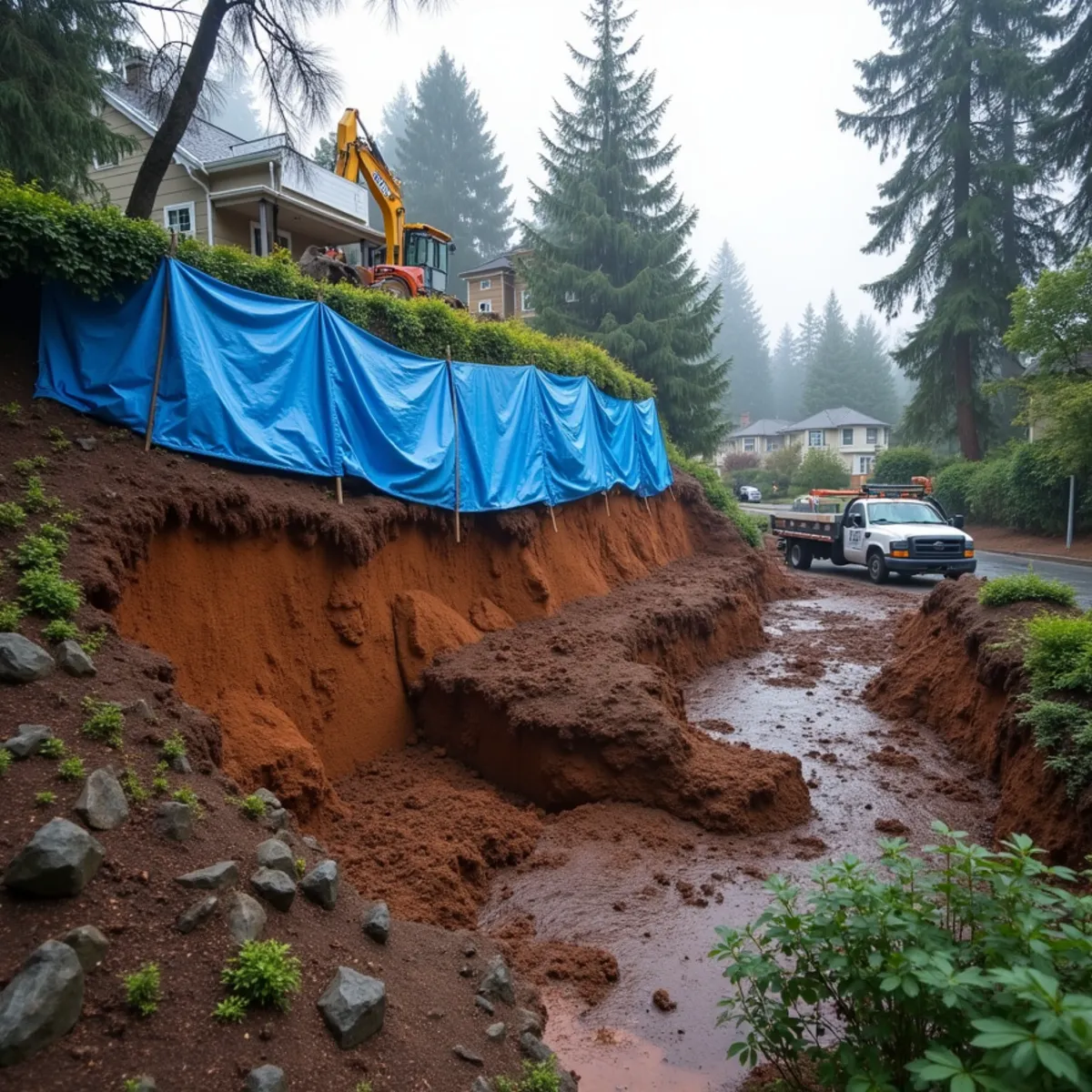
The defining trait of hardpan is that it sheds surface water rather than absorbing it. Where healthy soil lets rain percolate down and away, compacted glacial clay is so dense that water barely penetrates it. Rain soaks through the thin topsoil, reaches the hardpan, and then stops, spreading sideways and pooling because it cannot continue downward.
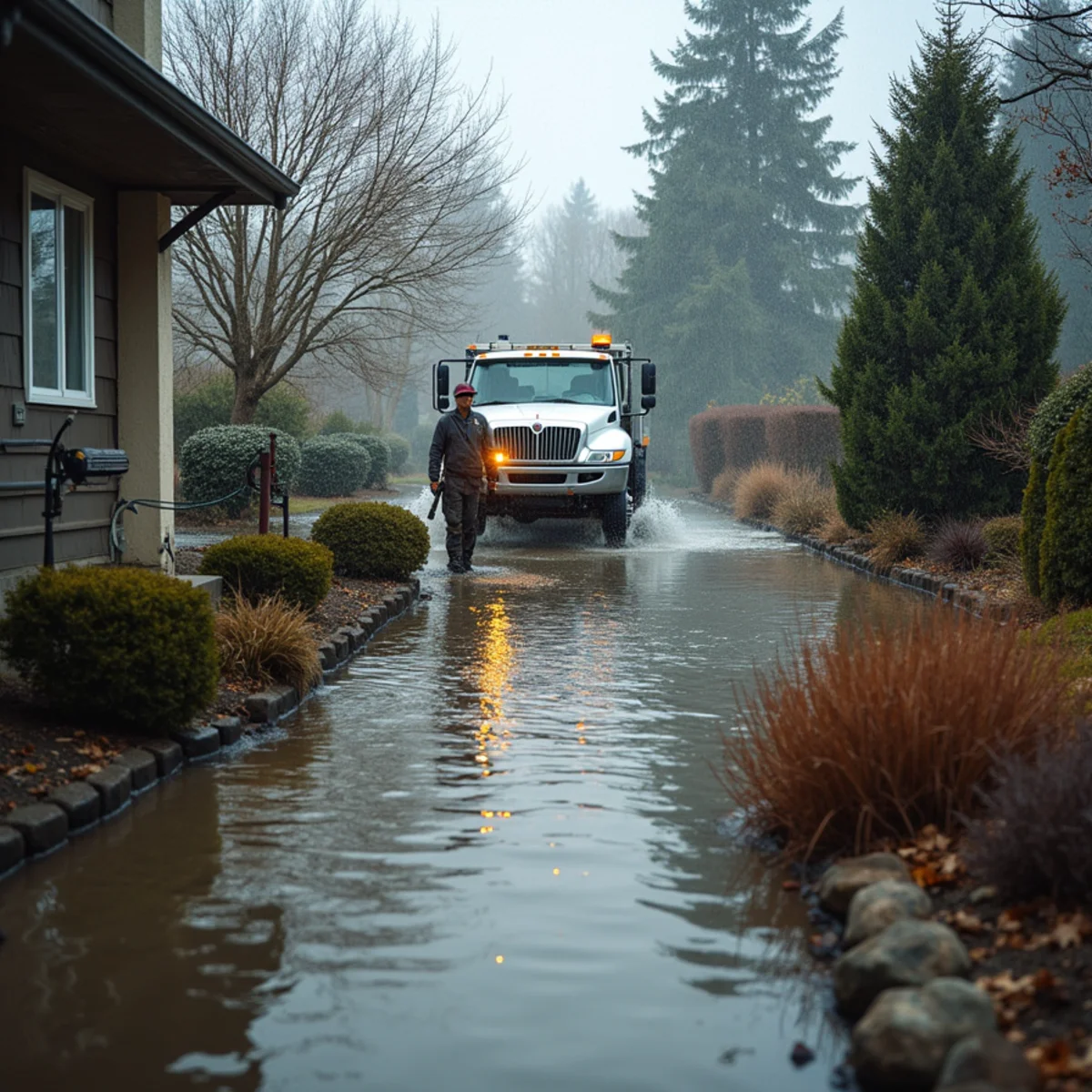
This is why yards over hardpan stay wet long after the rain ends and why puddles form in the same spots every winter. The water is effectively trapped in the shallow topsoil layer, sitting on the impermeable till below with nowhere to go. During a wet season that keeps delivering rain, that trapped water simply accumulates, saturating the root zone and turning the surface to mud.
It also explains why the water often ends up where you least want it. Unable to drain down, surface and near-surface water flows along the top of the hardpan by gravity, collecting at low points, which are frequently against foundations, patios, or the base of slopes. The hardpan does not just slow drainage; it actively channels water to the low ground.
The Failure of Shallow Trenches in Glacial Till Ground
Faced with a soggy yard, many homeowners and inexperienced crews dig a shallow drain trench and expect relief. On hardpan, this usually disappoints, because a shallow trench sitting in or just above the impermeable layer has the same problem as the yard: the water it collects still has nowhere to go. A drain that cannot discharge is just a place for water to sit.
Shallow drainage attempts also tend to clog and silt up, and they never reach deep enough to intercept water effectively or to connect to a real outlet. The trench fills, the water backs up, and the yard stays wet, confirming the homeowner's suspicion that nothing works, when the real issue is that the drainage was never engineered for the ground it was placed in.
The lesson is that surface-level thinking fails on hardpan. Effective drainage here is not about scratching a channel in the topsoil, it is about engineering a system that reaches the right depth, moves water with the right slope, and ends at a genuine outlet. That is a fundamentally different undertaking from a weekend trench.
Engineering French Drains That Cut Deep into the Hardpan
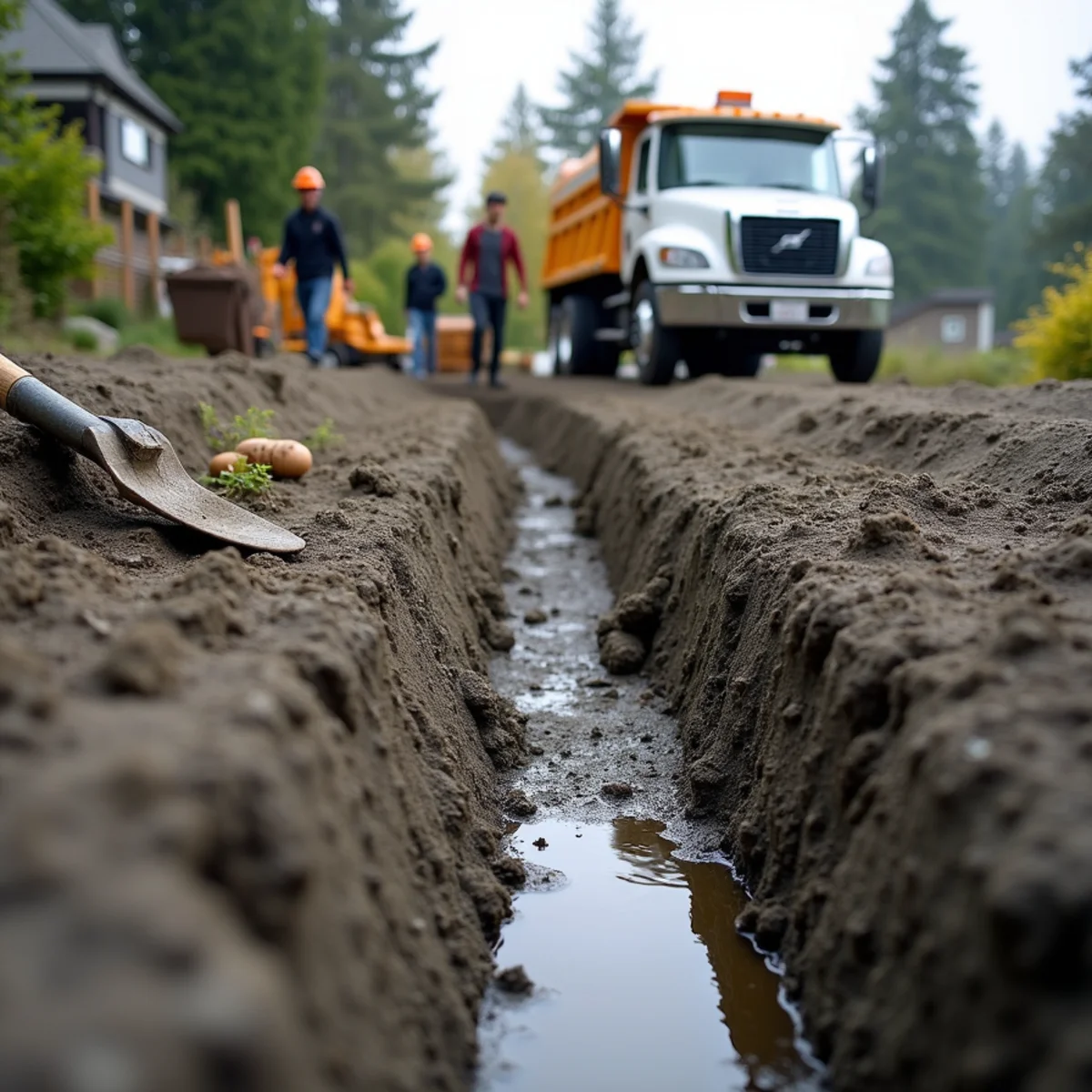
The workhorse solution for hardpan is a properly engineered French drain: a trench cut to sufficient depth, lined with filter fabric, filled with clean open-graded aggregate, and carrying a perforated pipe laid to a deliberate slope so water flows toward an outlet by gravity. Cutting deep enough and building the drain correctly is what lets it intercept and carry water that the hardpan will not absorb.
Depth and slope are everything on this soil. The drain has to sit where it can capture the water traveling along the top of the hardpan, and it must fall consistently toward its discharge point so that collected water keeps moving instead of stalling. The clean aggregate and filter fabric keep the system draining freely over the long term rather than silting shut like a shallow trench.
This is the core of our French drain and yard drainage work: drains engineered for the specific reality of glacial till, not generic trenches. Built to the right depth and grade and tied to a real outlet, a French drain gives water the escape route the ground itself denies, and it is the difference between a yard that finally drains and one that stays a swamp.
Dry Wells, Gravity Outfalls & City Storm Sewer Connections
A drain is only as good as where it ends, and on hardpan the outlet takes real planning because the ground will not simply soak the water up. One option is a gravity outfall, discharging the collected water to a lower point on or off the property where it can safely disperse, using the natural slope to keep everything moving without pumps.
A dry well, a buried, gravel-filled chamber, can provide storage and slow dispersal where a gravity outfall is not available, giving water a place to collect and gradually release. In the right settings, drainage can be connected to a municipal storm sewer, though this must follow local codes and jurisdictional requirements, which vary across the Eastside cities and King County. Choosing the right outlet is as important as the drain itself.
Getting the discharge right also matters for compliance and for your neighbors, since water cannot simply be dumped onto adjacent property. We evaluate the lot's slope, the available outlets, and the applicable rules to design a termination that is effective, legal, and durable. A well-chosen outfall is what turns a collection system into a true solution.
Professional Drainage Excavation by SeattleProTurf
Solving a hardpan drainage problem takes the right diagnosis, the right depth, and the right outlet, and that is difficult to achieve without experience and equipment suited to digging through dense glacial till. We assess where the water is coming from and going, determine how the hardpan sits on your lot, and engineer a drainage system, French drains, outfalls, dry wells, or storm connections, matched to your specific conditions.
As a licensed, bonded, and insured contractor under Washington license SEATTPT839LN with over fourteen years excavating and draining Eastside hardpan, we build drainage that works on this soil because we build for this soil. Our drainage expertise also protects the paver patios, walkways, and other hardscape we install, since sound water management keeps the whole landscape stable. Serving Kirkland, Sammamish, Lynnwood, and beyond, we can finally get the water off your yard.
What Seattle hardpan actually does to water under your yard
Dig down a foot or two almost anywhere on the Eastside and you hit it: a dense, gray-to-tan glacial till locals call hardpan, sometimes layered with sticky alder clay. It was compacted under a mile of ice, and it behaves less like soil and more like a lid. Water moving down through your topsoil reaches that lid and stops. In summer you'd never know. In a wet Puget Sound winter, the thin permeable layer above it fills up, and everything you plant is effectively sitting in a shallow bathtub.
This is why so many drainage fixes here disappoint. A shallow flowerbed amendment or a token layer of gravel doesn't reach or defeat the hardpan; the water just perches on top of it and moves sideways to the lowest point. Real solutions work with that reality: they either give the perched water a fast horizontal path out via a French drain, or they build a genuinely open-graded base that lets water spread and drain to a daylighted outlet rather than pooling.
The clay makes it worse because it swells when wet and shrinks when dry, so patios and walls set on it heave over the seasons. Recognizing hardpan and clay on the first dig changes everything about how we build; anyone who ignores it is designing tomorrow's callback.
Pro tips from our crew
- Dig a test hole, fill it with water, and time how long it takes to drop; slow or no drop confirms hardpan below.
- Amending only the top few inches doesn't reach hardpan; water still perches and moves sideways.
- French drains here should intercept and route perched water horizontally to a daylighted outlet, not just sit as a dry well.
- Never set patios or walls directly on alder clay; its seasonal swelling heaves hardscape over time.
- Plan drainage to a real low-point outlet; on flat lots that sometimes means a sump and pump, not gravity alone.
Frequently Asked Questions
It is glacial till, a dense, compacted layer of clay, silt, sand, and stone pressed down under glacial ice into a nearly impermeable, cement-like mass. It underlies much of the Puget Sound region, often just a foot or two below the topsoil, and it sheds surface water rather than absorbing it, which is the root of many local drainage problems.
Because water soaks through the thin topsoil, hits the impermeable hardpan, and stops. Unable to drain downward, it sits in the shallow soil layer and pools, and during a wet season it keeps accumulating. The fix is engineered drainage that intercepts that trapped water and carries it to a real outlet.
A shallow trench in or above the hardpan collects water but has nowhere to discharge it, so the water just sits and the trench silts up. Effective drainage on this soil requires reaching the right depth, building the drain with clean aggregate and a perforated pipe on a deliberate slope, and ending at a genuine outlet.
To a real outlet, since the ground will not absorb it. Options include a gravity outfall to a safe lower point, a dry well for storage and slow dispersal, or, where codes allow, a connection to a municipal storm sewer. Choosing and building the right outlet is as important as the drain itself, and it must comply with local rules.
Rarely a good idea. The hardpan can be several feet thick, and punching through it is expensive and often just reaches more of the same or unstable material; it won't reliably create downward drainage. The proven approach here is to move perched water sideways to a lower outlet rather than trying to force it down. We assess the layer depth before recommending a strategy.
Because the gravel sits above the hardpan too, so it fills with the same perched water that has nowhere to go. Gravel only helps if it connects to a drain that carries water off-site or downhill. Without that outlet, you've built a rock-filled bathtub. Call (323) 606-0255 and we'll map where your water actually needs to exit.
Seattle hardpan is the hidden reason so many Eastside yards refuse to drain: a dense glacial layer that sheds water sideways and traps it in the topsoil above. Surface fixes and shallow trenches fail against it because they never reach the depth or the outlet the water needs, which is why real solutions are engineered, French drains cut to the right depth and grade, ending at a proper gravity outfall, dry well, or storm connection.
If your yard stays soggy no matter what you try, the problem is likely the ground beneath it, and it is solvable with the right drainage. Call Seattle Pro Turf at (323) 606-0255 for a free drainage inspection, and we will diagnose how the hardpan is holding water on your property and design a system that finally moves it away.
Ready to move from reading to results? Our french drains & yard drainage and paver patios & walkways crews handle projects like this across the Eastside — including Kirkland and Sammamish. Call (323) 606-0255 for a free estimate.
Get expert help on your project
SeattleProTurf · 14+ years serving the Eastside · Licensed & insured