Hillside Mudslide Emergency: What to Do When Slopes Begin Moving
The short answer
If a slope starts moving, get people away from the path of failure first, then reduce the load and water: divert roof and surface runoff off the slope, cover bare soil, and avoid piling weight at the top. Call a licensed contractor and, for steep or critical-area slopes in King County, a geotechnical engineer immediately.
A moving slope is one of the few landscape emergencies that can threaten a home and the people in it within hours. When saturated ground on a hillside begins to slide, the warning signs can be subtle at first and then accelerate quickly, and knowing how to read them can matter enormously. Our region's geology and climate combine to make slope movement a real and recurring hazard, especially in the depths of a wet winter.
This guide covers the essentials: which ground is prone to sliding, the indicators that mean get out now, the interim measures that can slow surface runoff and buy time, and the engineered stabilization that actually holds a slope in place. If a hillside on or near your property in Shoreline, Edmonds, Mukilteo, or elsewhere in the region has started to move, understanding these steps helps you act safely and fast.
Key takeaways
- Safety first: get people and vehicles out of the potential slide path before doing anything else.
- Water is the trigger — divert roof runoff and surface water away from the slope to reduce saturation.
- Don't add load at the top of the slope or undercut the toe; both make movement worse.
- Cover exposed soil to slow erosion while you arrange a permanent fix.
- Steep slopes and King County Critical Area Ordinance zones require a geotechnical engineer, not just a landscaper.
- Permanent stabilization may involve engineered retaining structures, regrading, subsurface drainage, and deep-rooted plantings.
Understanding Seattle & Eastside Landslide-Prone Geologic Zones
The Puget Sound's landslide risk is written into its geology. Much of the region sits on layers left by glaciers, and a common dangerous arrangement is permeable soil sitting on top of a denser, less permeable layer like glacial till or clay. Rain soaks down through the upper soil until it hits that impermeable layer, then collects and moves along it, and that saturated boundary is where slides love to release. This is why our hardpan, which sheds water, is not just a drainage nuisance but a slope-stability factor.
Steep slopes, bluffs, and areas near water are especially prone, and King County recognizes many of these as sensitive through its Critical Area Ordinances, which regulate work in landslide-hazard and steep-slope zones. If your property is on or below a steep slope, or near a bluff, it is worth knowing that you may be in a mapped hazard area with specific rules and real risk.
Winter is prime slide season because the ground reaches full saturation. After weeks of rain, the soil is heavy and the water table within the slope is high, and it takes less to trigger movement than it would in a dry month. The combination of vulnerable geology and a saturating climate is exactly why slope emergencies cluster in the wettest part of the year.
Immediate Evacuation Indicators: Cracking Pavement & Leaning Trees
Some signs of slope movement mean the situation may be imminently dangerous, and personal safety comes before any property concern. New cracks appearing in the ground, pavement, driveways, or foundations, especially cracks that are widening, indicate the ground is shifting. Trees, fences, power poles, or retaining walls that have started to tilt or lean signal that the soil holding them is on the move.
Other urgent indicators include doors or windows that suddenly jam as a structure racks, the sound of cracking, groaning, or moving earth, water breaking out of the ground in new places on a slope, and a visible bulge or displaced soil at the bottom of a slope. A rapid change in a creek or drainage from clear to muddy can also precede or accompany a slide upstream.
If you see these signs and suspect a slide may be imminent, leave the area and get to safe ground, and contact emergency services if there is any threat to life. No property is worth being on a slope when it lets go. Once people are safe, the focus can shift to slowing the movement and getting professional stabilization underway.
Emergency Tarping and Surface Runoff Diversion Protocols
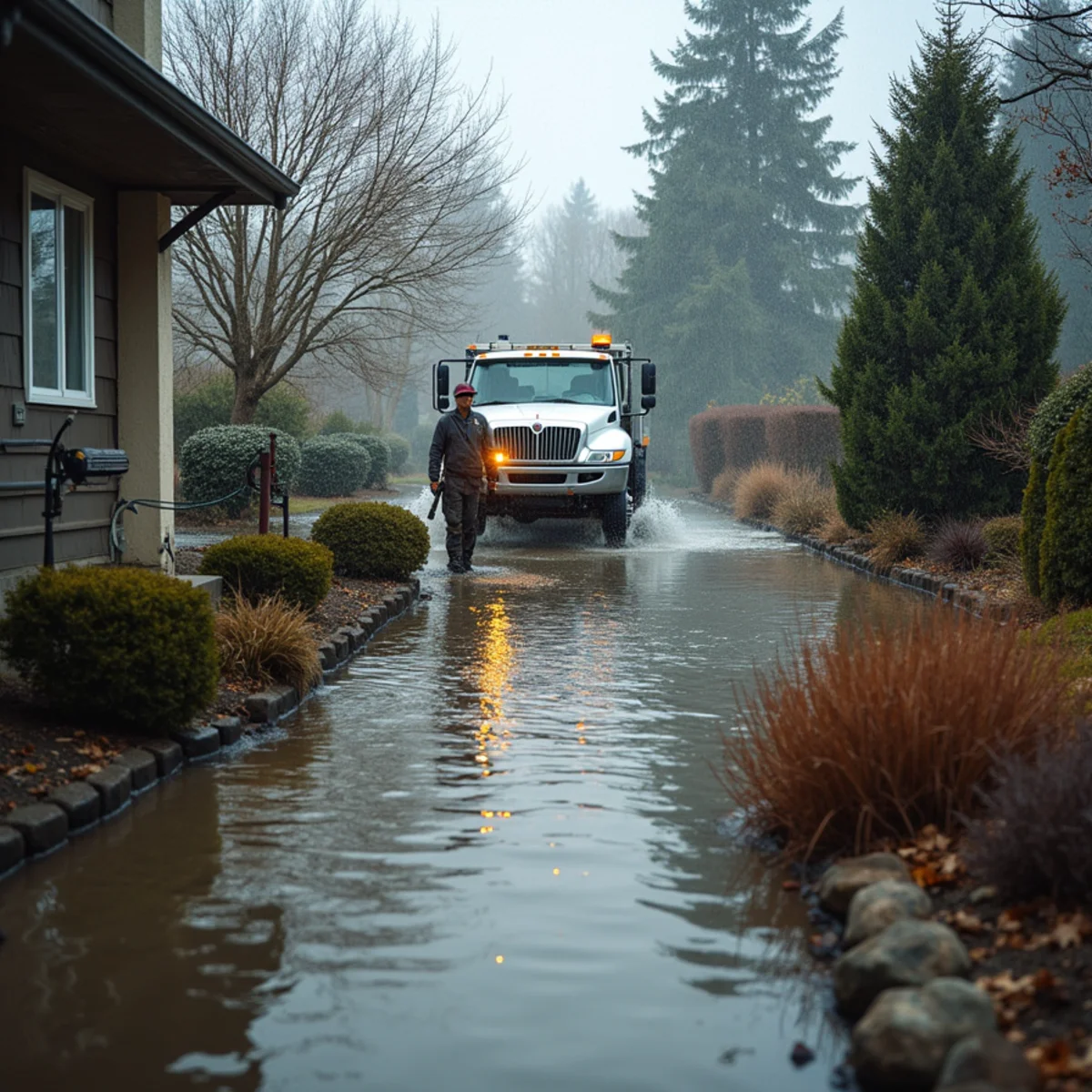
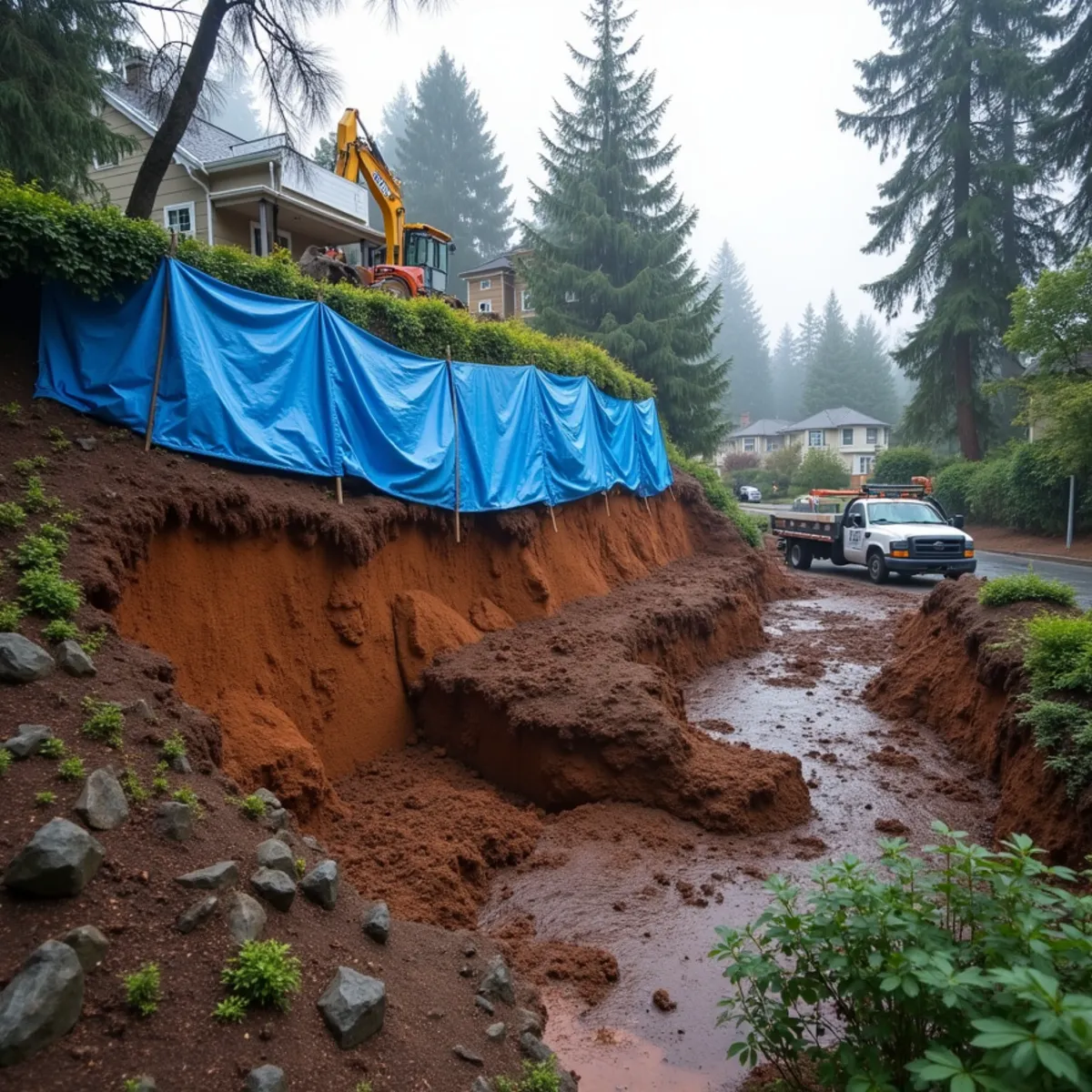
When a slope is saturated and beginning to move, the immediate goal is to stop adding water to it. Every additional inch of rain that soaks in makes the ground heavier and the movement more likely. Covering the slope surface with heavy tarps, overlapped and securely anchored so wind cannot lift them and so water sheds off the downhill edge rather than under the tarp, can significantly reduce how much rain infiltrates.
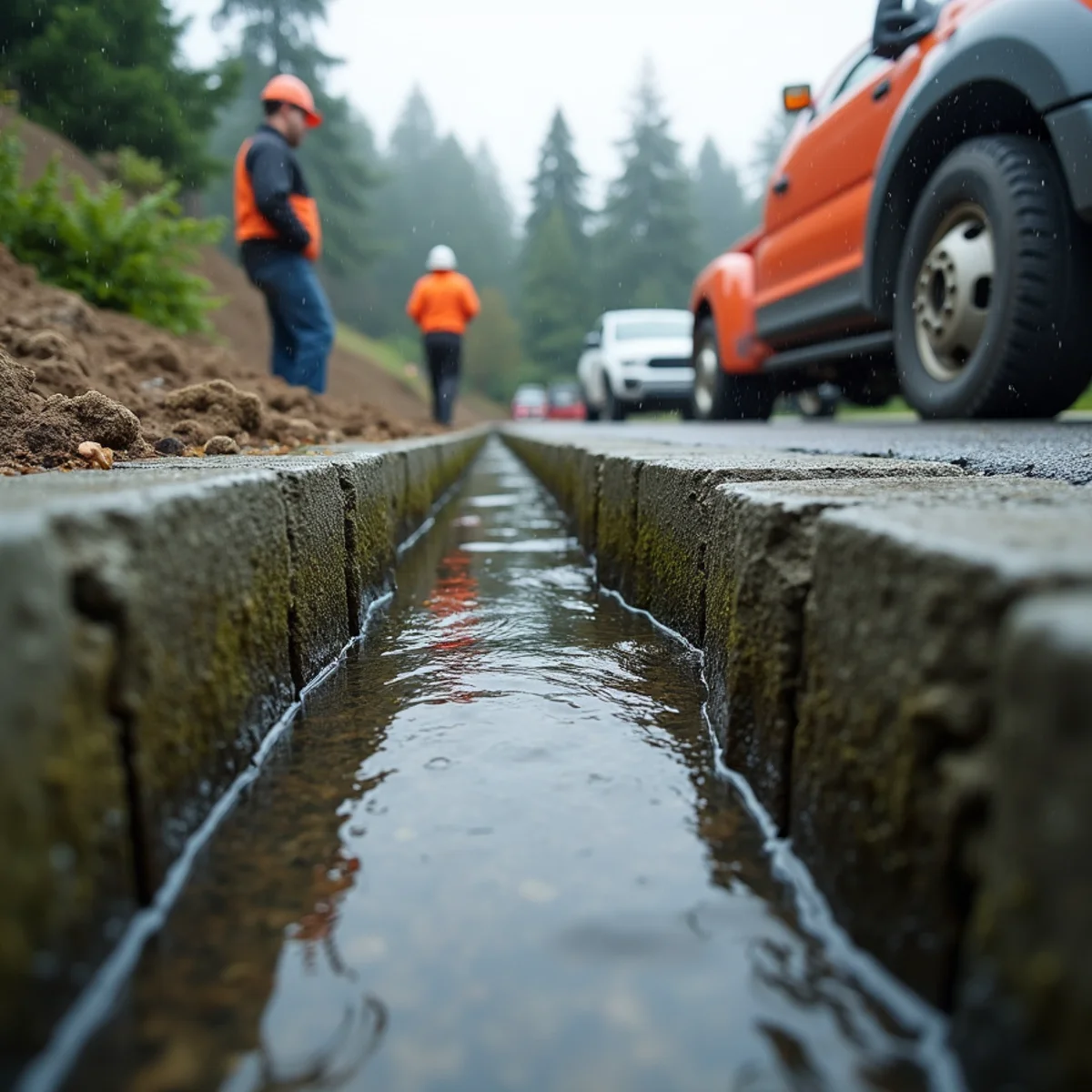
Diverting runoff is the companion step. Redirect downspouts, roof drainage, and any surface flow away from the top of the slope so that concentrated water is not pouring onto or into the vulnerable ground. Even simple measures that keep water from collecting at the crest of a slope can slow the process and buy time for professional help to arrive.
These are interim, buy-time measures, not repairs, and they must be done safely. Do not work on or below an actively moving slope, and do not attempt to dig into or re-cut a slope that is failing. The aim of tarping and diversion is only to reduce water infiltration from a safe position while stabilization is arranged.
Geogrid Soil Anchoring and Emergency Rockery Embankment Shoring
Real stabilization of a moving slope is an engineering task. One core technique is geogrid soil reinforcement, in which layers of high-strength geogrid are built into the slope or into a reinforced retaining structure to tie the soil mass together and resist the forces pulling it downhill. Reinforced with geogrid, a slope or wall behaves as a coherent, anchored mass rather than loose material free to slide.
Rockery and engineered retaining structures can shore an embankment by providing a strong toe and face that hold the base of a slope in place, which is often where movement concentrates. Combined with the drainage work that relieves the water pressure driving the slide, these structures convert an unstable hillside into a stabilized one. Our slope stabilization and retaining wall construction services are built around exactly this combination of reinforcement, structure, and drainage.
Because every slide has its own geometry, soil profile, and water source, the right stabilization is site-specific and frequently engineered. What all effective solutions share is that they address both the mechanical restraint of the soil and the water that saturated it in the first place. Treating one without the other is how slopes that were patched slide again.
Working with City Geotechnical Inspectors for Emergency Repair Permits
Slope work in a mapped hazard area is regulated, and for good reason. King County's Critical Area Ordinances and the individual cities have requirements for work on steep slopes and landslide-hazard zones, and significant stabilization usually involves geotechnical engineering and permits. In a genuine emergency, jurisdictions typically have provisions for urgent stabilization work, but the process still needs to be handled correctly.
This is where an experienced contractor earns their keep. We coordinate with geotechnical engineers and city inspectors to get emergency stabilization moving while keeping the work compliant, so that the fix is both fast enough to protect the property and sound enough to satisfy the authorities. Cutting the process out entirely can lead to stop-work orders and a solution that has to be redone.
The takeaway for a homeowner is that you should not try to navigate a slope emergency, its engineering, and its permitting alone. Working with a team that knows the local hazard rules and the inspectors who enforce them keeps the emergency response both safe and legitimate.
Contacting SeattleProTurf for Urgent Hillside Stabilization
A moving slope does not wait for business hours, and neither do we. We offer 24/7 emergency response for hillside and slope emergencies, and our team can assess the situation, put safe interim measures in place, and design the engineered stabilization the slope actually needs. Speed matters in a slide, and having experienced people on site quickly can change the outcome.
As a licensed, bonded, and insured contractor under Washington license SEATTPT839LN with over fourteen years stabilizing slopes and building retaining structures across the region, we combine the geogrid reinforcement, structural shoring, and drainage that a failing hillside requires, and we coordinate the engineering and permitting that go with it. Serving Shoreline, Edmonds, Mukilteo, and the surrounding areas, we are ready to respond when a slope starts to move. If life is in immediate danger, call emergency services first, then call us for stabilization.
What we tell homeowners in the first phone call when a slope is moving
When someone calls because their hillside is cracking or a slope has started to slump, the first thing we sort out is whether this is a life-safety situation or a landscape problem. New tension cracks at the top of a slope, a bulge or wet seep partway down, tilting trees or fence posts, and mud already on the move mean people and structures below need to be clear first. King County sits on soils that fail predictably when saturated, and a slope that's moving in a wet stretch can accelerate fast.
The counterintuitive truth is that most local slope failures are water failures, not soil failures. A slope that stood for decades often lets go after something changed the water: a new downspout dumping uphill, an irrigation leak, a removed tree that was drinking hundreds of gallons, or a season of record rain. Stopping water from reaching and saturating the slide mass is the immediate priority, often before any structural work.
Emergency stabilization is triage, not the cure. Tarping to shed rain, diverting surface water, and sometimes toe support buy time. The real fix, which usually involves engineering, proper drainage, geogrid or a keyed wall, and revegetation, comes after the ground stops moving and the site is safe to work.
Pro tips from our crew
- If a slope is actively moving, get people and vehicles out from below it first; property is replaceable.
- Tarp the slope to shed rain and divert any downspout or surface water away from the top immediately.
- Document with photos and dated notes; you'll likely need them for engineering, permits, or insurance.
- Don't pile the failed soil back on top or add weight to the slope's head; it worsens the load.
- On Critical Area or steep-slope parcels, expect King County review; loop in an engineer early to avoid rework.
Frequently Asked Questions
Watch for new or widening cracks in ground, pavement, or foundations, trees or poles that have begun to lean, doors and windows that suddenly jam, water breaking out in new spots on the slope, and bulging soil at the base. If you see these and suspect a slide is imminent, leave the area, get to safe ground, and contact emergency services if life is threatened.
From a safe position, you can reduce water reaching the slope by covering it with anchored heavy tarps that shed rain and by diverting downspouts and surface runoff away from the top of the slope. Never work on or below an actively moving slope. These steps only slow infiltration and buy time until professional stabilization is arranged.
Effective stabilization combines mechanical reinforcement, such as geogrid soil anchoring and engineered retaining or rockery structures at the toe, with drainage that relieves the water pressure driving the movement. Because every slide differs, the design is site-specific and usually involves geotechnical engineering and permits.
Significant slope work in mapped landslide-hazard or steep-slope areas is regulated under King County Critical Area Ordinances and local city codes, and typically requires geotechnical engineering and permits. Emergencies usually have provisions for urgent work, but it should be coordinated properly. We work with engineers and city inspectors to keep emergency stabilization both fast and compliant.
Not necessarily. A slope that moved once has usually lost some of its strength and can move again when it re-saturates in the next storm. Treat a stopped slide as a warning, not an all-clear, and get the water controlled and the site evaluated before winter loads it again. Call (323) 606-0255 and we'll advise on urgency.
For a genuine slope failure on a steep or Critical Area lot, you almost always need a geotechnical engineer to determine the failure surface and design the fix; a wall built without that analysis can simply be pushed over by the same forces. We work alongside engineers and handle the construction their design calls for. On smaller, non-critical grades, a contractor-built solution may be enough.
A moving hillside is a true emergency, and the right response puts safety first, slows the water feeding the slide second, and brings engineered stabilization, geogrid reinforcement, structural shoring, and drainage, to bear as fast as possible. Recognizing the warning signs early and getting experienced help on site quickly is what turns a potential disaster into a controlled repair.
If a slope on or near your property has started to crack, bulge, or move, do not wait to see how far it goes. Call emergency services if anyone is in danger, then call Seattle Pro Turf at (323) 606-0255 for 24/7 urgent hillside stabilization and a professional assessment of what your slope needs to hold.
Ready to move from reading to results? Our hillside slope stabilization and retaining wall construction crews handle projects like this across the Eastside — including Shoreline and Edmonds. Call (323) 606-0255 for a free estimate.
Get expert help on your project
SeattleProTurf · 14+ years serving the Eastside · Licensed & insured