
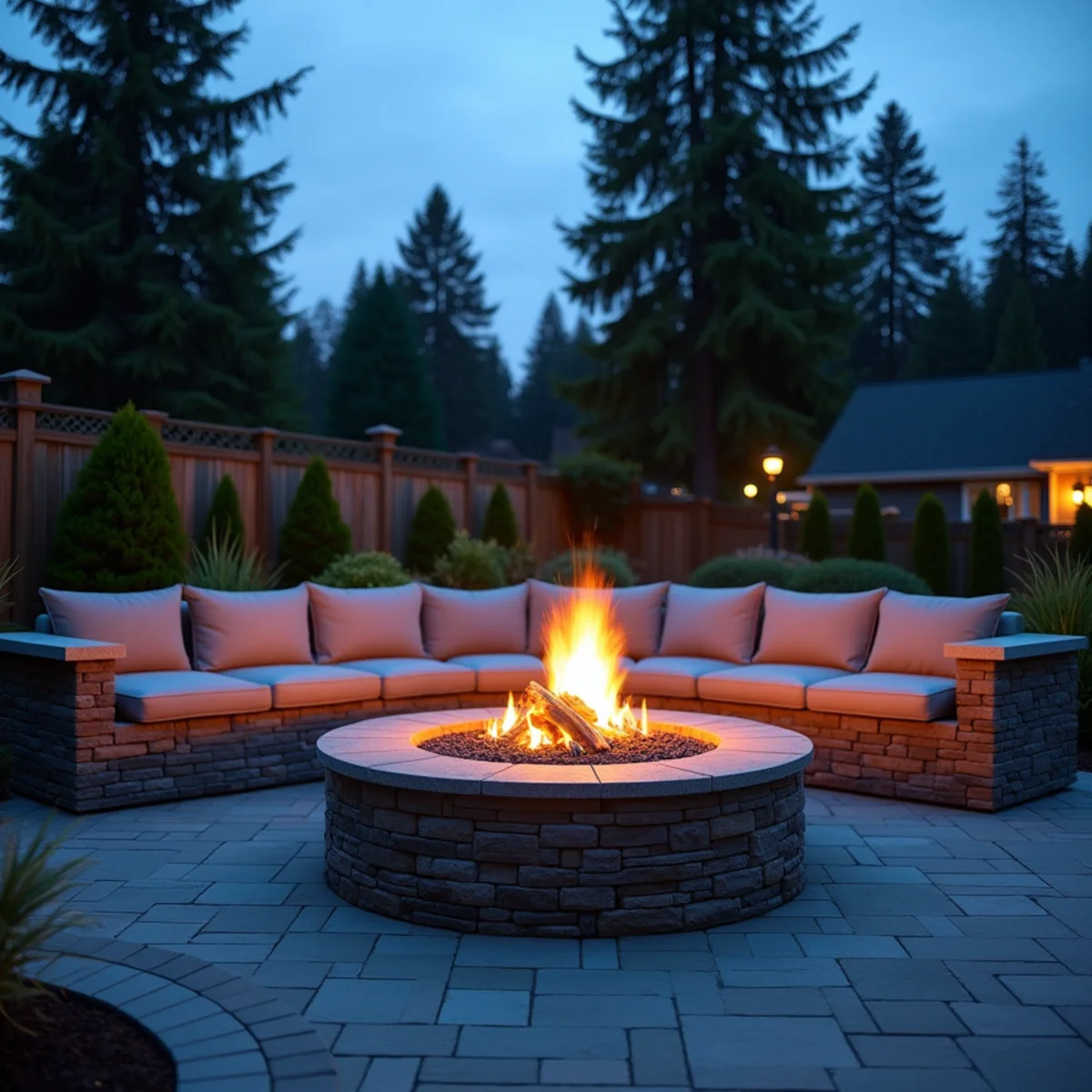
The Northwest gives us long, cool evenings for most of the year, and a well-built fire feature turns them into the best room in the house. A fire pit is the anchor that pulls a patio together, extends the season on both ends, and gives people a reason to be outside even when the air has a bite to it. The difference between a feature you use for fifteen years and one that cracks after two comes down to how the masonry is built.
We design and construct wood-burning and gas fire pits, seat walls, outdoor kitchens, and full living spaces as integrated hardscape, not add-ons dropped onto a slab. Real fire brick or a proper insulated firebox where it belongs, structural block behind the veneer, footings that will not heave, and a layout that works with the patio, lighting, and grade. The result is a durable outdoor room that fits the way your family actually gathers.
Need Outdoor Fire Pits & Living Spaces in the Seattle area?
Free on-site estimate · 14+ years serving the Eastside
Signs You Need Outdoor Fire Pits & Living Spaces
Short outdoor season
Homeowners build beautiful patios and then only use them a few weeks a year because the evenings are too cool. A fire feature changes the math entirely, drawing people outside from early spring through late fall. It is the single upgrade that most extends how often an outdoor space gets used.
Cracking and spalling masonry
Fire pits built without fire brick or proper heat management crack, and stone that traps moisture spalls when it heats and cools. In our damp climate that failure comes fast. Building with the right firebox materials and structural backing is what keeps the masonry sound.
Disconnected, awkward layouts
A fire pit plopped in the middle of the lawn with no seating or flow rarely gets used. Good outdoor living design considers circulation, seating, wind, and sightlines together. We plan the feature as part of the whole space so it feels intentional and comfortable.
Code and safety oversights
Clearances from structures, fuel line requirements for gas features, and local burn considerations all matter for a fire feature. Getting them wrong creates real hazards. We build to the required clearances and handle gas connections through licensed trades so the feature is safe to enjoy.
Our Process
- 1
Design consultation
We talk through how you gather, wood versus gas, seating needs, and how the feature relates to the house, then sketch a layout that fits the space and grade.
- 2
Site preparation and footings
We excavate and build compacted footings sized to carry the masonry without settling or heaving, because a fire feature is heavy and permanent.
- 3
Structural core construction
We lay up the structural block core of the fire pit, seat walls, or kitchen, integrating any gas, electrical, or ventilation runs before the finish goes on.
- 4
Firebox and heat protection
We line the burn area with fire brick or set an insulated gas firebox and burner, protecting surrounding materials from the heat cycle that cracks lesser builds.
- 5
Stone veneer and finishing
We apply the natural or manufactured stone veneer, set caps and hearth surfaces, and detail the transitions to the patio for a seamless finished look.
- 6
Final integration
We tie in lighting, complete gas or utility hookups through licensed partners, and finish the surrounding patio and grade so the space is ready to use.
What's Included
- Wood-burning and gas fire pit design and build
- Compacted footings sized for masonry loads
- Structural block cores with fire brick liners
- Insulated gas fireboxes and burner systems
- Natural and manufactured stone veneer
- Seat walls, benches, and hearth surfaces
- Outdoor kitchen and grill island framing
- Coordinated gas and electrical rough-ins
- Integrated patio, lighting, and grade tie-ins
- Cap stones and finished transitions
What Affects the Price
Fire features and outdoor living spaces range widely because a simple wood-burning stone pit and a full gas kitchen with seat walls are very different projects. Cost tracks the masonry volume, the fuel and utility work, and the finish materials. We design to your budget and use, then quote the specific build rather than a generic square-foot figure.
| Factor | How it affects your quote |
|---|---|
| Wood-burning versus gas | Gas features add a burner, ignition, gas line, and permitting, while wood-burning pits are simpler and generally cost less to build. |
| Size and scope | A standalone fire pit is far less than a full outdoor room with seat walls, a kitchen, and multiple hardscape elements. |
| Finish materials | Natural stone veneer, high-end caps, and specialty pavers cost more than manufactured stone and standard finishes. |
| Utility connections | Running gas and electrical to the feature, through licensed trades, adds cost that varies with distance and access. |
| Site and footing work | Slopes, poor soil, or difficult access increase the excavation and footing effort under a heavy masonry feature. |
Every property is different — the only way to get an accurate number is a free on-site estimate. Call (323) 606-0255 to schedule.
What Your Line-Item Estimate Includes
We put everything in writing so you can compare bids on the same scope instead of guessing what a total leaves out. Your itemized SeattleProTurf estimate separates:
- Labor and installation
- Materials and delivery
- Site prep, excavation, and haul-off
- Drainage and engineered base work
- Permits and engineering (when required)
- Restoration, cleanup, and site protection
- Payment milestones tied to real progress
- Workmanship warranty terms
Why Choose SeattleProTurf for Outdoor Fire Pits & Living Spaces?
Plenty of contractors can lay turf, stack block, or dig a trench. Building outdoor work that survives Northwest winters takes local knowledge, real engineering, and a crew that is still here to stand behind it. Here is what sets us apart on projects like yours.
14+ years on the Eastside
We have built projects like this across Kirkland and Puget Sound for more than 14 years, so we know exactly how our glacial-till soil and wet winters affect the work.
Licensed, bonded & insured
Registered Washington contractor SEATTPT839LN, with liability and workers' comp coverage — and we handle the engineering and permits when the scope requires them.
Trusted by Eastside homeowners
Homeowners choose us for clean job sites, honest line-item estimates, and installations that hold up season after season.
One accountable local crew
Not a franchise or a lead broker. The same team quotes, builds, and warranties your project — and we are here to stand behind it.
Frequently Asked Questions
Both work well here, and it comes down to how you want to use it. Gas lights instantly and is easy on damp evenings when you want warmth without tending a fire, while wood gives the crackle and ambiance many people prefer. We build either to last, and gas features include proper firebox and burner components.
For most of the year, yes. Our cool but mild evenings are ideal for a fire feature, and it is what makes a patio usable from early spring through late fall. Under a covered structure with proper clearances, many homeowners use theirs even on damp winter nights.
Heat and moisture. A pit built without a fire brick liner or proper firebox lets the burn zone crack, and stone that absorbs water spalls as it heats and cools. We build with the correct heat-resistant materials and a structural core so the repeated heat cycles do not destroy the masonry.
Yes. Fire pits are often part of a larger outdoor living plan that can include seat walls, a grill island or full kitchen, patio, and lighting. We design and build the whole space as one integrated project so the elements work together instead of feeling added on.
Choosing between wood-burning and natural gas or propane drives the whole build: gas lines require proper sleeving and often a permit and inspection, while wood pits face local burn restrictions and clearance rules from structures and overhangs. We also set a non-combustible base and proper air venting so the feature performs safely for years. Call (323) 606-0255 and we'll walk through the options for your yard.
Heat and Seattle's freeze-thaw cycles are hard on masonry, so we build fire features on a compacted crushed base with proper fire-rated block and a steel or masonry liner that absorbs thermal expansion. The surrounding patio is set on the same open-graded base and locked with polymeric sand so nothing telegraphs cracks outward. Cutting corners on the liner or base is what leads to spalling and loose pavers within a few seasons.