Winter Storm Yard Flooding: How to Protect Your Foundation
The short answer
Protect your foundation by moving water away from the house: extend downspouts well past the foundation, regrade so soil slopes away, and add drainage such as French drains or catch basins where water collects. Seattle's glacial hardpan sheds water sideways instead of absorbing it, so surface and subsurface drainage together do the real work.
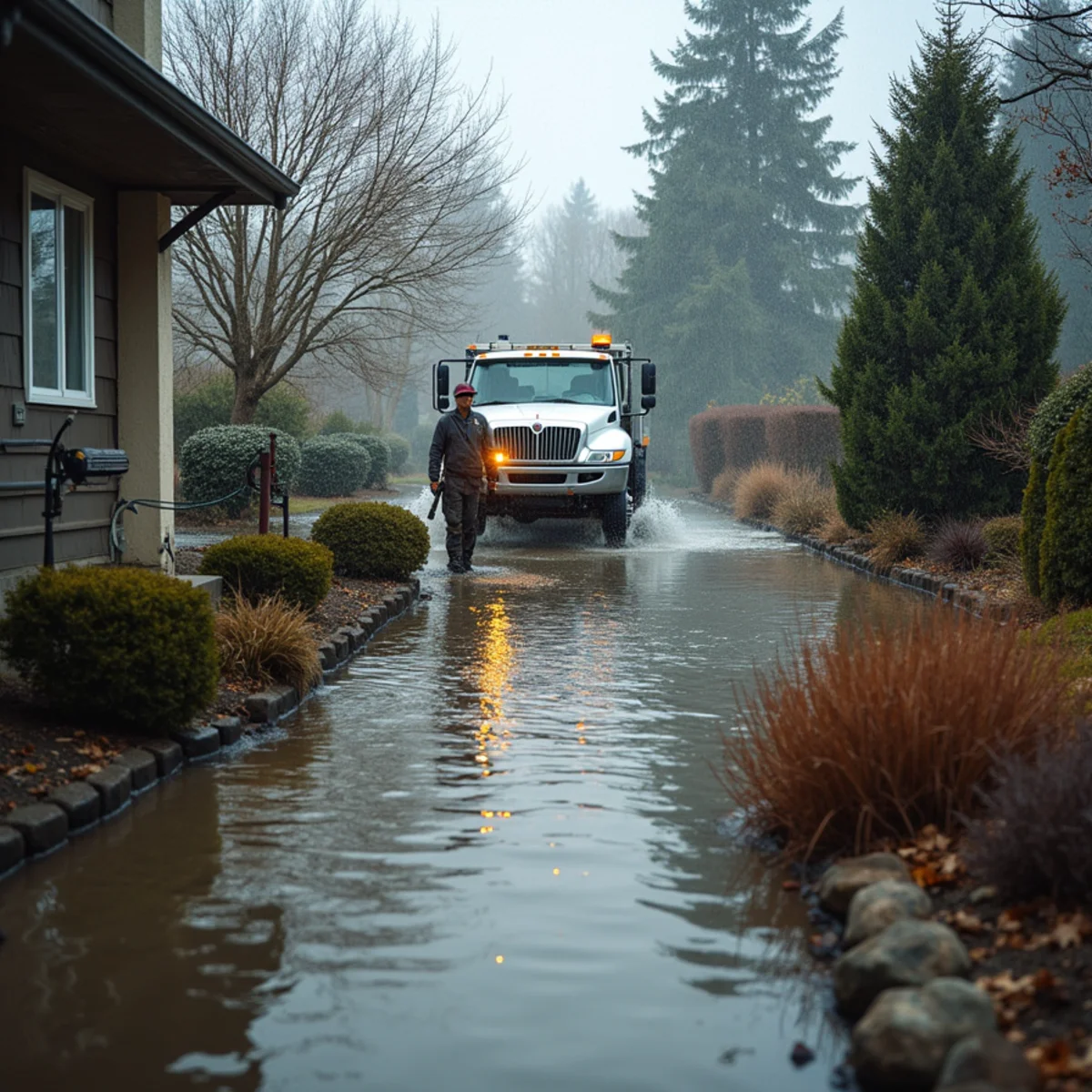
When an atmospheric river parks over Puget Sound and drops inches of rain in a day, a yard's drainage is either ready or it is not. The homes that flood are rarely unlucky; they are usually the ones where water had no clear path away from the house. Standing water against a foundation is not just a nuisance, it is a direct threat to crawlspaces, slabs, and the structural health of the home, and winter is when that threat is at its worst.
This guide explains why our winter storms overwhelm ordinary drainage, why surface water near the foundation is so dangerous, and what to do about it, both in the emergency of an active storm and in the longer term. If your yard is pooling and creeping toward the house in Bothell, Renton, Kenmore, or anywhere in King County, understanding the fixes is the first step to keeping the water out.
Key takeaways
- Seattle's glacial hardpan barely absorbs water, so storm runoff pools on the surface and migrates toward the foundation.
- Extend downspouts well past the foundation so roof water isn't dumped against the house.
- Regrade soil to slope away from the foundation — even a slight reverse grade sends water where you don't want it.
- French drains and catch basins collect and redirect water in low spots and along the base of slopes.
- December delivers around 5.45 inches of rain, so drainage should be sized for sustained saturation, not a single storm.
- Combine surface fixes (grading, downspouts) with subsurface drainage for a system that actually keeps water off the foundation.
How Northwest Winter Atmospheric Rivers Overwhelm Yard Drainage
The Pacific Northwest winter delivers rain in a particular way: long-duration, high-volume events driven by atmospheric rivers, plumes of moisture that can dump enormous amounts of water in a short window. Kirkland averages around 5.45 inches of rain in December, and much of that can arrive in a handful of heavy storms rather than gentle, spread-out showers. Drainage that copes with drizzle can be completely overrun by a single one of these events.
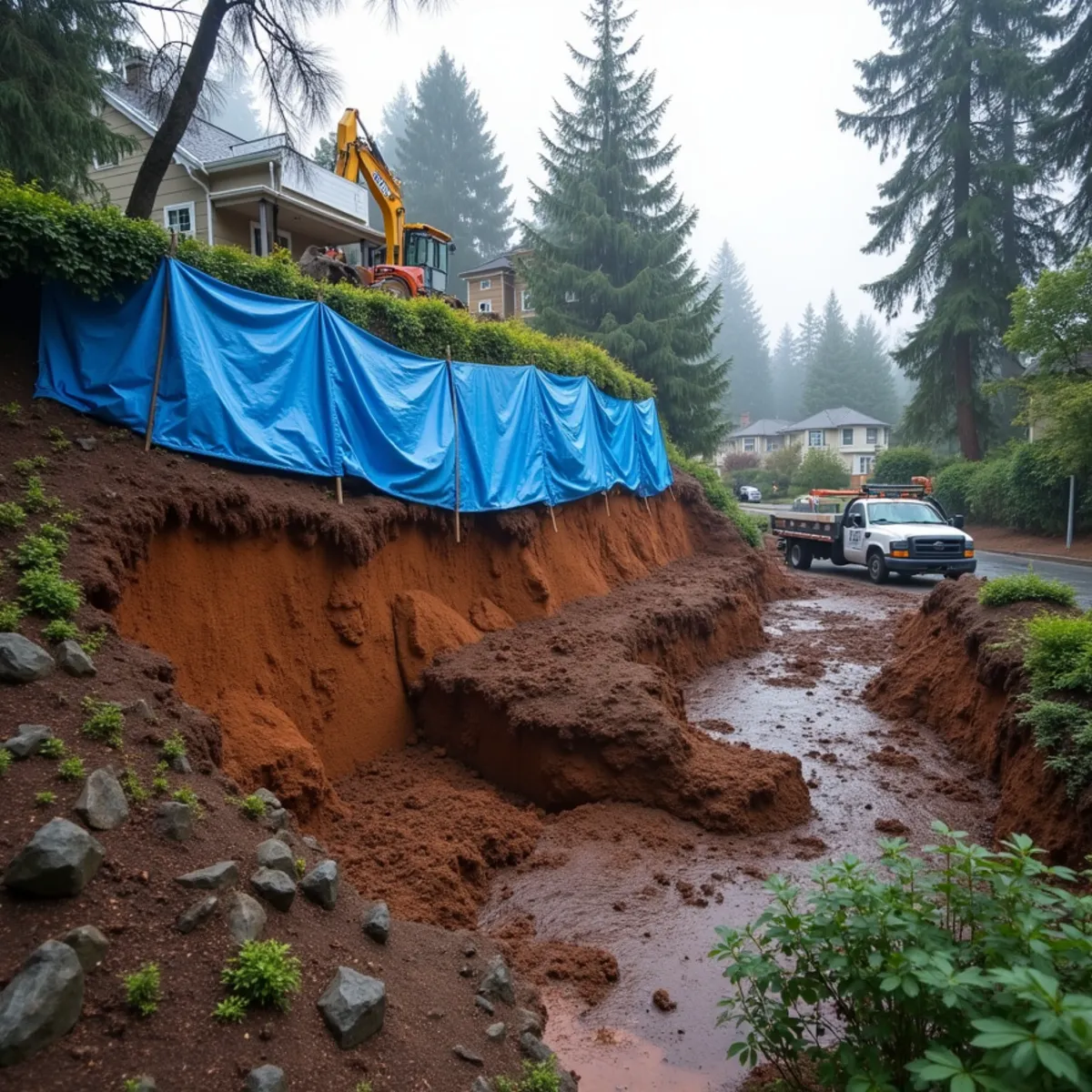
Our soil makes the problem worse. Glacial till, the Seattle hardpan beneath much of the region, sheds surface water rather than soaking it up. So when the sky opens, the ground does not absorb the flood, it channels it across the surface, and that surface flow goes wherever gravity and grading send it, often toward the lowest point on the lot. If that low point is against your house, the water collects exactly where you least want it.
The result is that a yard can be dry all summer and flood every serious winter storm, because the failure only appears under peak load. Designing drainage for our climate means designing for the atmospheric river, not the average day, and that is a different and larger standard than many yards were ever built to meet.
The Danger of Surface Water Infiltrating Crawlspaces and Slabs
Water pooling against a foundation does not stay outside for long. It finds its way into crawlspaces, seeps against slabs, and works into any gap it can reach. A wet crawlspace is a serious problem: it invites mold, rot in the wood structure above, and elevated moisture throughout the home, and it can undermine the soil that supports the foundation itself.
Beyond the crawlspace, saturated soil against a foundation exerts pressure on foundation walls, much as it does on a retaining wall. Persistent water intrusion can, over time, contribute to cracking and movement in the foundation, which is among the most expensive damage a home can suffer. What starts as a puddle in the yard can end as a structural repair bill.
This is why foundation protection is really about water management outside the house. The goal is simple to state and demanding to achieve: keep surface and subsurface water moving away from the structure, especially during the peak storms when the volume is highest. Everything below is in service of that goal.
Clearing Catch Basins & Installing Emergency Sump Pumps
In the middle of a storm, the fastest wins come from removing blockages and adding capacity. Catch basins, yard drains, and gutters clogged with leaves and debris are a leading cause of sudden flooding, because the drainage that exists simply cannot take in water past the clog. Clearing catch basins and drain grates so they can actually accept flow is often the single most effective emergency step, and it is one homeowners can sometimes do safely themselves.
Where water is collecting faster than it can drain, an emergency sump pump moves the volume out actively rather than waiting on gravity. A pump placed in the low spot or a sump basin can pull water away from the foundation and discharge it to a safe location, keeping a crawlspace or low yard from filling during the worst of the storm. Our emergency drainage and sump pump service is designed for exactly these situations, when the water is rising now and needs to go somewhere fast.
These are stabilizing measures. Clearing basins and running a pump can save a home during a storm, but they treat the symptom. Once the weather breaks, the lasting fix is a drainage system built to handle the next atmospheric river without heroics.
French Drains vs Swales: Directing Water Away from Foundations
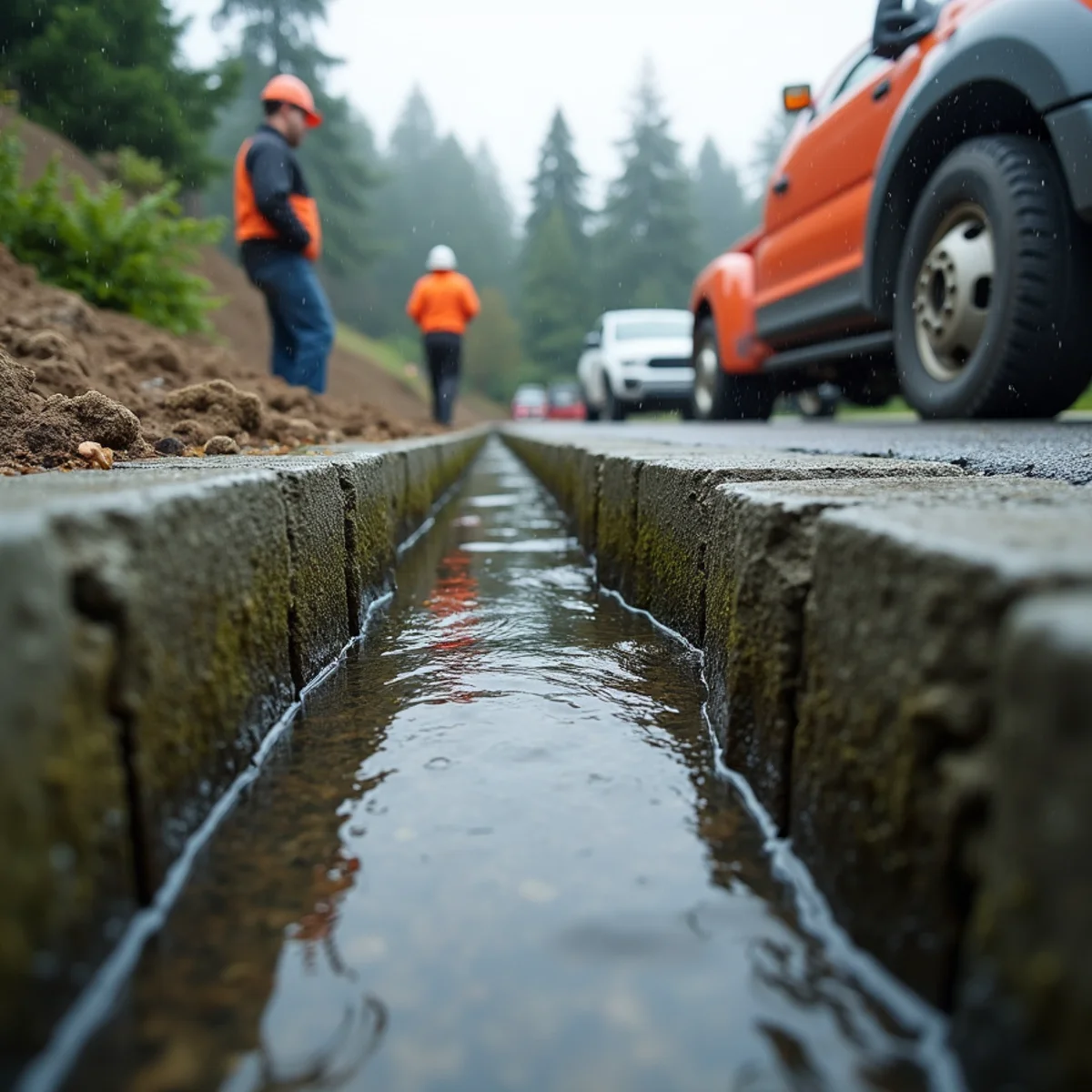
The workhorse of foundation protection is the French drain: a gravel-filled trench with a perforated pipe that collects subsurface and surface water and carries it away from the house to a safe outlet. On our hardpan soil, a properly built French drain gives water the escape route the ground itself refuses to provide, intercepting flow before it reaches the foundation. Our French drain and yard drainage work is aimed squarely at pulling water away from the structure and moving it where it belongs.
A swale is the surface counterpart: a shallow, graded channel, often planted, that guides water across the yard by gravity toward a drainage point or outfall. Swales are excellent for managing large volumes of surface runoff and for shaping where water flows before it can pond. They work with the landscape rather than beneath it.
In practice the best solutions often combine both, along with correct grading, so that surface water is guided by swales and grade while subsurface water is captured by French drains. The right mix depends on the lot, the soil, and where the water is coming from, which is why an on-site assessment matters more than a one-size prescription.
Long-Term Yard Regrading & Glacial Till Soil Remedies
The most fundamental fix is often the grade itself. Soil should slope away from the foundation so that gravity carries water off rather than toward the house. Many flooding problems come down to a yard that slopes the wrong way or is flat where it should fall, and regrading to establish positive drainage away from the structure addresses the problem at its root.
On glacial till, drainage remedies have to account for soil that will not absorb water. That can mean tying French drains into a dry well or a gravity outfall, and in the right conditions connecting to a city storm system, so the collected water has a real destination rather than just being moved a few feet. Building drainage that respects the hardpan is what separates a fix that lasts from one that fails the next big storm.
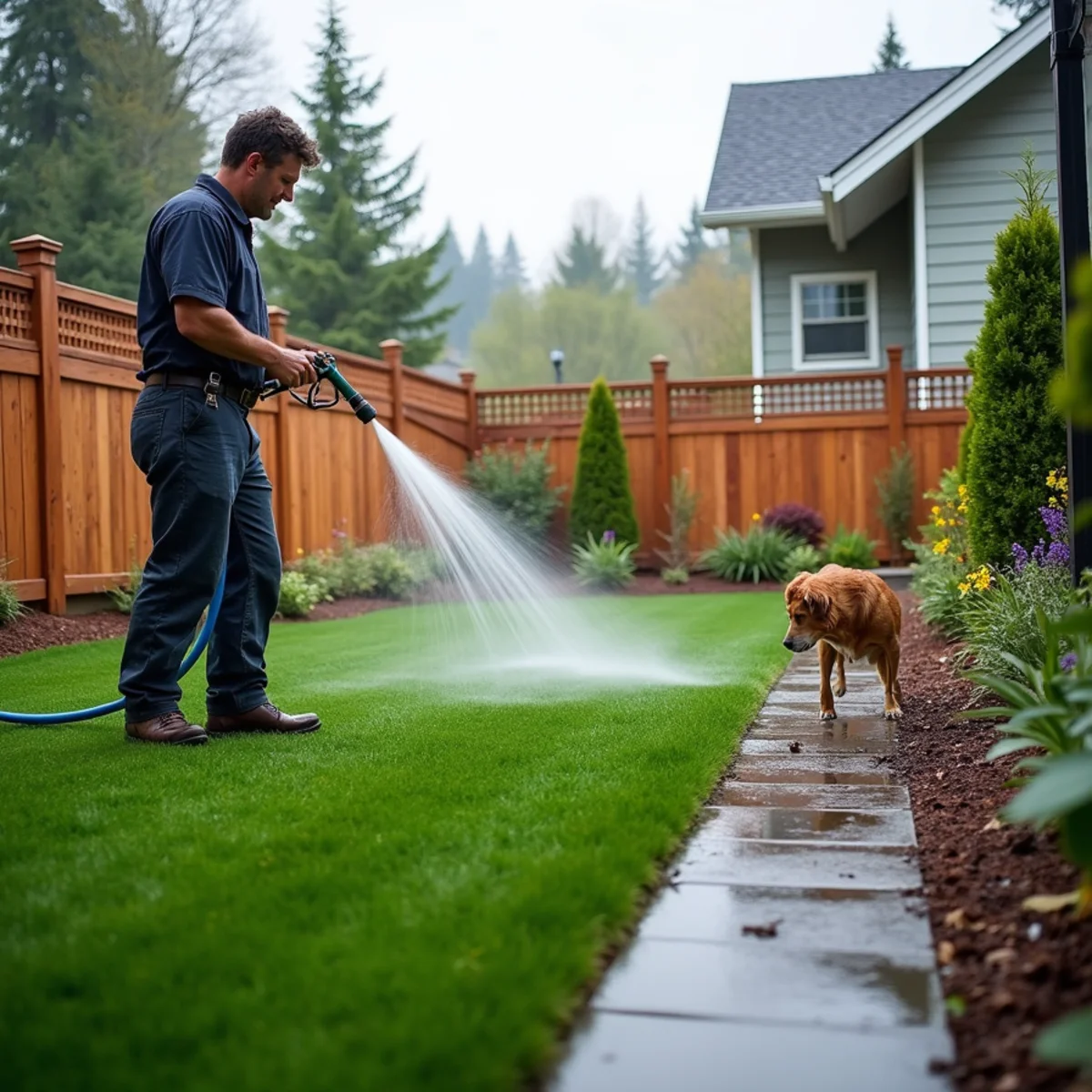
Well-designed drainage and grading also protect any hardscape and turf on the property, keeping patios stable and lawns from waterlogging. A comprehensive plan treats the yard as one water system, so the same work that shields the foundation also keeps the rest of the landscape performing through winter.
24/7 Emergency Storm Drainage Response Across King County
When a storm is actively flooding your yard and threatening the house, you do not need an appointment next week, you need help now. We provide 24/7 emergency response for storm drainage across King County, from clearing overwhelmed catch basins to setting emergency sump pumps to diverting water away from the foundation while the rain is still falling.
As a licensed, bonded, and insured contractor with over fourteen years managing water on Eastside and greater Seattle soil, we handle both the emergency and the lasting solution. Once the immediate crisis is stabilized, we can design and build the French drains, swales, regrading, and outfalls that keep the next atmospheric river from putting water against your home. Serving Bothell, Renton, Kenmore, and the surrounding communities, we are ready when the weather is not.
Why your yard floods here even when the gutters are clean
People assume flooding means a clogged gutter or a bad downspout, and sometimes it does. But the deeper reason yards pond in Seattle is the ground itself. Under a few inches of topsoil sits glacial-till hardpan that water simply won't penetrate. In summer it's invisible; in a December storm dropping several inches, the soil above that hardpan saturates, has nowhere to drain down, and the excess sheets toward the lowest point, which is often the foundation.
The mistake we fix most often is downspouts that dump right at the wall. A single downspout can move hundreds of gallons off a roof in one storm, and if it discharges into a splash block six inches from the foundation, that water goes straight down the exterior wall and into the crawlspace. Extending discharge well away from the house, or tying it into a proper drain line that daylights downhill, solves a surprising number of wet-basement calls.
Grade is the other half. Over years, settling soil and new landscaping often reverse the slope so the yard tilts back toward the house. Re-establishing positive grade away from the foundation, sometimes paired with a French drain along the uphill side, is unglamorous work that quietly ends the flooding.
Pro tips from our crew
- Trace every downspout; any that discharge within a few feet of the foundation should be extended or piped away.
- Check that soil slopes down and away from the house for at least the first six feet; regrade if it doesn't.
- A French drain along the uphill side intercepts water before it reaches the foundation on hardpan lots.
- Never pipe roof water into a footing drain; overwhelming it in a storm pushes water toward the crawlspace.
- Daylight drain outlets downhill where they can actually flow; a buried or uphill outlet does nothing in a storm.
Frequently Asked Questions
It usually means water has no clear path away from the foundation, often because of grading, clogged drains, or our glacial soil that sheds water instead of absorbing it. It is dangerous because water against a foundation can enter crawlspaces, cause mold and rot, and pressure foundation walls, so it should be addressed rather than tolerated.
Clear leaves and debris from catch basins, yard drains, and gutters so existing drainage can actually accept water, and divert downspouts away from the foundation. If water is rising faster than it drains, an emergency sump pump can actively move it away. These steps stabilize the situation until a lasting fix is installed.
A French drain is a gravel-filled trench with a perforated pipe that captures subsurface and surface water underground and carries it away. A swale is a shallow graded surface channel that guides runoff across the yard by gravity. Many yards need both, plus correct grading, to keep water away from the foundation.
Yes. We provide 24/7 emergency storm drainage response across King County, including clearing catch basins, installing emergency sump pumps, and diverting water from the foundation during active storms. Call (323) 606-0255 when water is threatening your home.
Sometimes, but usually it's one piece of a system. On hardpan lots the fix is often a combination: intercept uphill water with a French drain, extend downspouts, and correct the grade so surface water flows away from the house. A drain in the wrong spot or without a daylight outlet just fills with water. We diagnose the whole flow path before recommending one.
We can often do targeted drainage and downspout work in winter, and honestly winter is when we can see exactly where the water goes, which helps the diagnosis. Full regrading and turf work usually wait for drier conditions. If water is entering your crawlspace now, don't wait; call (323) 606-0255 and we'll prioritize the site visit.
Winter yard flooding in the Puget Sound is a water-routing problem, and the homes that stay dry are the ones where water has a clear, engineered path away from the foundation before the atmospheric river arrives. Clearing drains and running a pump can rescue a home mid-storm, but the lasting protection comes from French drains, swales, regrading, and proper outfalls built for soil that refuses to absorb the flood.
If a storm is flooding your yard right now, or you want to fix the problem before the next one hits, we handle both the emergency and the long-term solution. Call Seattle Pro Turf at (323) 606-0255 for 24/7 emergency drainage response or a free drainage inspection and estimate.
Ready to move from reading to results? Our french drains & yard drainage and emergency drainage & sump pump crews handle projects like this across the Eastside — including Bothell and Renton. Call (323) 606-0255 for a free estimate.
Get expert help on your project
SeattleProTurf · 14+ years serving the Eastside · Licensed & insured