
Emergency? We dispatch 24/7 across the Eastside. Call (323) 606-0255 now for rapid response.
When a winter storm dumps rain faster than your yard can shed it, water rises against the house, fills window wells, and pushes into crawlspaces and basements. Every hour it sits there it does more damage. A failed sump pump or a clogged drain during a downpour turns a manageable storm into an active flooding emergency, and that is exactly when you cannot wait days for help.
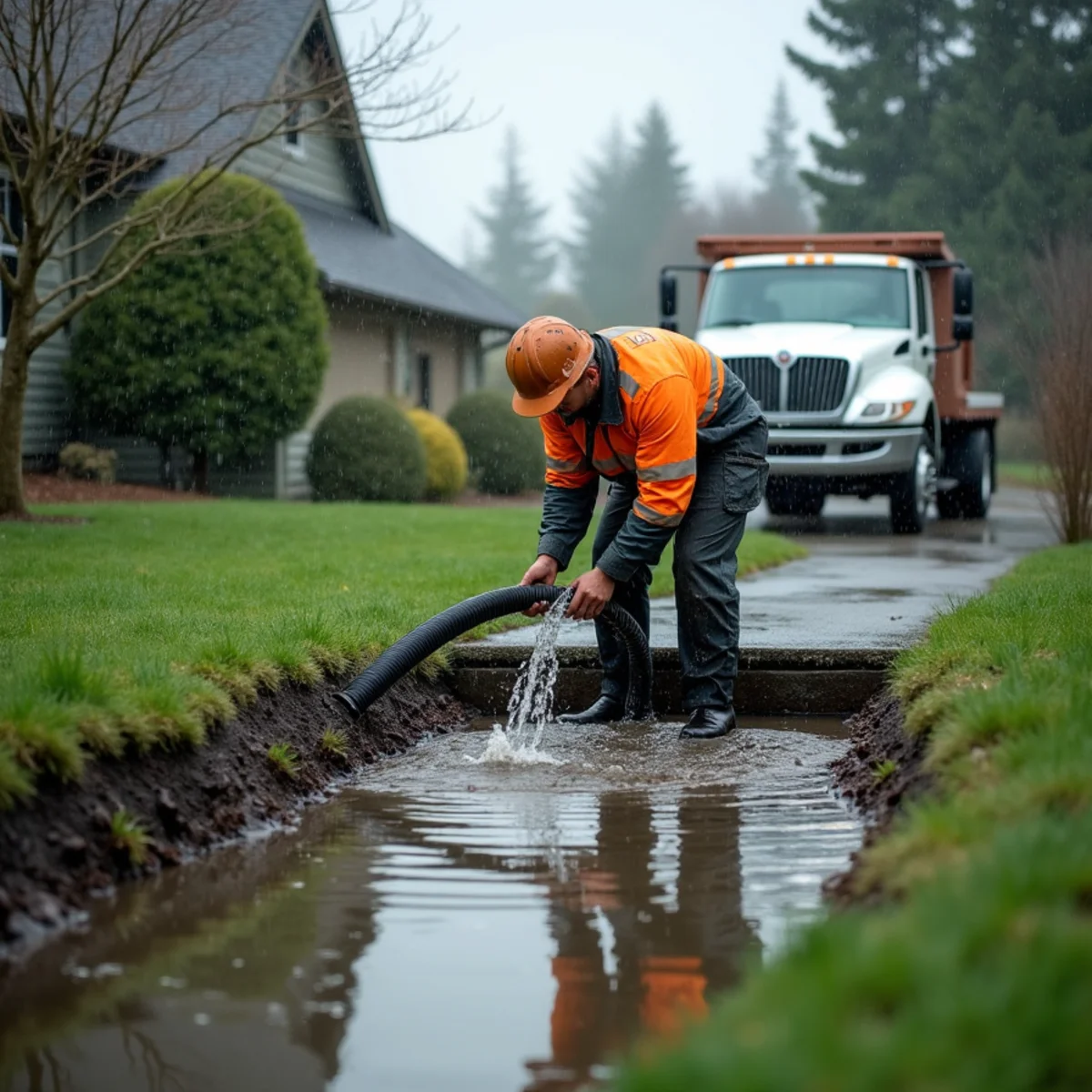
We respond fast to flooding and drainage failures across the Eastside. The immediate work is to get water moving away from the structure, pumping standing water, clearing or bypassing blocked drains, and cutting a path for runoff to leave the property. Once the crisis is under control, we find why it flooded, a failed pump, an undersized or silted drain, downspouts dumping at the foundation, and fix it so the next storm does not repeat the scene. Protecting the foundation is always the first priority.
Need Emergency Drainage & Sump Pump in the Seattle area?
Free on-site estimate · 14+ years serving the Eastside
Signs You Need Emergency Drainage & Sump Pump
Water rising against the foundation
When runoff has nowhere to go it pools against the house, saturates the soil around the footings, and works into crawlspaces and basements. Standing water at the foundation is the most damaging drainage failure. It has to be pumped down and diverted immediately.
Failed or overwhelmed sump pump
A sump pump that quits during a storm, from a stuck float, a tripped breaker, or a burned-out motor, lets water back up fast. An undersized pump simply cannot keep pace with a heavy Northwest downpour. Either way the water rises, and a quick repair or replacement is critical.
Clogged or collapsed drain lines
Drains silted with sediment, choked by roots, or collapsed stop carrying water right when it matters most. The water they should be moving instead backs up and floods the yard. Clearing, bypassing, or replacing the failed line restores the flow.
Downspouts flooding the yard
Roof downspouts discharging at the foundation or into a blocked line add hundreds of gallons per storm exactly where flooding starts. In a heavy rain that volume overwhelms everything. Redirecting roof water into a working system relieves a major source of the flooding.
Our Process
- 1
Rapid response and triage
We respond quickly to assess where water is coming from, what is at immediate risk, and the fastest way to get it moving away from the structure.
- 2
Emergency water removal
We pump down standing water at the foundation and low areas and create temporary paths to move runoff off the property while we work.
- 3
Pump repair or replacement
If a sump pump has failed we repair or swap it on site, sizing a replacement to handle real storm volume rather than just a light drizzle.
- 4
Drain clearing and bypass
We locate and clear clogged or collapsed lines, or install a bypass so blocked drainage no longer traps water against the house.
- 5
Cause diagnosis
With the crisis controlled, we determine why the system failed, whether pump, capacity, blockage, or grading, so the fix addresses the real problem.
- 6
Permanent drainage repair
We repair or upgrade the drainage, adding catch basins, new lines, downspout tie-ins, or a properly sized pump so the next storm is handled.
What's Included
- Fast emergency dispatch during storms
- Standing water pump-out at foundations
- Sump pump repair and same-day replacement
- Backup and higher-capacity pump options
- Clogged and collapsed drain line clearing
- Temporary bypass routing for blocked drains
- Downspout redirection away from the house
- New catch basins and conveyance piping
- Foundation and crawlspace water diversion
- Root-cause diagnosis and permanent repair
What Affects the Price
Emergency drainage is priced in two parts: the urgent response to stop the flooding, and the permanent repair once we know what failed. The immediate work of pumping, clearing, and diverting water is scoped to protect the structure fast. The lasting fix depends on whether the issue was a pump, a blocked line, or inadequate drainage capacity.
| Factor | How it affects your quote |
|---|---|
| Emergency response scope | The pumping, clearing, and temporary diversion needed to stop active flooding is priced by the urgency and volume of water involved. |
| Pump repair versus replacement | A simple pump fix costs far less than a new, properly sized pump with a backup, which many storm failures ultimately need. |
| Extent of drain failure | Clearing a clog is minor compared with replacing a collapsed or badly silted line, which requires excavation and new pipe. |
| Permanent upgrade needed | Adding capacity, catch basins, or downspout tie-ins to prevent recurrence adds materials and labor beyond the emergency fix. |
| Access and conditions | Working in an active storm, on saturated ground, or in tight crawlspaces adds difficulty and time to the response. |
Every property is different — the only way to get an accurate number is a free on-site estimate. Call (323) 606-0255 to schedule.
What Your Line-Item Estimate Includes
We put everything in writing so you can compare bids on the same scope instead of guessing what a total leaves out. Your itemized SeattleProTurf estimate separates:
- Labor and installation
- Materials and delivery
- Site prep, excavation, and haul-off
- Drainage and engineered base work
- Permits and engineering (when required)
- Restoration, cleanup, and site protection
- Payment milestones tied to real progress
- Workmanship warranty terms
Why Choose SeattleProTurf for Emergency Drainage & Sump Pump?
Plenty of contractors can lay turf, stack block, or dig a trench. Building outdoor work that survives Northwest winters takes local knowledge, real engineering, and a crew that is still here to stand behind it. Here is what sets us apart on projects like yours.
14+ years on the Eastside
We have built projects like this across Kirkland and Puget Sound for more than 14 years, so we know exactly how our glacial-till soil and wet winters affect the work.
Licensed, bonded & insured
Registered Washington contractor SEATTPT839LN, with liability and workers' comp coverage — and we handle the engineering and permits when the scope requires them.
Trusted by Eastside homeowners
Homeowners choose us for clean job sites, honest line-item estimates, and installations that hold up season after season.
One accountable local crew
Not a franchise or a lead broker. The same team quotes, builds, and warranties your project — and we are here to stand behind it.
Frequently Asked Questions
Keep water away from the foundation and any electrical panels, move valuables up out of crawlspaces or low areas, and call us at (323) 606-0255. We can respond to pump down the standing water and get it moving away from the house. The faster we divert it, the less it soaks into the structure.
Yes. A pump failure in a downpour is an emergency because water backs up quickly. We can repair a fixable pump on site or replace it the same visit, and we size the replacement to handle real storm volume. We also recommend a battery or secondary backup so a single failure does not flood you again.
Usually because the soil here is dense glacial till that water cannot soak into, combined with drainage that is undersized, clogged, or missing. Add downspouts dumping at the foundation and a big storm has nowhere to send the water. We find the specific bottleneck and upgrade the system so it keeps up.
Yes, and it is the biggest risk. Water pooling against the footings saturates the soil, seeps into crawlspaces, and over time undermines and cracks the foundation while breeding mold. That is why our first move is always to get standing water away from the structure, then fix the drainage that let it collect there.
During an active storm we can deploy pumps to move standing water away from the foundation, clear blocked catch basins and outlets, and open temporary channels to relieve pooling before it reaches the structure. Once the immediate threat is handled we design a permanent fix, whether that's a sump system, regraded surface drainage, or expanded conveyance. Our line is staffed 24/7 at (323) 606-0255.
Sump pumps usually fail during the biggest storms because that's when they run hardest, and a pump without a check valve, proper float, or battery backup can't keep up when the power flickers during a windstorm. Undersized pits and clogged discharge lines are also common culprits on hardpan lots where inflow spikes fast. We size the pump and pit to your actual peak load and add backup so it holds through the December deluge.