The Risks of DIY French Drain Installation in Glacial Clay Soils
The short answer
DIY French drains fail in glacial clay because the soil barely percolates, so a drain with the wrong slope, no outlet, missing fabric, or fines-clogged gravel simply fills and stops. Misrouted water can end up against your foundation. Success depends on positive fall, a real daylight or sump outlet, and clean open-graded rock.
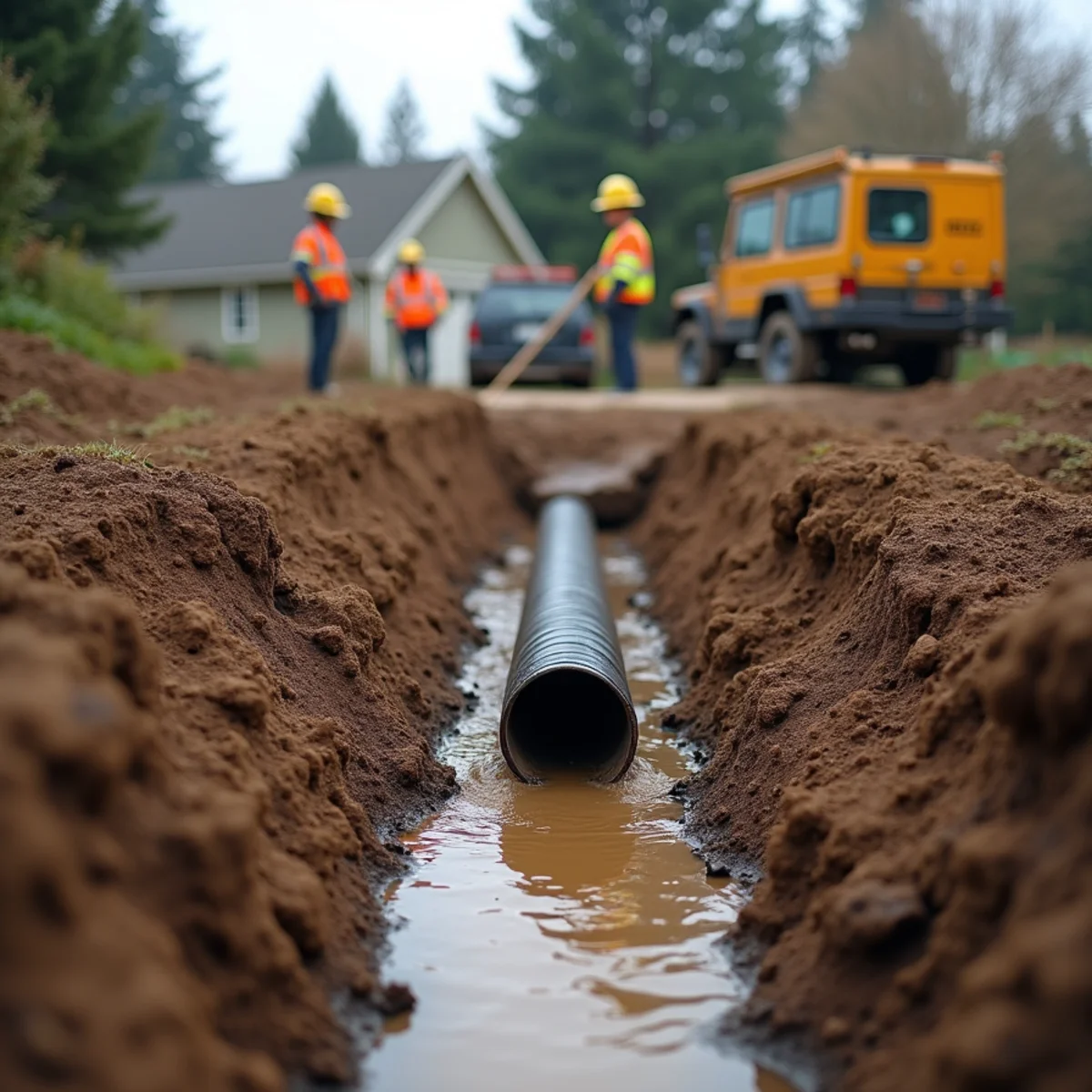
A French drain is one of the most misunderstood projects in home improvement. The concept is simple, a gravel-filled trench with a perforated pipe that collects water and carries it away, and that simplicity lures homeowners into a project that our specific soil conditions make genuinely difficult to get right. In Seattle's glacial clay, a French drain done wrong does not just fail to help; it can concentrate water and make flooding worse than before.
The difficulty here is the ground itself. Our dense glacial till, the Seattle hardpan, resists both digging and drainage, and it holds water rather than letting it soak away. A drain has to be dug through that hardpan, sloped precisely, built with the right materials, protected from silt, and discharged somewhere legal. Miss any of those and the trench becomes an expensive channel that reroutes water toward your foundation instead of away from it. These are the risks that make DIY French drains so prone to failure in our region.
Key takeaways
- Glacial clay barely percolates, so a French drain here has to carry water out, not rely on it soaking away.
- The most common DIY error is insufficient or reversed slope, which leaves the drain holding standing water.
- No real outlet — a daylight discharge or sump — means the trench simply fills and stops working.
- Skipping filter fabric lets fines migrate in and clog the gravel, killing the drain within a few seasons.
- Using the wrong rock (fines-heavy instead of clean open-graded) chokes flow from day one.
- A misrouted drain can send collected water straight toward the foundation, making the original problem worse.
Why Digging in Seattle Hardpan Destroys Regular Trenchers
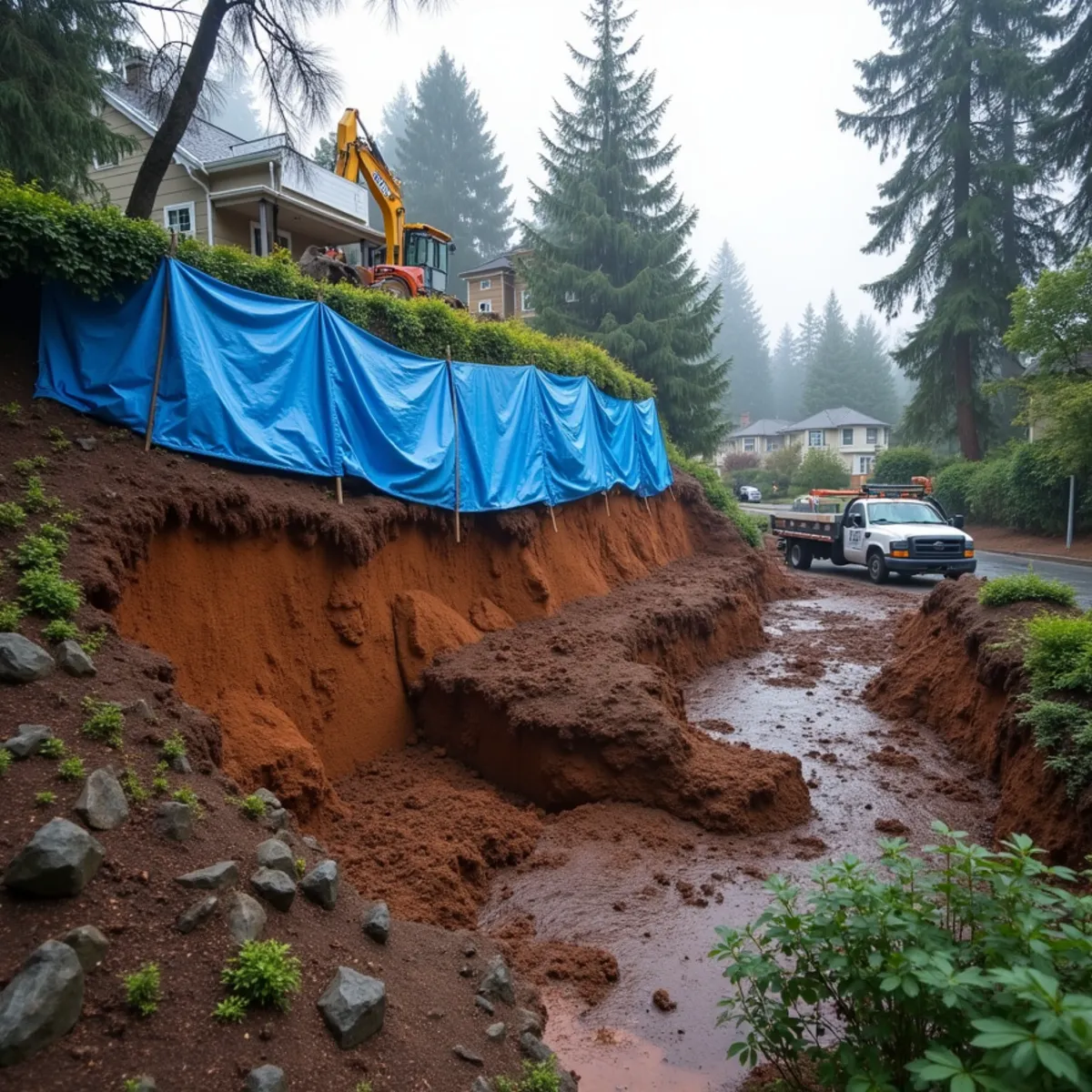
The first obstacle is one homeowners rarely anticipate: our subsoil is brutally hard to dig. Glacial till was compacted under the immense weight of ice sheets, leaving a dense, rocky, clay-bound layer that behaves more like soft rock than soil. Homeowners who rent a small trencher expecting to cut a clean channel often find the machine bucking, stalling, or refusing to bite into the hardpan at all.
This is more than an inconvenience. The difficulty of digging tempts DIYers into a shallower trench than the drain actually needs, which undermines the whole system before a single pipe goes in. A French drain works only if it sits deep enough and runs on a consistent grade, and both of those become nearly impossible when the ground fights every inch. Professional crews use equipment matched to our soil precisely because standard homeowner tools are not built for hardpan.
The Slope Fallacy: Why Negative Slope Floods Your Basement
Water moves downhill, and a French drain is entirely dependent on maintaining a continuous downhill slope from where it collects water to where it discharges. This sounds obvious, and it is exactly where DIY drains most often fail, because eyeballing grade over a long trench is far harder than it looks, especially when the difficult digging encourages an uneven bottom.
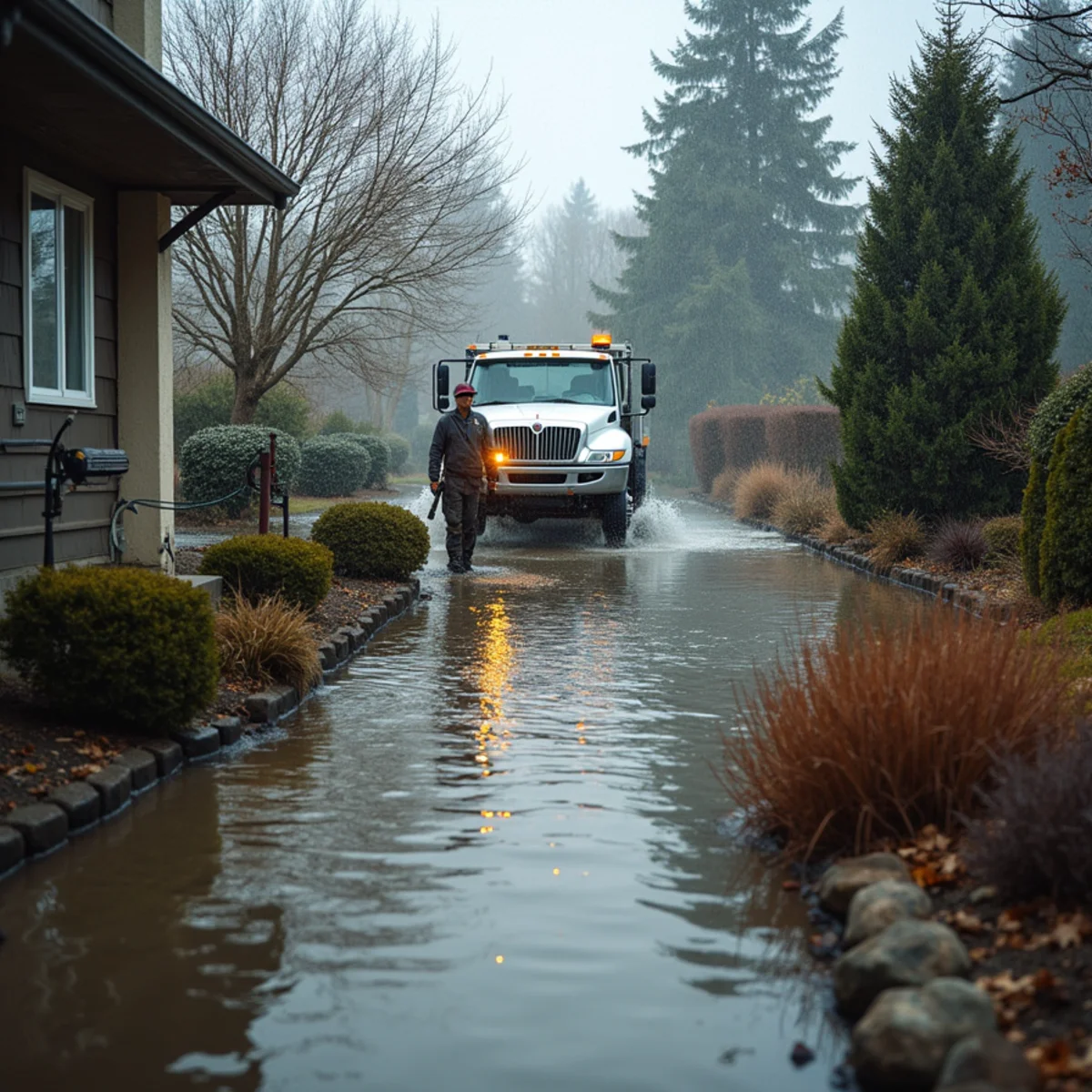
The consequence of getting it wrong is severe. A trench with a flat spot or, worse, a negative slope that tips back toward the house becomes a reservoir. Instead of carrying water away, it collects water and holds it against the foundation, and a drain intended to keep the basement dry can end up delivering water straight to it. The pipe must fall consistently along its entire length, verified with proper leveling, not guessed. In our clay, where the surrounding soil will not absorb overflow, a mis-sloped drain has nowhere to shed its water except back toward the structure it was meant to protect.
Using Cheap Perforated Slinky Pipe vs Rigid PVC Drain Pipe
Not all drain pipe is equal, and the choice matters more than the price tag suggests. The inexpensive black corrugated flexible pipe, the accordion-like tubing sold in coils, is easy to handle and cheap, which is why it dominates DIY drains. It is also the wrong choice for a serious drainage problem in our soils.
The Problem with Corrugated Pipe
The corrugated wall that lets flexible pipe bend also creates ridges where sediment settles and roots find purchase, so it clogs more readily and is far harder to clean out. Its flexibility means it can sag between support points, creating the low spots that trap water. For a drain expected to perform for years in demanding conditions, that fragility is a liability.
Why Rigid Pipe Performs Better
Rigid smooth-wall PVC drain pipe holds its grade, resists sagging, moves water faster along its smooth interior, and can be cleaned out mechanically if it ever needs it. It costs more and takes more care to install with proper fittings, but for a permanent drainage solution in glacial clay it is the material that actually lasts. Choosing pipe on price alone is one of the quiet reasons DIY drains underperform.
Filter Fabric Fails: How Silt Clogs Unprotected Gravel Trenches
A French drain lives or dies by whether it stays clean inside, and its greatest enemy is silt. The fine particles in our soil migrate with moving water, and if they reach the gravel and pipe they gradually fill the voids the drain relies on to move water. A clogged drain is a dead drain, and silt intrusion is the slow, invisible way most drains eventually die.
The defense is filter fabric, a geotextile that wraps the gravel and pipe and lets water pass while holding back the fines. DIY drains frequently omit it to save money, use the wrong grade of fabric, or install it incompletely so silt finds its way in around the gaps. The result is a drain that works for a season or two and then chokes, at which point the entire trench must be dug up and rebuilt because there is no cleaning silt out of clogged gravel. Proper fabric, fully wrapping the aggregate, is what lets a drain keep working for years instead of months.
Discharge Legalities: Where Are You Allowed to Send Sump Water
The question that stops many DIY drainage projects cold is the simplest one to overlook: where does all this collected water go? A drain that successfully gathers water still has to discharge it somewhere, and you are not free to send it wherever is convenient. Directing water onto a neighbor's property, into a steep slope, or into a critical area can create liability and run afoul of local rules.
Eastside jurisdictions regulate stormwater and drainage discharge, and King County's Critical Area Ordinances add further constraints near sensitive slopes and water features, which cover a lot of hillside Eastside property. A legitimate discharge point might be a suitable storm connection, an approved dispersion or infiltration system, or another code-compliant outlet, and which of those applies depends on your parcel. Getting this wrong can turn a drainage fix into a legal problem, which is why the discharge plan is part of the drainage design, not an afterthought once the trench is already dug.
Get Guaranteed Commercial-Grade Yard Drainage
A French drain touches soil mechanics, precise grading, material selection, silt control, and local discharge law all at once, and in our hardpan and wet climate the margin for error is thin. When it works, it quietly protects your foundation and yard for years. When it fails, it can worsen the very flooding it was built to stop, and the fix means digging the whole thing up again.
Seattle Pro Turf installs commercial-grade French drains and yard drainage across Kirkland, Bothell, and Shoreline, engineered for our soils and built with the right pipe, fabric, and slope, discharged to a legal outlet. Licensed, bonded, and insured under Washington license SEATTPT839LN, we also handle emergency drainage and sump pump work when water is already in the house and cannot wait.
Why French drains behave differently in glacial clay
A French drain is simple in sandy soil and treacherous in our glacial till. The whole system depends on water being able to reach the perforated pipe and then leave the gravel trench, and tight clay resists both. DIY drains here fail most often because the trench becomes a bathtub: water enters the gravel, hits the impermeable clay walls, and just sits there because there is no fall to daylight and no permeable soil to soak into. A drain that holds water instead of moving it is worse than no drain, because now you've concentrated moisture next to whatever you were trying to protect.
The second common failure is the filter. Without a proper non-woven geotextile wrapping the aggregate, clay fines migrate into the gravel and clog the voids within a couple of wet seasons, and silt fills the pipe perforations. The drain works beautifully the first winter and quietly dies by the third. Homeowners rarely connect the later basement dampness to a drain they installed years earlier.
The judgment that separates a working drain from a decorative gravel trench is establishing consistent fall and a real outlet. Every foot of pipe needs to drop toward a legitimate discharge, a daylight point downslope, a storm connection where allowed, or a properly sized drywell, and that discharge has to be lower than the water you're collecting. On flat Eastside lots that outlet is the hard part, and it is the part DIY plans usually hand-wave.
Pro tips from our crew
- Wrap the aggregate in non-woven geotextile fabric; in clay, an unfiltered drain clogs with fines within a few seasons and stops working.
- Establish continuous fall toward a real outlet before you dig; a level trench in clay collects water instead of moving it.
- Confirm your discharge point is genuinely lower than what you're draining and legal to connect to, the outlet is the hardest part on flat lots.
- Use open-graded washed rock, not pit-run gravel full of fines, so the trench actually stores and conveys water.
- Keep the drain far enough from the foundation that you relieve water pressure without channeling it against the footing.
Frequently Asked Questions
Our subsoil is glacial till, a dense hardpan compacted by ancient ice sheets that behaves more like soft rock than dirt. It resists standard homeowner trenchers and shovels, which often tempts DIYers into digging too shallow, undermining the drain before it is even built.
Yes. A trench with a reversed or flat slope collects water and holds it against your foundation instead of carrying it away, and a clogged or mis-discharged drain can concentrate water where you least want it. A poorly built drain can genuinely leave you worse off than no drain at all.
No. Eastside cities regulate stormwater discharge, and King County Critical Area Ordinances add restrictions near steep slopes and sensitive areas. Water must go to an approved, code-compliant outlet, and sending it onto a neighbor's property or a protected slope can create liability, so the discharge plan is part of a proper design.
It depends on your parcel and any critical areas nearby. Options include daylighting to a lower point on your own property, an approved storm connection, or a sized drywell for infiltration, but discharging onto a neighbor's land or into a critical area or steep slope can violate King County rules and cause real problems. This is worth confirming before you dig. Call (323) 606-0255 and we can help identify a compliant outlet for your lot.
Almost always because it collects water but has nowhere to send it. In tight glacial clay, a trench with no fall and no permeable outlet fills up and holds water right where you dug it, so the ground stays saturated longer than before. The fix is establishing proper grade to a real discharge point and, often, wrapping the system in filter fabric so it doesn't silt shut.
A French drain is simple only on paper. In Seattle's glacial clay, the difficulty of digging, the precision the slope demands, the material choices, the silt that clogs unprotected trenches, and the legal question of where the water goes each represent a way for a DIY drain to fail, and failure here often means water routed toward your home rather than away from it. The trench that looked like a weekend project becomes a recurring one.
If standing water, a wet basement, or a soggy yard has you considering a drain, it is worth getting the design and discharge right the first time in soil this unforgiving. Call Seattle Pro Turf at (323) 606-0255 for guaranteed commercial-grade yard drainage engineered for our conditions, and for emergency help when water is already where it should not be.
Ready to move from reading to results? Our french drains & yard drainage and emergency drainage & sump pump crews handle projects like this across the Eastside — including Kirkland and Bothell. Call (323) 606-0255 for a free estimate.
Get expert help on your project
SeattleProTurf · 14+ years serving the Eastside · Licensed & insured