Why Artificial Turf Waterlogs: Fixing Failed Saturated Sub-Bases
The short answer
Turf waterlogs when the sub-base can't drain — usually a compacted, fines-heavy or clay-contaminated base sitting on hardpan instead of an open-graded crushed-rock layer. The fix is corrective, not cosmetic: lift the turf, remove and rebuild the base with 5/8" open-graded rock, re-establish fall and drainage, then relay the turf.
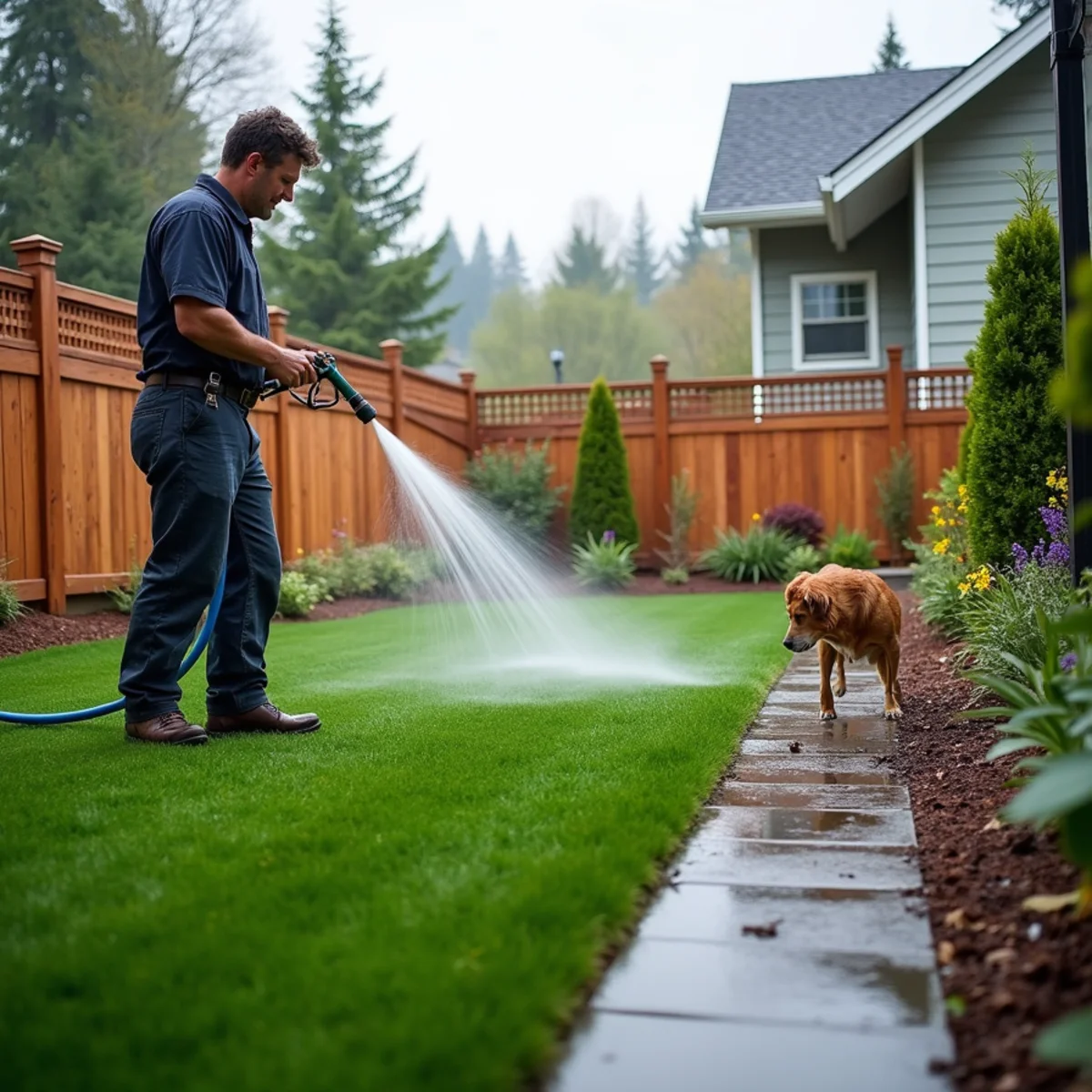
Artificial turf is supposed to be the end of mud, not a new source of it. When a synthetic lawn pools water, squishes underfoot, or sprouts wrinkles and sunken spots, the grass is not the problem, the base beneath it is. In our climate, a turf failure is almost always a drainage failure, and it traces back to an installation that never accounted for the ground it was built on.
This guide explains why so many turf jobs waterlog in Washington's rains, why standard approaches fail on our glacial hardpan, and how a correctly engineered base and sub-surface drainage fix the problem for good. If your turf in Kirkland, Redmond, or Bellevue holds water after a storm, understanding what went wrong is the first step to a lawn that finally drains the way it should.
Key takeaways
- Waterlogging is a sub-base problem, not a turf problem — the surface can't drain faster than the base underneath it.
- Common causes are compacted fines, clay contamination, or a base built without an open-graded crushed-rock layer.
- On hardpan, water has nowhere to go unless the base and site drainage give it a path.
- The proper repair is corrective: lift the turf, remove the failed base, and rebuild with 5/8" open-graded rock.
- Re-establish correct fall and drainage outlets before relaying the turf so water actually exits the system.
- Topical fixes like more infill or aeration won't solve a base that was built wrong from the start.
Why Incompetent Turf Installations Fail in Washington Rains
Turf that fails in the Pacific Northwest was usually installed to a standard borrowed from a drier place. Crews accustomed to arid climates, or homeowners following a generic DIY guide, build a thin base over minimally prepared soil and roll turf on top. In Phoenix that might survive. Here, where Kirkland alone averages roughly 5.45 inches of rain in December, that base is asked to move enormous volumes of water, and it cannot.
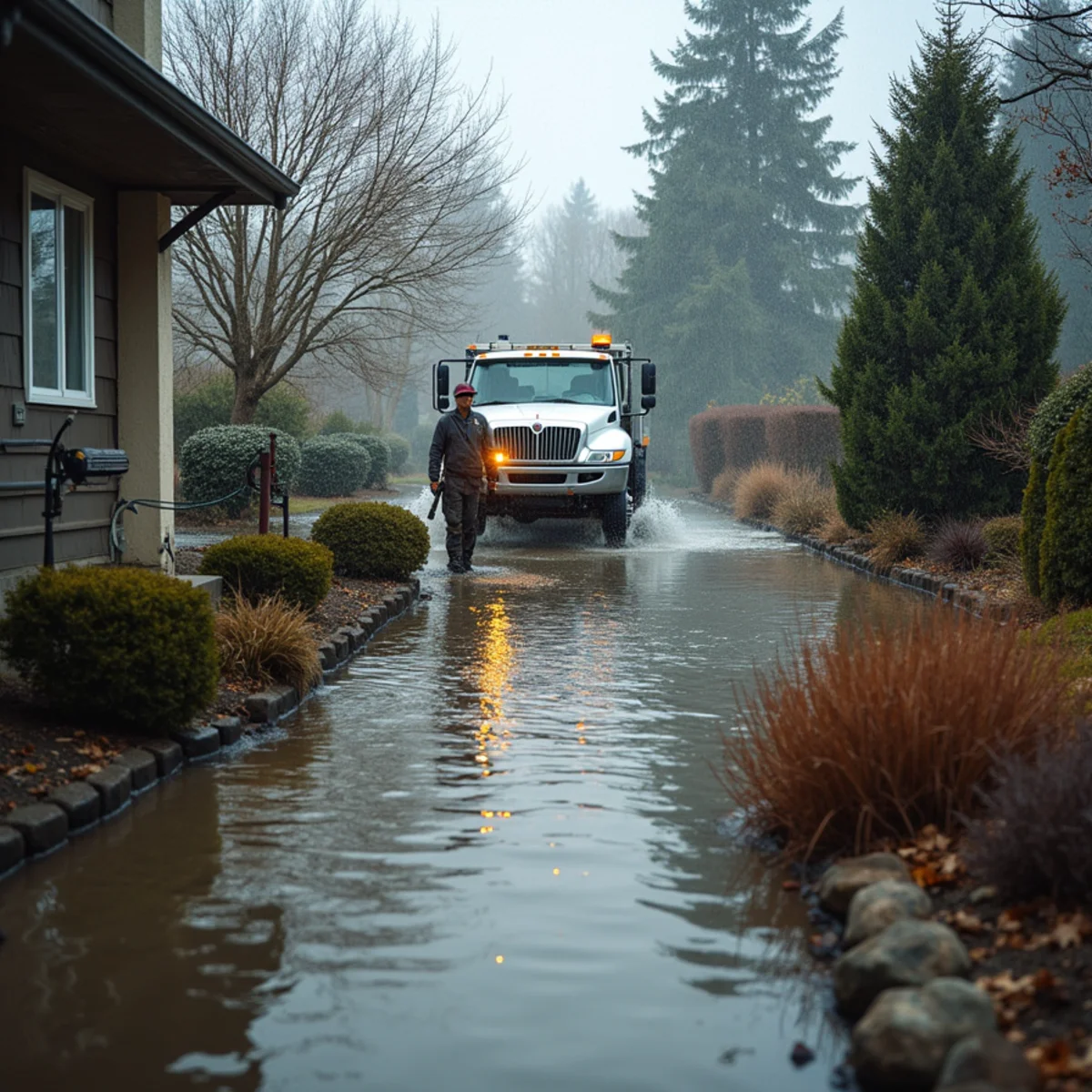
The failures show up as pooling on the surface after rain, a spongy or squishy feel underfoot, standing water that lingers for hours or days, and eventually wrinkles and low spots where the base has shifted or compacted unevenly. Sometimes odor develops, as trapped water and organic material sit in a base that never dries out. None of this is the turf wearing out; it is water with nowhere to go.
The frustrating part for homeowners is that a bad install can look perfect on the day it is finished. The defect is invisible until the first serious storm loads the base, which is why turf should be judged by how it drains in December, not how it looks in July. A lawn that waterlogs is telling you the base was built for the wrong climate.
The Glacial Hardpan Trap: Why Standard Sand Infill Fails
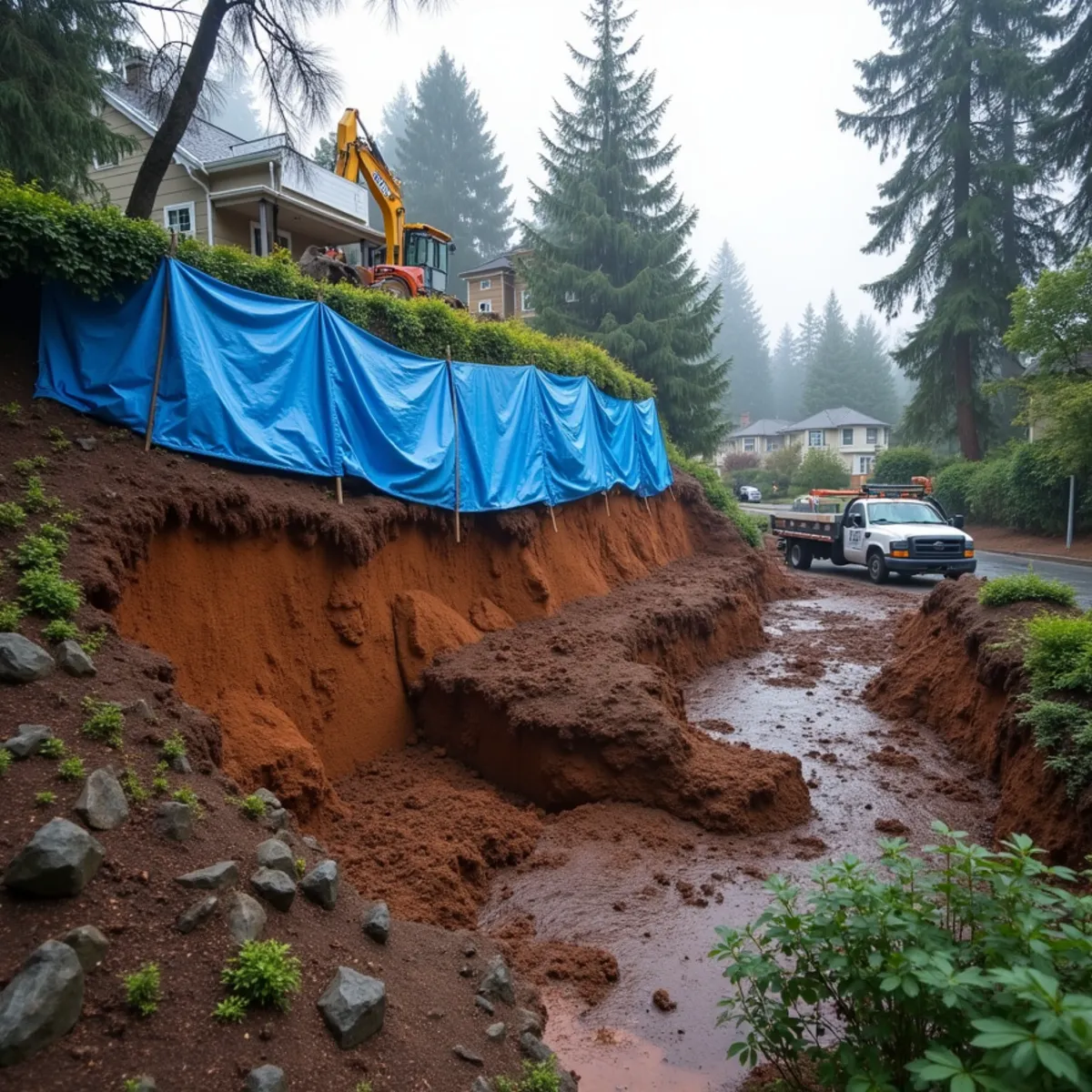
The specific trap in our region is the glacial hardpan beneath the topsoil. This dense, compacted till sheds water rather than absorbing it, so any water that reaches it stops there and spreads sideways or pools. A turf base built without accounting for that impermeable layer simply traps water on top of the hardpan, right where the lawn sits.
Compounding the problem, many installs use a fine sand or a poorly draining aggregate as the base, chasing a smooth surface at the expense of drainage. Fine materials hold water and clog, and over the hardpan they create a saturated layer that has no exit. The turf backing may be permeable, but permeability means nothing if the water passes through the grass only to sit in a base that cannot drain and on a subsoil that will not accept it.
The fix is not more of the wrong material, it is the right material and a path for the water to leave. That means a base engineered to stay open and drain freely even when the hardpan below is saturated, paired with a way to route the collected water away from the lawn entirely.
How Crushed Open-Graded Aggregate (Clean 5/8) Saves Turf
The heart of a turf base that works in our climate is open-graded crushed aggregate, commonly a clean 5/8 inch crushed rock. Open-graded means the material lacks the fine particles that clog and hold water, so it retains open voids between the stones that let water pass through quickly and keep passing through over time. It is the difference between a base that drains and a base that saturates.
Because it is angular crushed rock rather than rounded gravel, this aggregate also locks together when compacted, providing a stable, firm platform that resists shifting and rutting under foot traffic. That stability is what prevents the wrinkles and sunken spots that plague turf on soft or poorly built bases. A properly compacted open-graded base is both a drainage layer and a structural one.
This is the base we build under every turf installation, and it is the base we install when we repair a failed one. Rebuilding the sub-base with clean, open-graded aggregate is frequently the core of turning a waterlogged lawn back into a dry, firm one that performs through the wet season.
Repairing Sunk Spots, Wrinkles & Under-Turf Pooling
Repairing a failed turf lawn starts with diagnosis, because the visible symptom points to the underlying flaw. Sunken spots and low areas usually mean the base was under-compacted or has washed and settled unevenly. Wrinkles and bubbles often mean the turf was not properly secured or the base moved beneath it. Persistent pooling means the base and subsoil are not draining. Each tells us what the base is doing wrong.
The repair typically involves lifting the affected turf, removing the failed or poorly draining base material, and rebuilding with properly compacted open-graded aggregate to restore both drainage and a true, level surface. Where the whole lawn drains poorly, the repair may extend across the full area; where the problem is localized, we can often target the failed zone. The turf itself, if it is sound, can frequently be re-laid over the corrected base.
Done right, the lawn comes back firm, level, and draining, without the pooling and wrinkles that prompted the call. The key is that we fix the base, not just the surface, because re-stretching wrinkled turf over a base that still cannot drain only postpones the next failure.
Installing Sub-Surface Perforated Turf Drain Pipes
On the toughest lots, an open-graded base still needs a dedicated exit for the water it collects, and that is where sub-surface drainage comes in. We install perforated drain pipes beneath or within the turf base to actively gather water and carry it away to a safe outlet, rather than relying on the saturated hardpan below to somehow absorb it. This gives the water a real destination.
This sub-surface drainage is essential wherever the volume is high, the ground is flat, or the hardpan sits close to the surface. It ties the turf lawn into the broader principle behind all our French drain and yard drainage work: capture the water and route it away from where it causes problems. For turf, that means the base drains through the aggregate, into the perforated pipe, and off to an outfall, keeping the surface dry.
Combining an open-graded base with sub-surface drain lines is what makes turf reliable on lots that would otherwise waterlog. It is more work than a basic install, and it is exactly the work that separates a lawn that survives a Pacific Northwest winter from one that fails in it.
Schedule a Professional Turf Drainage Inspection
If your turf is pooling, squishing, wrinkling, or sinking, the lawn is fixable, but it needs a proper diagnosis first. We come out, assess how the base and subsoil are draining, and identify whether the fix is a targeted base repair, a full sub-base rebuild, or the addition of sub-surface drainage. From there you get an honest plan to make the lawn perform.
As a licensed, bonded, and insured contractor with over fourteen years building and repairing turf on Eastside hardpan, we know exactly why these installations fail here and how to correct them. Our saturated turf sub-base repair and synthetic turf installation expertise means we can rescue a bad install or build a new lawn that drains from day one. Serving Kirkland, Redmond, Bellevue, and beyond, we can inspect your waterlogged turf and tell you what it will take to fix it.
The failed base under waterlogged turf, and why the turf isn't the problem
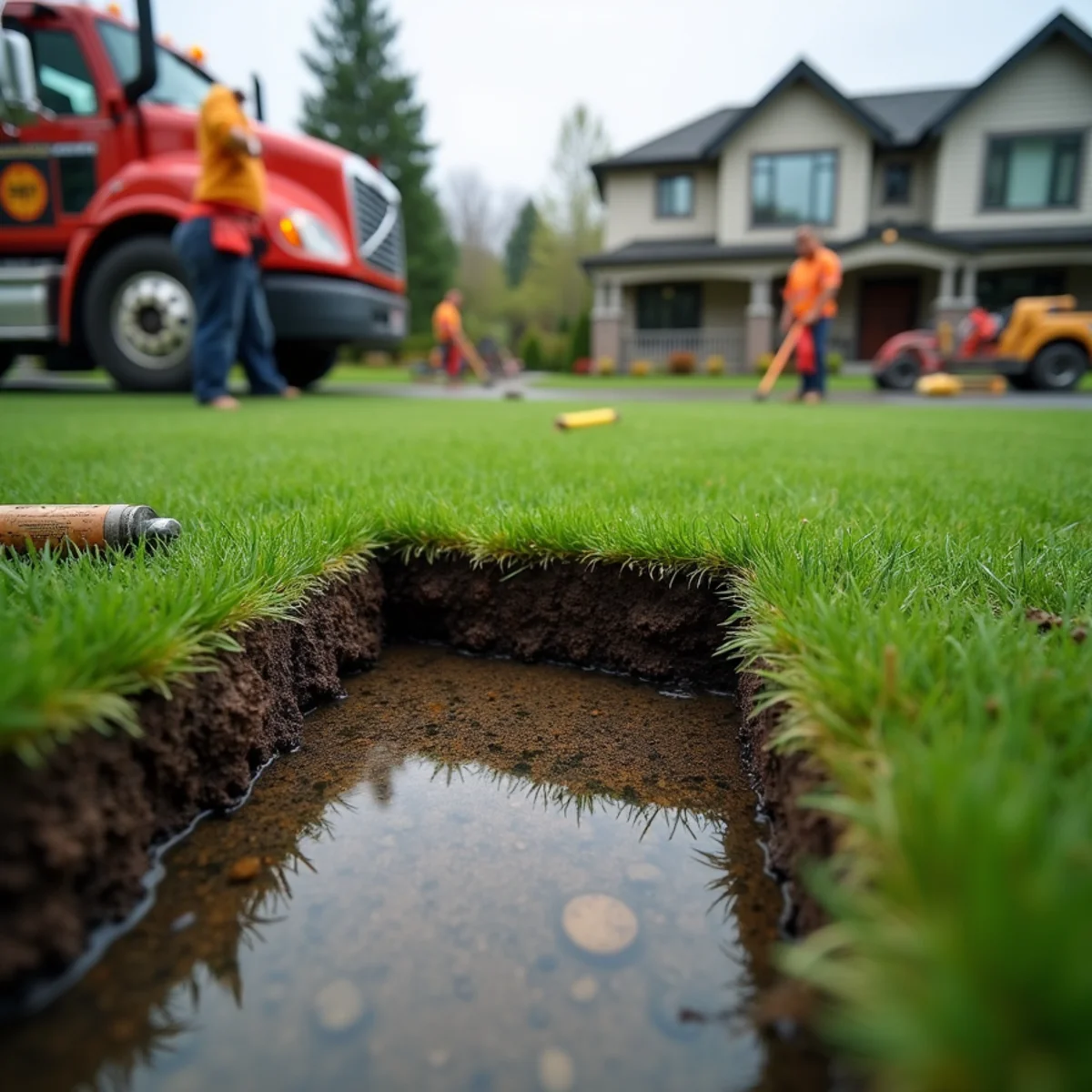
When turf holds water and squishes underfoot, homeowners blame the grass, but the turf is almost always fine. Quality turf is perforated and drains freely; the water is trapped below it in a base that can't shed it. The usual culprit is that the original crew used a fine, non-draining base like sand or dense-graded fines directly on our hardpan. Water passes through the turf, hits that closed layer, and has nowhere to go, so it sits like a sponge over impermeable clay.
We see two failure patterns. In the first, there was never an open-graded base to begin with, so the whole lawn saturates. In the second, the base was fine but the drainage outlet, a French drain or a daylighted pipe, silted up or was never connected, so the base fills like a bathtub with no drain. Diagnosing which one you have decides whether it's a full tear-out or a drainage repair.
The honest reality is that a truly failed sub-base means lifting the turf, removing the offending layer, and rebuilding with open-graded 5/8-inch crushed base and a real outlet. It's disruptive, but patching over a base that can't drain just resets the same clock. Doing it once, correctly, on hardpan is the only version that lasts.
Pro tips from our crew
- Press the turf after a dry spell; if it's still spongy days later, the problem is the base, not the grass.
- Ask whether the original base was open-graded crushed rock or fine sand; sand over hardpan is the classic failure.
- Confirm the drainage has an actual outlet that daylights or ties to a drain; a base with no exit is a bathtub.
- A partial fix rarely works if the base itself is non-draining; budget realistically for a rebuild.
- Keep a small sample of your infill and turf specs; it speeds diagnosis if a repair crew is different from the installer.
Frequently Asked Questions
Almost never. Pooling and squishy turf is a drainage failure in the base, not a defect in the grass. On our glacial hardpan, a base built with fine or poorly draining material traps water on top of the impermeable subsoil. The fix is rebuilding the base with open-graded aggregate and, where needed, adding sub-surface drainage.
It can usually be repaired. If the turf itself is sound, we can lift it, rebuild the failed base with properly compacted open-graded aggregate, add drainage if the lot needs it, and re-lay the same turf over the corrected base. Full replacement is only necessary if the turf is also damaged or worn out.
Open-graded crushed rock lacks the fine particles that clog and hold water, so it keeps open voids between the stones that let water pass through and keep passing through. As angular rock, it also compacts into a firm, stable platform. Fine sand does the opposite, holding water and clogging over time, especially above hardpan that cannot absorb it.
If the lot is flat, the water volume is high, or the glacial hardpan sits close to the surface, an open-graded base alone may collect water with nowhere to send it. In those cases perforated sub-surface drain pipes are added to carry the water to a safe outlet. An on-site inspection determines whether your lawn needs them.
Occasionally. If the base is sound and the only failure is a blocked or missing outlet, we can sometimes add drainage at the low end and restore flow without a full tear-out. But if the base layer itself doesn't drain, there's no shortcut; the non-draining material has to come out. We can core-test a spot to tell you which situation you're in.
No, and it can void a turf warranty. The turf backing already drains; punching holes doesn't fix a base that can't move water sideways or down through hardpan. You'd be treating the wrong layer. The real fix is at the sub-base and outlet; call (323) 606-0255 and we'll diagnose it properly rather than guess.
Waterlogged artificial turf is a solvable problem with a clear cause: a base built for a drier climate than ours, sitting on glacial hardpan that will not accept the water. Rebuilding with clean open-graded aggregate and, where the lot demands it, adding sub-surface drain pipes gives the water a real path out and turns a squishy, wrinkled lawn back into a firm, dry one.
If your turf is pooling, sinking, or wrinkling after our winter rains, do not assume you are stuck with it. Call Seattle Pro Turf at (323) 606-0255 for a free turf drainage inspection, and we will diagnose exactly why it is failing and what it will take to make it drain right.
Ready to move from reading to results? Our saturated turf sub-base repair and synthetic turf installation crews handle projects like this across the Eastside — including Kirkland and Redmond. Call (323) 606-0255 for a free estimate.
Get expert help on your project
SeattleProTurf · 14+ years serving the Eastside · Licensed & insured