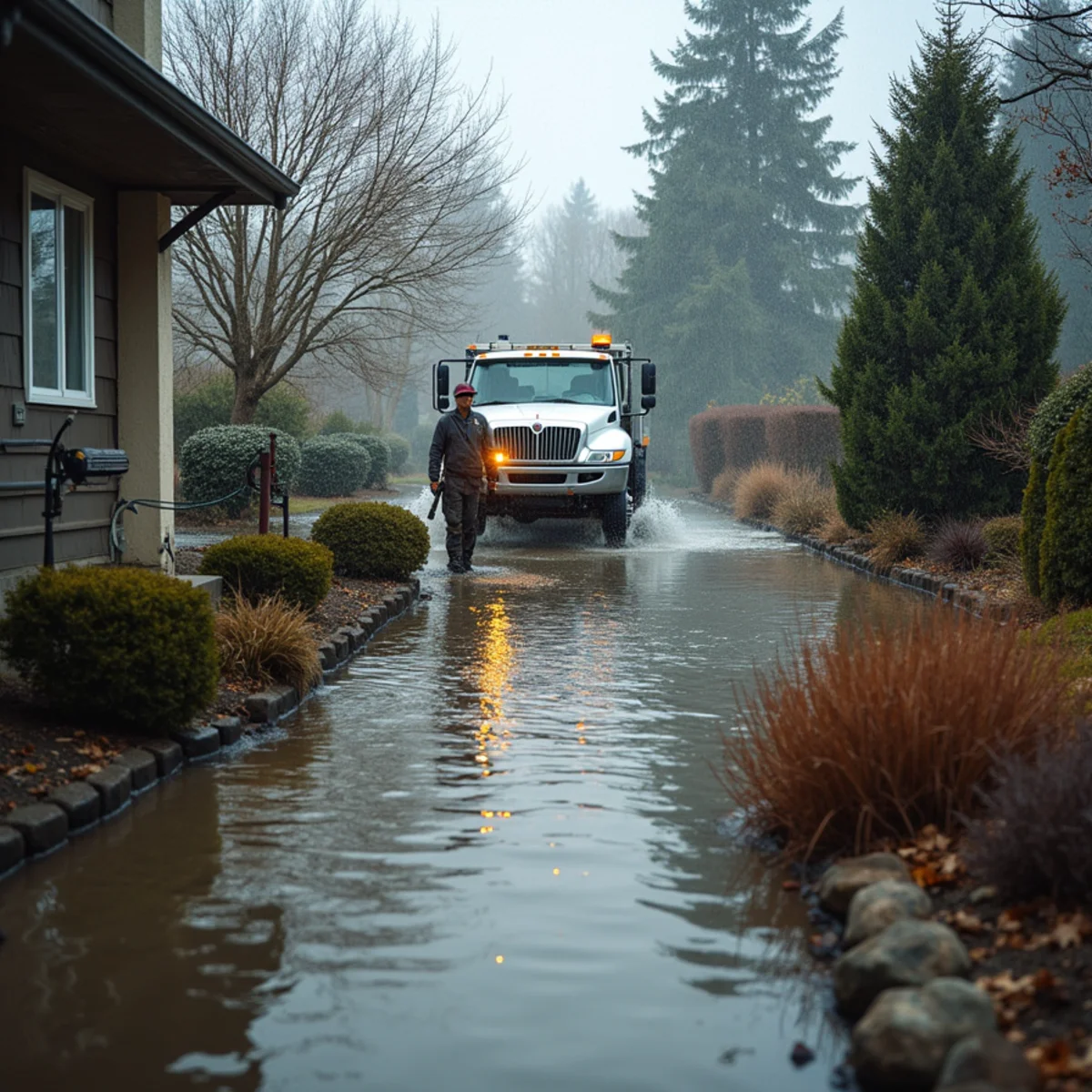
Composite Decks vs Cedar Decks in the Wet Pacific Northwest Climate
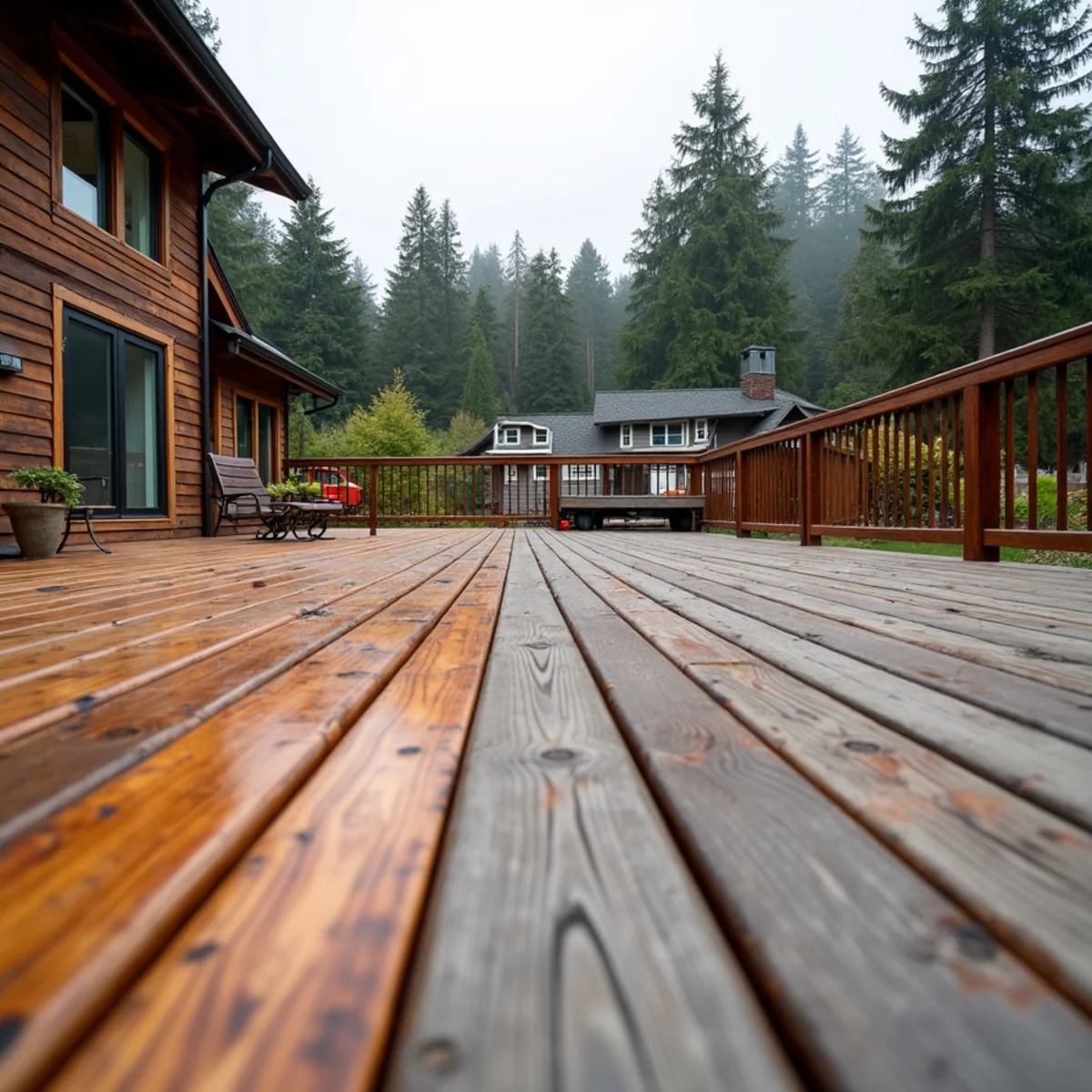
The short answer
In the wet Pacific Northwest, composite decking costs more upfront but resists moss, rot, and moisture with minimal upkeep, while cedar is cheaper initially and beautiful but needs regular cleaning and sealing to survive constant damp. Over the deck's life, composite usually costs less to maintain; cedar rewards owners willing to do the work.
A deck in the Pacific Northwest lives a hard life. It spends more than half the year damp, shaded surfaces grow algae, and the wood is never fully dry long enough to stay stable. That reality is the backdrop for every decking decision here, and it is why the classic Northwest choice between natural cedar and modern capped composite is really a choice about how you want to spend the next twenty years, in maintenance or in materials cost.
Cedar has deep roots in regional building, prized for its beauty and its natural resistance to decay. Capped composite boards from makers like Trex and TimberTech promise to sidestep rot, algae, and the annual staining cycle altogether. Both build a fine deck; they simply ask for very different commitments. This guide compares them on looks, durability, cost over time, structural protection, and the demands of the hillside lots so common above Lake Washington.
Key takeaways
- Composite decking costs more upfront but resists moss, rot, splintering, and moisture with very little upkeep.
- Cedar is cheaper to install and naturally beautiful, but needs regular cleaning and sealing to survive constant damp.
- In the Pacific Northwest, untreated or neglected cedar can gray, cup, and rot faster than in drier climates.
- Composite's colorfast, low-maintenance surface holds up through wet winters without annual refinishing.
- Over the deck's lifespan, composite typically costs less to maintain even though it costs more to build.
- Cedar rewards owners who enjoy the look and are committed to the ongoing maintenance it requires.
The Traditional Northwest Cedar Deck: Natural Beauty vs Yearly Staining
Cedar earns its place through genuine beauty. The warm grain, the natural color range, and the way it weathers give a cedar deck a character that composite works hard to imitate. As a naturally rot-resistant softwood, cedar has been a Northwest standard for generations, and for homeowners who want a real-wood surface underfoot, nothing else feels quite the same.
The cost of that beauty is maintenance, and in our climate it is relentless. Left untreated, cedar silvers and, more importantly, absorbs the constant moisture that feeds rot and mildew. To keep it sound and good-looking, a cedar deck needs cleaning and re-sealing or re-staining on a regular cycle, typically every year or two, because our long wet season strips protective finishes faster than drier climates do.
Skip that cycle and cedar deteriorates. Boards cup, split, and grow slick with algae in the shaded, damp conditions that dominate Northwest yards for months. Cedar rewards owners who genuinely enjoy the upkeep and treat the annual staining as part of owning a wood deck. For those who want to build it and forget it, that ongoing obligation is the deciding drawback.
Modern Capped Composite (Trex, TimberTech): Zero Rot and Algae Resistance
Capped composite decking is engineered to defeat exactly the problems our climate creates. The board is a wood-plastic composite core wrapped in a hard polymer cap, and that cap is the key. It seals the core against moisture, so the board cannot absorb water, rot, or feed the mildew and algae that plague wood decks in the shade.
Why the Cap Matters in Our Climate
Because water never penetrates a capped board, the failure modes that shorten a cedar deck's life simply do not apply. Products from Trex and TimberTech resist the staining, the slick algae film, and the rot that a Northwest winter drives into unprotected wood. The surface stays dimensionally stable through the wet-dry swings that make cedar cup and split.
Maintenance Reduced to Cleaning
Capped composite eliminates the staining and sealing cycle entirely. Upkeep is limited to periodic washing to keep the surface clean, with no annual finish to reapply. For homeowners weighing decades of Northwest weekends spent maintaining cedar against a wash-and-go surface, the reduced maintenance is composite's central selling point.
Cost Differences: Upfront Lumber vs Long-Term Composite Durability
The cost comparison mirrors the turf-versus-sod trade-off: cedar generally costs less to buy, and composite costs less to keep. Cedar decking is the lower-priced material upfront, which makes it attractive on a tight budget, while capped composite carries a higher board price that raises the initial project cost noticeably.
The long view changes the picture. Cedar's lower purchase price comes with a recurring bill for stain, sealer, and either your labor or a contractor's every year or two, plus the eventual replacement of boards that rot or split despite the care. Composite's higher upfront cost buys out most of that future spending, since the boards resist the decay and finish maintenance that consume a cedar deck's budget over time.
Which one is cheaper over the deck's full life depends on how diligently the cedar is maintained and how long you keep the home. For a long-term owner who would rather not spend weekends staining, composite's durability tends to justify its premium. For a shorter horizon or a homeowner who values real wood and enjoys the upkeep, cedar's lower entry cost can be the better fit.
Sub-Structure Framing: Protecting Joists with Waterproof Butyl Tape
The decking boards get all the attention, but the frame underneath determines how long any deck lasts, and this is where our climate does its quietest damage. Water sits in the seam where a deck board meets the joist below it, and on an untreated frame that trapped moisture rots the joists from the top down, hollowing out the structure while the surface still looks fine.
The professional defense is waterproof butyl joist tape. Applied along the top of every joist and beam before the decking goes down, this self-sealing membrane keeps water out of the wood and away from the fasteners, dramatically extending the life of the framing. It is inexpensive relative to the whole project and it is one of the clearest markers of a deck built to survive Northwest conditions rather than just pass inspection.
This matters regardless of whether you choose cedar or composite on top, because both surfaces sit on a wood frame. A premium composite deck built on an untaped, unprotected frame can still fail from below. A properly detailed sub-structure with taped joists and correct flashing at the house is what makes the surface investment worthwhile.
Hillside Deck Engineering Overlooking Lake Washington
Many of the best deck sites on the Eastside are also the most demanding: sloping lots above Lake Washington where the deck is less a patio extension than an elevated structure reaching out over a hillside. These builds move well beyond decking-material selection into real structural engineering, with tall footings, lateral bracing, and connections designed to carry both the load and the forces a hillside imposes.
On steep sites the framing and foundation work must account for the same soil behavior that governs retaining walls in our region, and taller elevated decks often intersect with permitting and engineering requirements. Building a lake-view deck on a slope is a job for a contractor who understands both the finish carpentry and the structure holding it in the air, because a beautiful deck surface means nothing on a frame that was not engineered for the grade.
Discuss Your Deck Vision with Our Building Specialists
Choosing between cedar and composite, and detailing the frame that will outlast either, is easier with someone who builds decks in this climate every season. A conversation about your site, your budget, and how long you plan to enjoy the deck will point clearly toward the right material and the right structural approach for your yard.
Seattle Pro Turf builds timber and composite decks across Kirkland, Bellevue, and Shoreline, including hillside and elevated builds, and we protect every frame we set. Licensed, bonded, and insured under Washington license SEATTPT839LN, we pair the deck with low-voltage landscape lighting when you want the space to work after dark, so the finished project is one you actually use through the seasons.
What 14 years of Northwest weather does to each material
Cedar is beautiful and it is the traditional Northwest deck, but our climate is the worst-case environment for it. Constant winter moisture feeds surface mildew and moss, and the boards need cleaning and re-oiling or staining roughly every year or two to hold color and resist rot. Skip that cycle for a few seasons on a shaded Kirkland lot and the boards gray, cup, and start to soften at the fastener holes where water sits. Cedar can last a long time here, but only for an owner who genuinely keeps up the maintenance, and most people overestimate how much of that they will do.
Capped composite like Trex or TimberTech front-loads the cost and then nearly eliminates the upkeep. The polymer cap shrugs off the moss and mildew that plague real wood, and it does not need staining. The honest tradeoff is that composite gets hot in direct summer sun and, in a fully shaded wet spot, the surface itself can still grow a thin film of mildew that needs an occasional wash, though it never rots underneath the way cedar does.
The detail that decides longevity for either material is the substructure. The framing under the deck is almost always pressure-treated wood regardless of the surface you choose, and in our climate that frame is what fails first if the joists are not flashed and ventilated. We put joist tape on the framing and keep airflow under the deck, because a premium composite surface on a rotting frame is a false economy.
Pro tips from our crew
- Flash or tape the tops of your joists in any Northwest deck; trapped water at the fastener line rots the frame long before the boards give out.
- If your deck sits in shade, expect a thin mildew film on composite that washes off, and expect cedar to need more frequent cleaning to avoid slickness.
- Choose lighter composite colors for sunny exposures to limit summer surface heat underfoot.
- Budget cedar honestly as a re-stain every one to two years; if you know you won't keep that up, composite is the better long-run value here.
- Keep a ventilation gap and clear leaf litter from under the deck so the pressure-treated frame stays dry between rains.
Frequently Asked Questions
Capped composite resists the algae film that makes shaded cedar slick, which is a real advantage in our climate. Any wet surface can be slippery, but by keeping moisture and mildew out of the board, composite avoids the slick biological growth that develops on damp, unmaintained wood.
Because our wet season strips finishes quickly, most cedar decks need cleaning and re-sealing or re-staining every one to two years to stay protected. Neglecting that cycle lets moisture into the wood, which is what leads to cupping, splitting, and rot.
Yes. It is a small line item that protects the most failure-prone part of a Northwest deck, the top of the joists where water collects. Taping the frame prevents rot from starting underneath and can add many years to the structure's life regardless of the decking material on top.
Capped composite has an embossed surface that provides reasonable traction, but any deck in deep shade can develop a slick mildew film here regardless of material. A periodic wash keeps composite grippy, and it never gets as treacherous as cedar coated in moss. For shaded spots we can recommend a specific product line with a more textured cap.
Not if you love the look and will actually maintain it. Cedar rewards an owner who cleans and re-oils on schedule, and it can be beautiful for decades. It becomes a mistake when someone buys it for the lower upfront cost, skips the maintenance, and lets our wet winters gray and soften the boards. Call (323) 606-0255 and we'll talk through which fits how you'll actually use and care for the deck.
Cedar and capped composite both build a handsome Northwest deck; they differ in what they ask of you afterward. Cedar offers real-wood beauty and a lower upfront cost in exchange for a genuine, ongoing maintenance commitment that our climate makes demanding. Composite trades a higher initial price for freedom from rot, algae, and the annual staining ritual. Underneath either one, a properly protected, taped frame is what determines how long the deck truly lasts.
The best choice depends on your site, your budget, and how you want to spend your weekends, and a hillside lake-view build adds engineering to the conversation. Call Seattle Pro Turf at (323) 606-0255 to discuss your deck vision with our building specialists and get a plan matched to your yard and the way you live in it.
Ready to move from reading to results? Our timber & composite deck construction and low-voltage landscape lighting crews handle projects like this across the Eastside — including Kirkland and Bellevue. Call (323) 606-0255 for a free estimate.
Get expert help on your project
SeattleProTurf · 14+ years serving the Eastside · Licensed & insured