Sinking Pavers? How to Diagnose Sub-Base Erosion in Washington
The short answer
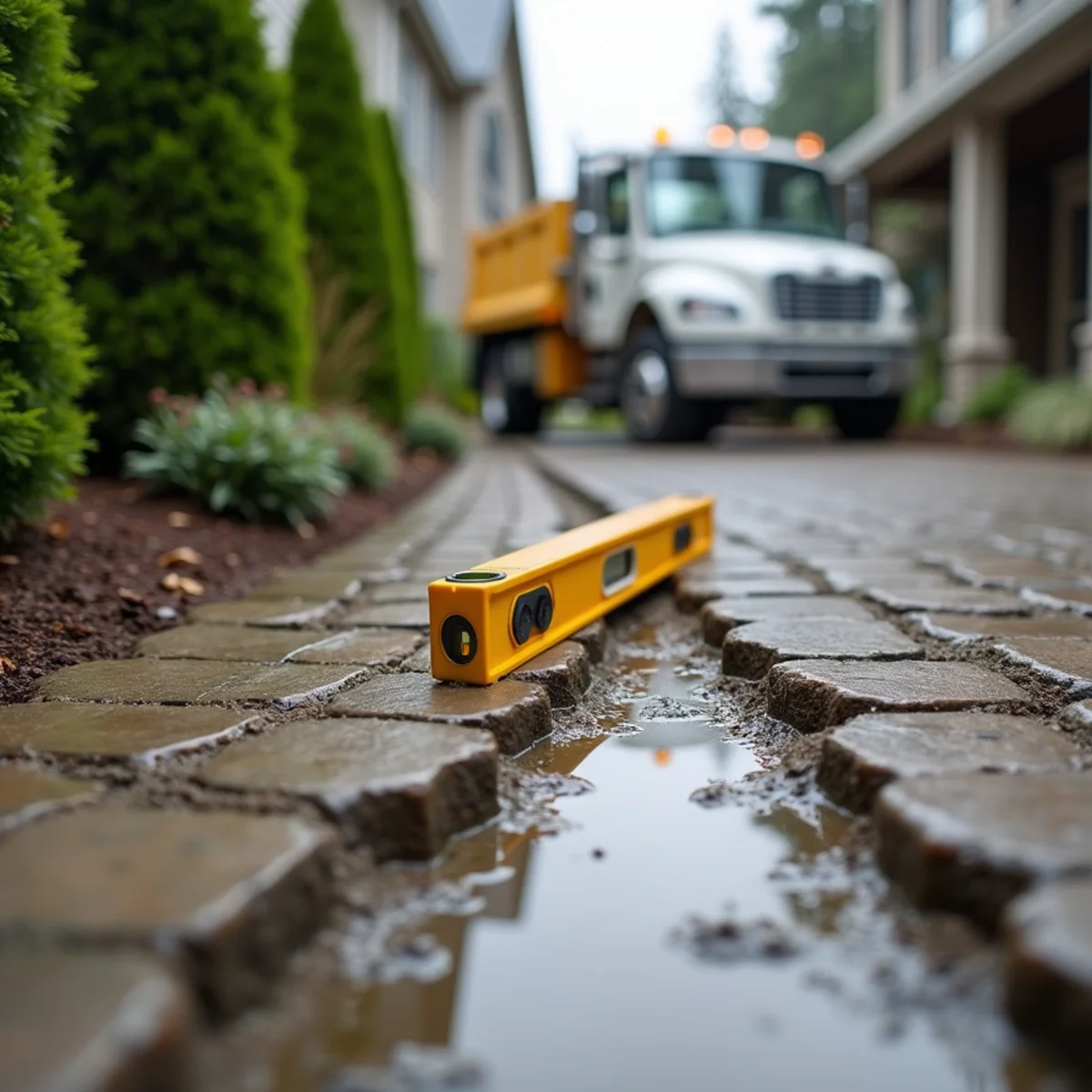
Sinking pavers almost always signal sub-base failure, not bad pavers: water washing out the bedding sand and base fines, an under-built or poorly compacted base, or drainage funneling runoff beneath the surface. Diagnose by mapping where it sinks, checking nearby downspouts and grading, then lifting a section to inspect the base.
A paver patio that has started to sag in the middle, tip toward the house, or collect standing water after a storm is rarely a problem with the pavers themselves. Concrete and clay pavers are dense, durable units that outlast the material holding them in place. When a walkway dips or a patio corner drops half an inch below the rest of the field, the failure lives underneath, in the compacted base and the thin bedding layer the stones rest on.
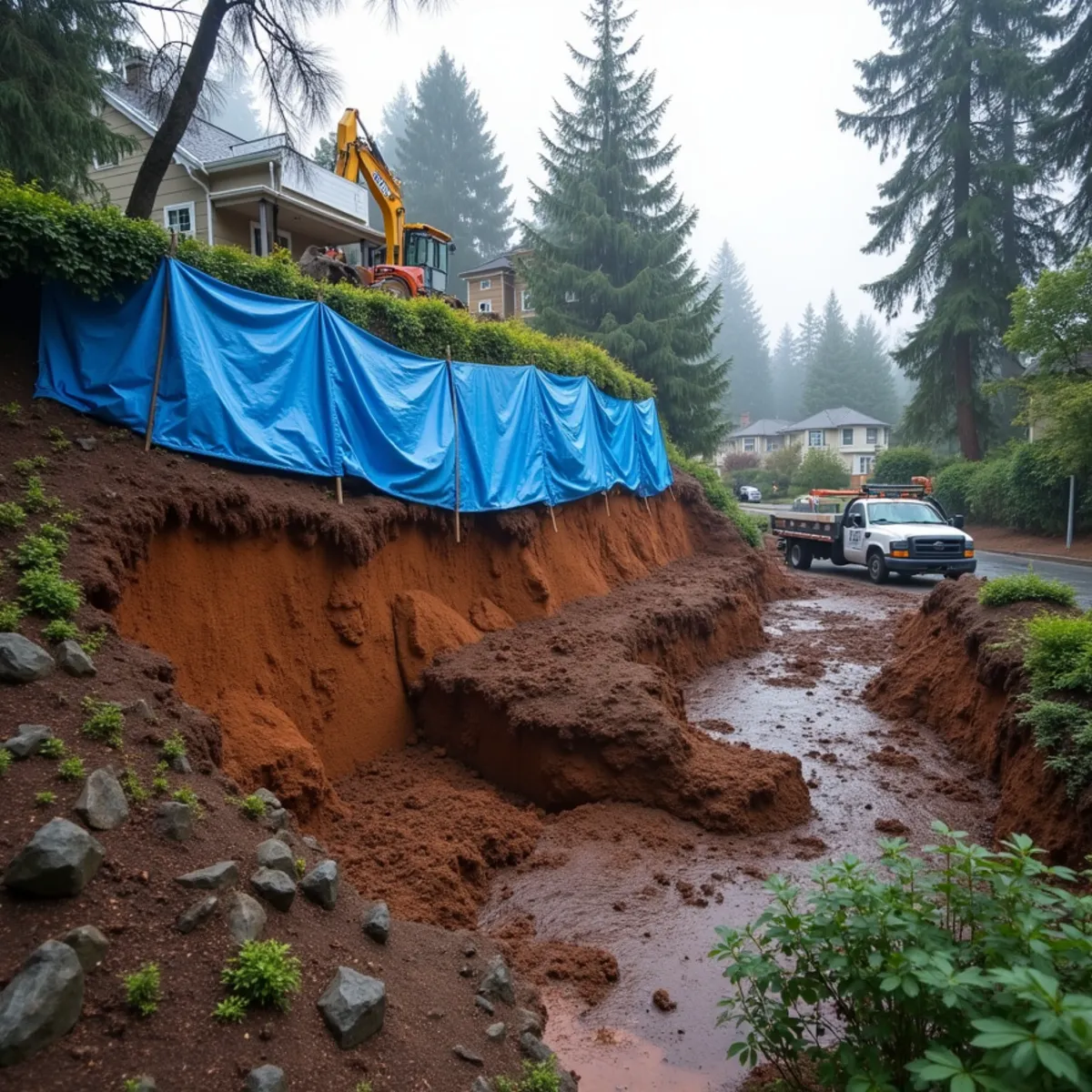
Across King County, the culprit is usually a combination of our glacial till subsoil, the heavy wet winters that saturate it, and shortcuts taken during the original installation. Understanding what is happening below the surface lets you judge whether you are looking at a small cosmetic reset or a full lift-and-rebuild. This guide walks through the common failure patterns we see on Eastside patios and driveways, and what a proper diagnosis and repair involves.
Key takeaways
- Sinking is almost always a sub-base failure, not a defect in the pavers themselves.
- Water washing out bedding sand and base fines is the most common culprit in Washington's wet climate.
- An under-built, too-shallow, or poorly compacted base settles unevenly under load over time.
- Diagnose by mapping exactly where the surface dips and checking nearby downspouts, grading, and runoff paths.
- Lifting a section of pavers reveals whether the base is washed out, contaminated, or simply too thin.
- A lasting repair rebuilds the base with proper open-graded rock, compaction, and drainage — not just re-leveling the top.
Why Pavers Shift, Dip, and Form Puddles After Heavy Rain
Interlocking pavers are a flexible pavement system. They are meant to move slightly as the ground beneath them expands, contracts, and drains. That flexibility is a strength, but it depends entirely on a stable, well-draining base carrying the load. When water repeatedly moves through or under that base, it carries fine particles with it, and the support the pavers once had slowly disappears.
In our climate the pattern is seasonal. Puget Sound winters deliver months of steady rain that keeps the ground saturated, while dry summers bake and shrink the same soil. That freeze-adjacent wet-dry cycling works joints loose and opens tiny channels for water to travel. Once a low spot forms, it collects more runoff, which accelerates the erosion, and the dip grows deeper each winter.
The tell-tale signs are consistent: a patio that ponds water instead of shedding it, individual stones that rock underfoot, joints that have widened and lost their sand, and a visible slope pulling toward the foundation rather than away from it. Any one of these is a signal that the base is no longer doing its job.
Insufficient Base Compaction and Missing Edge Restraints
The single most common cause of sinking pavers is a base that was never compacted to the right depth or density. A patio needs a base of open-graded 5/8-inch crushed rock installed and compacted in thin lifts, not dumped in one pass and rolled once. When crews rush this step, the aggregate keeps settling under foot traffic and weather for years afterward, and the surface follows it down.
How Weak Compaction Shows Up
A patio built on under-compacted base tends to settle unevenly, with the heaviest-used paths and the areas nearest downspouts dropping first. You will often see a broad, shallow bowl rather than a single failed stone. Because the whole field is soft, spot repairs rarely hold, and the dip returns within a season or two.
The Role of Edge Restraints
Pavers rely on edge restraints, usually a rigid plastic or aluminum bender board spiked into the base, to lock the perimeter in place. Without them, the outer courses creep outward under load, the joints open, and the interlock that gives the pavement its strength unravels from the edges in. Missing or failed edge restraint is one of the first things we check on a spreading, wobbling patio.
Water Runoff Washing Away Bedding Sand Under Paver Stones
Beneath the pavers sits a thin bedding layer, traditionally a coarse sand or fine chip, that lets each stone seat evenly. This layer is the most vulnerable part of the system. When water is allowed to run under the pavers instead of over and off them, it lifts and carries that bedding material away, leaving voids the stones then drop into.
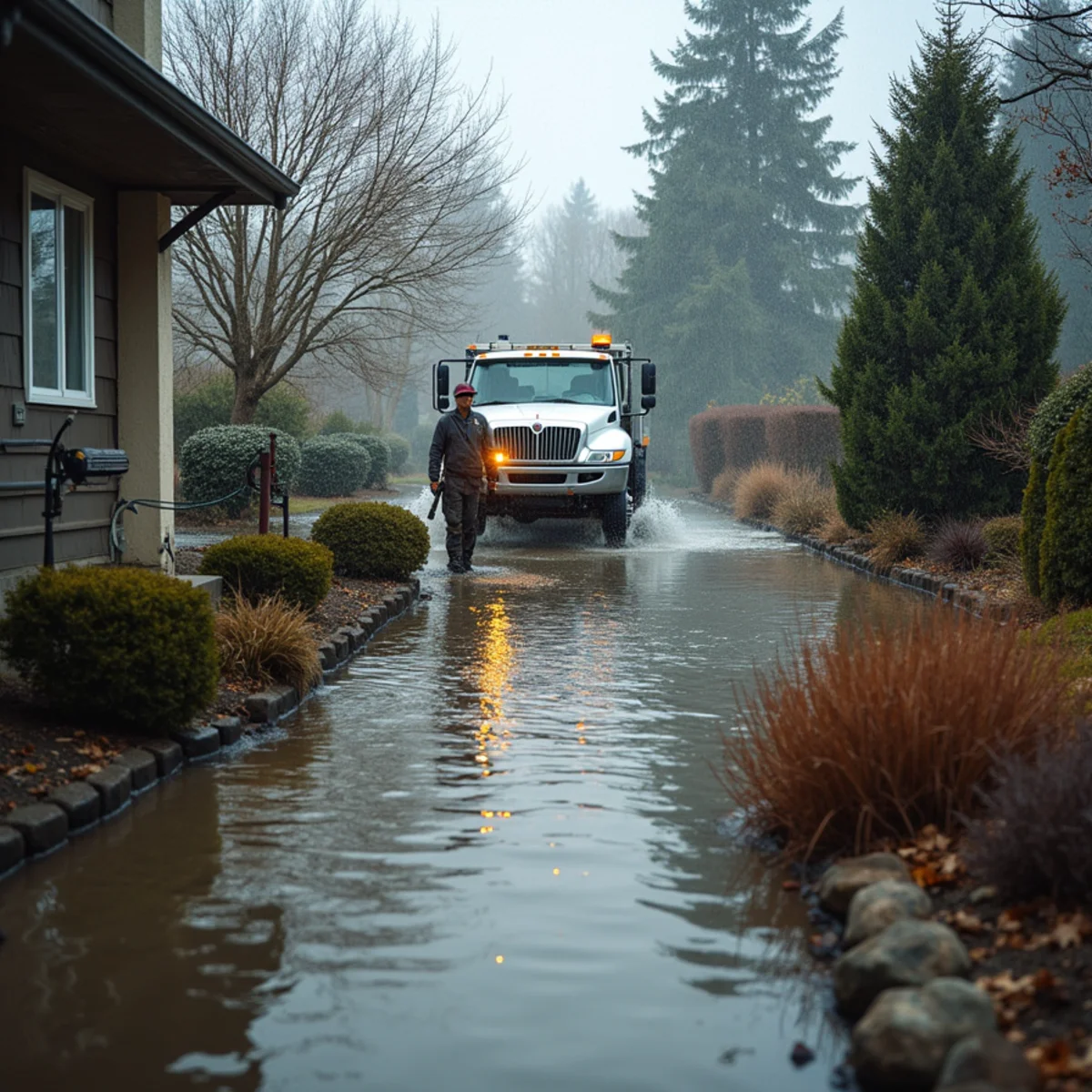
This is where drainage and hardscape intersect. A downspout dumping directly onto or beside a patio, a lawn graded toward the pavement, or a French drain that has clogged will all feed water into the base. In Seattle's hardpan soils, which drain slowly, that water has nowhere to go quickly, so it lingers and keeps moving fines. Correcting the surface without addressing where the water comes from guarantees the repair will fail again.
Part of a real diagnosis is tracing the water path. We look at roof runoff, yard grading, and any existing drainage before deciding how to rebuild, because a patio reset that ignores a saturated sub-base is a patch, not a fix. Homeowners dealing with chronically soggy ground alongside sinking stones often need drainage work and hardscape repair addressed together.
Lifting, Regrading, and Resetting Settled Paver Sections
Because pavers are individual units, a settled section can often be lifted, the base corrected, and the same stones reset, so a good repair does not always mean starting over. The pavers are pulled up and set aside in order, the failed bedding and any contaminated base are removed, and fresh crushed rock is added and compacted back to the proper depth and slope.
Grade is the part homeowners most often overlook. A patio should carry a slope of roughly a quarter-inch per foot away from the house so water sheds off the surface rather than pooling or running toward the foundation. When we reset a section, re-establishing that fall across the whole field, not just the sunken spot, is what keeps the repair from simply migrating to the next low area.
Once the base is rebuilt and screeded to grade, the pavers go back down, the edges are re-restrained, and the field is compacted again to seat the stones into the bedding. Done properly, a reset section blends into the original patio and carries the same load and drainage performance as new construction.
Applying Commercial Polymeric Sand to Lock Jointing Gaps
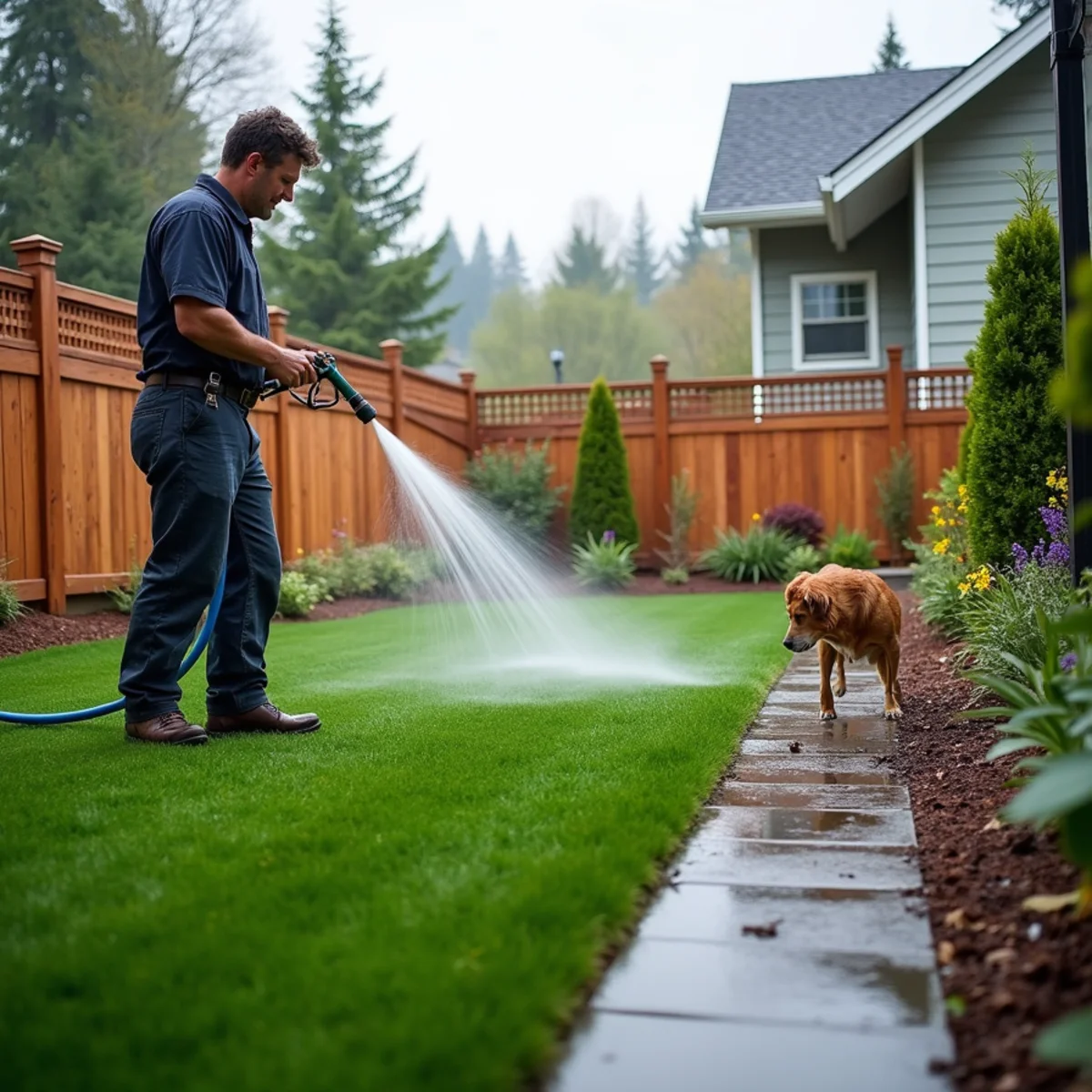
The final step that separates a lasting repair from a temporary one is the joint sand. Ordinary sand washes out with the first heavy rain, reopening the gaps that let water back under the pavers. Commercial-grade polymeric sand is swept into the joints and then activated with a light misting, after which the polymers bind the grains into a firm, flexible fill that resists washout, weeds, and ants.
Locked joints restore the interlock across the whole field, so the pavers again share load as a single flexible surface instead of moving independently. In our wet climate this matters more than in drier regions, because every winter tests the joints. Properly installed polymeric sand, combined with a sound base and working edge restraints, is what lets an Eastside patio ride out years of rain without sagging again.
Contact Our Hardscape Specialists for a Paver Assessment
Diagnosing whether a sinking patio needs a simple reset or a full rebuild takes an eye for what the surface symptoms reveal about the base below. Our crews have spent 14-plus years reading these patterns on patios and driveways across Kirkland, Redmond, and Mercer Island, and we can tell you honestly which repair your hardscape actually needs rather than defaulting to the biggest job.
As a licensed, bonded, and insured Washington contractor (license SEATTPT839LN), we handle both the paver work and the underlying drainage that so often drives it, so you are not left coordinating two trades. An on-site assessment identifies the water source, checks the base and edge restraints, and gives you a clear path forward.
How our crew reads a sunken paver field before we lift a single stone
Nine times out of ten in King County, sinking pavers are a water-routing problem, not a paver problem. Before we pull anything, we look for the tell: a depression that follows a straight line usually means a downspout or a buried irrigation lateral is discharging under the field and washing out the bedding sand. A saucer-shaped dish in the middle of a patio points to base compaction that was skipped or done in one lift instead of two. On Seattle hardpan, the classic failure is a base built directly on glacial till with no drainage path, so winter water perches on the clay, freezes lightly, and pumps fines out from under the pavers every rain cycle.
The judgment call homeowners miss is whether to relay or rebuild. If the base is open-graded 5/8-inch crushed rock and only the bedding layer washed, we can lift a section, re-screed, and reset for a fraction of a full rebuild. But if we probe and find sand-set pavers over native clay with no geotextile separating the two, relaying just buys a year. We rebuild those, because the fines will keep migrating no matter how carefully we reset the top.
We also check the perimeter restraint first. A surprising number of Eastside 'sinking' complaints are actually spreading edges: the plastic edge restraint pulled its spikes out of soft winter ground, the field crept outward, and the joints opened enough that pavers rock and drop. That is a two-hour fix, not a demolition.
Pro tips from our crew
- Push a long screwdriver into an open joint after a dry week and again after heavy rain; if it sinks noticeably deeper when wet, you have a saturated, unstable base rather than a surface issue.
- Photograph the low spot next to a downspout during an actual downpour so you can see where water surfaces, not where you assume it goes.
- Never re-level with more sand alone; adding bedding sand over a failed base creates a soft, deep cushion that ruts faster than before.
- Check whether the pavers were laid over compacted crushed rock or over sand set on clay by lifting one edge stone; the answer decides repair versus rebuild.
- If joints are washing out repeatedly, refill with polymeric sand only after the base drains properly, or the polymer will crack and fail again.
Frequently Asked Questions
Adding sand on top of a failed base is a temporary patch that usually sinks again within a season. The lasting fix is to lift the affected section, correct and recompact the crushed-rock base to the proper depth and slope, then reset the stones and lock the joints with polymeric sand.
Localized sinking almost always points to a concentrated water source or a soft spot in the base, such as a downspout discharging nearby, a clogged drain, or an area that was under-compacted during installation. That corner collects and channels water, which erodes the bedding faster than the rest of the field.
A patio built on a well-compacted open-graded base with working edge restraints and polymeric-sand joints should perform for decades in our climate. Most premature failures trace back to skipped compaction, missing edge restraint, or unmanaged runoff rather than the pavers wearing out.
Usually yes, if the rest of the field is stable and the base under it is crushed rock rather than sand on clay. We lift the affected pavers, correct the base and screed, and reset with matching joint sand so the repair blends in. If the low corner traces back to a downspout dumping under the field, we fix the drainage first, or it sinks again. Call (323) 606-0255 and we can often diagnose it from photos before scheduling.
That seasonal pattern is the signature of base saturation over glacial till. In our dry summers the clay is firm and everything holds; once the wet season starts, water perches on the hardpan, softens the sub-base, and fines pump out under traffic. The permanent fix is an open-graded, free-draining base with a geotextile separation layer, not another round of releveling.
Sinking pavers are a symptom, and the diagnosis lives in the base and the drainage beneath the surface. Catching erosion early, while it is still a reset rather than a rebuild, saves money and keeps small dips from spreading across an entire patio or driveway. The pattern of the settling, the direction of the slope, and the source of the water together tell the real story of what your hardscape needs.
If your patio is puddling, wobbling, or pulling toward the house, have it looked at before another wet winter deepens the damage. Call Seattle Pro Turf at (323) 606-0255 to schedule a paver assessment with a specialist who will tell you exactly what is failing underneath and what it takes to make it right.
Ready to move from reading to results? Our paver patios & walkways and storm hardscape clearing & reset crews handle projects like this across the Eastside — including Kirkland and Redmond. Call (323) 606-0255 for a free estimate.
Get expert help on your project
SeattleProTurf · 14+ years serving the Eastside · Licensed & insured