Kirkland & Eastside Tree Protection Ordinances: Digging Near Roots
The short answer
Kirkland and many Eastside cities protect significant and heritage trees, regulating removal and work inside the critical root zone. Digging for hardscape near protected roots can require permits, an arborist, and hand-digging or root-friendly methods. Check local tree codes before excavating, since unpermitted root damage can trigger fines and replacement requirements.
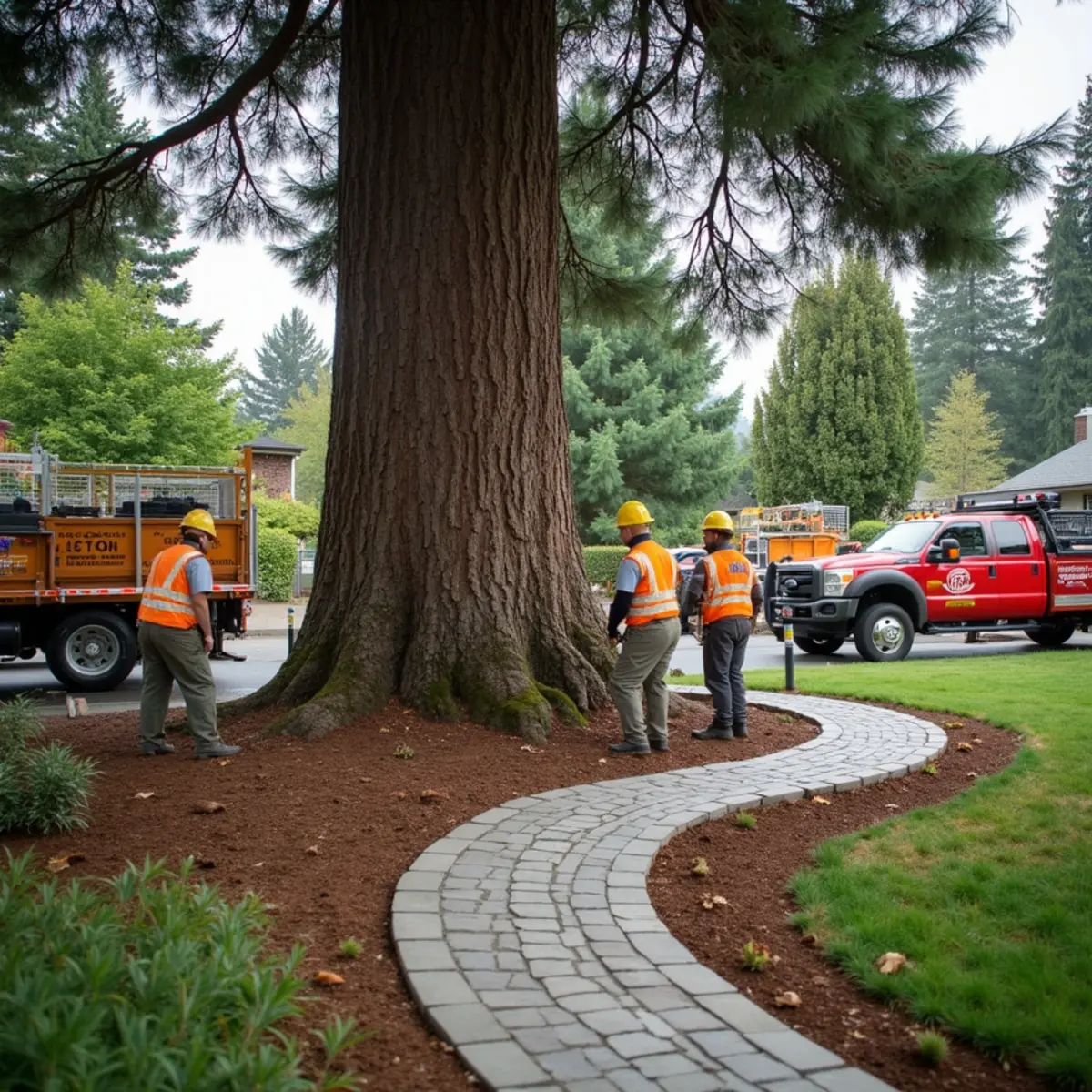
The mature trees that give Eastside neighborhoods their character, the towering Douglas firs and Western red cedars, are not just scenery. They are protected by ordinance, and those protections directly govern what you can and cannot do when you install a patio, walkway, or turf lawn anywhere near them. Homeowners are frequently surprised to learn that digging in their own yard can require tree review, and that damaging a protected tree, even accidentally, can carry real penalties.
Cities like Kirkland and Redmond have adopted tree canopy preservation codes with genuine enforcement behind them, because the regional canopy provides stormwater absorption, slope stability, cooling, and habitat that the cities are committed to maintaining. For a hardscape project, this means the tree, its canopy, and especially its root zone all factor into the plan. Understanding the rules before you break ground protects both the tree and you from fines, and it often points toward smarter construction methods. This is how Eastside tree ordinances shape digging near roots.
Key takeaways
- Kirkland and many Eastside cities protect significant and heritage trees, regulating removal and nearby work.
- The critical root zone around a protected tree is regulated, so excavation near it isn't automatically allowed.
- Hardscape digging near protected roots may require a permit and an arborist's involvement.
- Root-friendly methods — hand-digging, air excavation, or rerouting the design — are often needed to avoid damage.
- Unpermitted root damage or removal can trigger fines and mandatory tree replacement.
- Check the specific city's tree code before excavating, since rules and thresholds vary across Eastside jurisdictions.
Understanding Tree Canopy Preservation Codes in Kirkland and Redmond
Kirkland, Redmond, and their Eastside neighbors regulate trees through canopy and tree preservation codes designed to protect the urban forest as the region develops. In practice, these codes limit the removal of significant or landmark trees, may require permits to remove or substantially alter protected trees, and can impose replacement or retention requirements when trees are lost. The specifics differ by city, but the shared intent is to keep the mature canopy intact.
For a homeowner, the important shift in thinking is that trees on your property are not entirely yours to remove or endanger at will once they reach a protected size or status. A large, healthy tree may be classified as significant or as a landmark tree, and that classification brings it under the ordinance. Before a hardscape project that involves removing a tree or working close enough to threaten one, checking its status under the local code is a necessary first step.
These codes matter for hardscaping even when no tree is being removed, because harming a protected tree through construction is treated much like removing it. Digging that severs major roots, compacting the soil over the root zone, or changing the grade around the trunk can all injure or kill a protected tree, and the ordinances hold homeowners responsible for that damage. The canopy code, in other words, reaches into the ground around the tree, not just the trunk you can see.
Critical Root Zones (CRZ): Where Heavy Machinery Cannot Dig
The single most important concept for building near trees is the Critical Root Zone, or CRZ. This is the area of soil around a tree that contains the roots essential to its stability and survival, and it extends outward well beyond what most people expect, often to or past the edge of the canopy. The CRZ is where the tree's fine feeder roots and major structural roots live, and it is far more sensitive than the visible trunk.
Why the CRZ Is Off-Limits to Machines
Within the CRZ, the two great threats are root severing and soil compaction. Excavating with standard machinery cuts through roots the tree depends on, and simply driving equipment across the zone compacts the soil so severely that roots suffocate and the tree declines over the following years. Because this damage often kills the tree slowly, the connection to the construction can be missed until it is too late, which is exactly why the ordinances protect the zone preemptively.
Planning Hardscape Around the CRZ
A tree-aware hardscape plan treats the CRZ as a constraint from the start, positioning patios, walkways, and excavation to minimize intrusion into it and choosing methods that avoid heavy machinery within it. Sometimes this means adjusting a patio's footprint or alignment; sometimes it means using specialized techniques to work within the zone safely. Either way, the CRZ is mapped and respected before the design is finalized, not discovered after roots are already cut.
Installing Pavers Near Landmark Douglas Firs Without Killing Trees
Landmark trees, the largest and most significant specimens like the mature Douglas firs common across the Eastside, carry the strongest protections and demand the most careful construction. Homeowners understandably want to build a patio or path to enjoy the shade of such a tree, and it can be done, but only with methods designed to protect the roots and the soil around them.
The key is to build over the root zone rather than cutting into it. Rather than deep excavation that severs roots, a tree-conscious paver installation can use a shallower, permeable base built up over the existing grade so the roots below are disturbed as little as possible, allowing air and water to continue reaching them. Edging and layout are planned to avoid the largest structural roots, and the design accepts the constraints the tree imposes. A patio built this way sits lightly around the fir instead of strangling it, and both the hardscape and the tree survive. The alternative, a conventional deep-dig installation tight against a landmark tree, is precisely what kills the tree and triggers the ordinance's penalties.
Air-Spade Root Excavation and Permeable Base Alternatives
When work genuinely must happen within a tree's root zone, professionals turn to techniques that expose and protect roots instead of cutting blindly through them. The air-spade is the central tool. It uses a high-velocity jet of compressed air to excavate soil away from roots without damaging them, so the roots can be seen, worked around, and preserved rather than severed by a blade or bucket.
Air-spade excavation lets a crew route around important roots, tunnel beneath them where necessary, and understand exactly what lies in the soil before committing to a design, which is impossible with conventional digging. Paired with permeable base construction, where an open-graded aggregate and permeable surface let air and water continue reaching the roots, these methods make it possible to build hardscape in sensitive root zones without condemning the tree. They cost more and take more skill than a standard dig, but for a project near a protected or landmark tree they are often what makes the work both possible and compliant. This is the kind of specialized approach that separates a tree-safe installation from one that quietly dooms the tree.
Fines and Legal Liabilities for Damaging Protected Urban Trees
The enforcement behind these ordinances is what makes them more than guidelines. Damaging or removing a protected tree without authorization can expose a homeowner to significant fines, mandatory replacement or restoration requirements, and other penalties, and the amounts can be substantial because they are calculated to reflect the value of a mature tree that cannot simply be replanted overnight.
The liability is real even when the damage is unintentional. A contractor who digs through a protected tree's roots, or a homeowner who compacts a root zone with equipment, can be held responsible for the harm regardless of intent, and the tree's decline may not become obvious until well after the project is done. Beyond city penalties, damaging a tree that provides slope stability or that a neighbor values can create additional disputes and costs. The financial and legal exposure is exactly why respecting the CRZ and using protective methods is not optional caution but sound risk management. Building near protected trees the right way is far cheaper than the consequences of getting it wrong.
Schedule a Tree-Safe Hardscape Assessment
Building a beautiful patio, walkway, or turf lawn near mature trees is entirely achievable, but it depends on understanding the tree ordinances, mapping the Critical Root Zone, and using construction methods that protect rather than injure the roots. That expertise is what turns a risky dig into a compliant, tree-safe project that both you and the tree can live with for decades.
Seattle Pro Turf installs pavers, walkways, and synthetic turf near protected trees across Kirkland, Redmond, and Woodinville, using tree-conscious methods and, where needed, specialized root-safe excavation. Licensed, bonded, and insured under Washington license SEATTPT839LN, we assess the trees and root zones before we design, so your hardscape respects both the code and the canopy that makes the Eastside what it is.
How we hardscape near protected roots without killing the tree
On Eastside lots, the tree ordinance and the Critical Root Zone are the real constraints on where a patio or wall can go, and homeowners usually discover this after they've fallen in love with a layout. Kirkland and Redmond protect significant trees, and the Critical Root Zone, roughly the area under the canopy where the structural and feeding roots live, is largely off-limits to the trenching, grading, and compaction that normal hardscape construction requires. The problem is that a conventional excavator working near a mature conifer severs the anchoring roots and compacts the soil, and the tree may look fine for two or three years before it declines or, worse, becomes a windthrow hazard on a wet winter night.
Our approach in the root zone is to change the construction method, not just the footprint. We use air-spade excavation to expose roots with compressed air instead of steel, so we can route a footing or a drain around major roots rather than cutting through them. Where a surface has to cross the root zone, we favor a floating, permeable structure over an open-graded base that spans the roots and lets water and air reach them, instead of a compacted, sealed slab that suffocates the soil.
The honest part homeowners don't want to hear is that sometimes the tree wins. If the design requires cutting a third of a significant tree's roots, the responsible call is to move the hardscape, because a dead or hazardous tree costs far more to deal with later than redesigning the patio now. We'd rather have that conversation at the design table than at the arborist's.
Pro tips from our crew
- Identify significant and protected trees on your lot and map their Critical Root Zones before you design; those zones dictate what's buildable.
- Use air-spade excavation near mature trees so roots can be exposed and routed around rather than severed by a machine.
- Prefer a floating, permeable surface over a compacted slab inside the root zone so water and air still reach the roots.
- Involve a certified arborist early; a report often smooths permitting and prevents an expensive mistake near a protected tree.
- Avoid stockpiling material or parking equipment over the root zone during construction; compaction alone can kill a tree slowly.
Frequently Asked Questions
Yes, if the work is near a protected, significant, or landmark tree. Kirkland, Redmond, and neighboring cities regulate harm to protected trees, and damaging one through excavation, root cutting, or soil compaction, even on your own property, can trigger penalties. Checking a nearby tree's status before you dig is the safe course.
Farther than most people expect, often out to or beyond the edge of the canopy, because the roots that anchor and feed the tree spread well past the trunk. The exact zone depends on the tree's species, size, and condition, which is why it should be mapped by someone experienced before hardscape is designed around it.
Often yes, using tree-conscious methods such as a shallower permeable base built over the existing grade, careful layout around structural roots, and air-spade excavation where digging in the root zone is unavoidable. The goal is to keep air and water reaching the roots and avoid severing or compacting them, which is what a conventional deep dig does.
An air-spade uses a jet of compressed air to remove soil from around roots without cutting them, so a crew can see and work around roots rather than slicing through them. It makes it possible to build in sensitive root zones while keeping the tree alive, which is essential near protected and landmark trees.
On many Eastside lots, no, not without approval. Kirkland and Redmond regulate removal of significant trees and may require a permit, retention of a certain canopy percentage, or replacement plantings. Removing a protected tree without authorization can bring fines and replacement mandates. Confirm your city's tree code before planning around removal, and call (323) 606-0255 if you'd like help designing a layout that keeps the tree.
Both are risks with the wrong method. A compacted, sealed slab over the root zone starves the roots of water and air and can slowly kill the tree, while the tree's growing roots can later heave and crack an unyielding slab. A floating permeable surface on an open-graded base reduces both risks by letting the roots breathe and flexing rather than cracking as the tree grows.
The mature trees that define Eastside neighborhoods come with real legal protection, and that protection extends into the soil and root zone where hardscape construction happens. Canopy preservation codes, the Critical Root Zone, and the fines behind them all mean that installing pavers or turf near a significant tree is a job to plan carefully, using methods like permeable base construction and air-spade excavation that protect the roots rather than sever them. Done right, you get the hardscape and keep the tree; done wrong, you can lose both and pay penalties besides.
If your project sits near a protected or landmark tree, the smart move is a tree-safe assessment before any ground is broken. Call Seattle Pro Turf at (323) 606-0255 to schedule an evaluation and get a hardscape plan that respects Kirkland and Eastside tree ordinances while giving you the patio, walkway, or lawn you want.
Ready to move from reading to results? Our paver patios & walkways and synthetic turf installation crews handle projects like this across the Eastside — including Kirkland and Redmond. Call (323) 606-0255 for a free estimate.
Get expert help on your project
SeattleProTurf · 14+ years serving the Eastside · Licensed & insured